


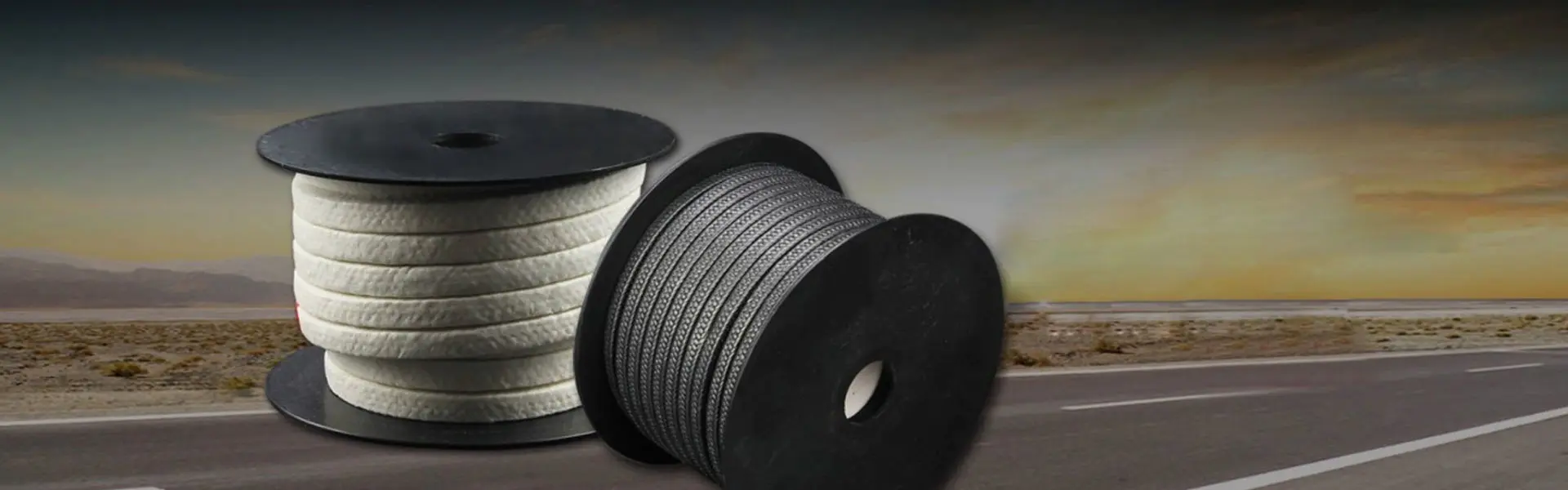
Asbestos gaskets are sealing components manufactured using asbestos fibers, often combined with other materials like rubber or graphite. Historically, they were prized in industrial applications for their exceptional ability to withstand extreme temperatures, high pressures, and corrosive chemicals. These gaskets create a tight seal between two mating surfaces, such as pipe flanges, engine components, or boiler doors, preventing leaks of liquids or gases. Due to their inherent properties, they became a standard in industries like power generation, chemical processing, shipbuilding, and heavy manufacturing throughout much of the 20th century.
However, it is crucial to understand that the use of asbestos is now heavily restricted or banned in many countries due to the severe health risks associated with asbestos fiber inhalation. The legacy of asbestos gaskets persists in older equipment, and specific, highly regulated industrial applications may still use them under controlled conditions. For most modern applications, safer alternative materials are strongly recommended and required by law.
When specifying or identifying asbestos gaskets, several critical parameters define their performance and suitability. At Kaxite Seals, our historical expertise allows us to detail these specifications for informational and identification purposes.
| Parameter | Typical Range | Description & Importance |
|---|---|---|
| Temperature Resistance | -100°F to +750°F (-73°C to +400°C) | The primary historical advantage. Suitable for superheated steam, hot oils, and exhaust systems. |
| Pressure Rating | Up to 1500 psi (103 bar) | Capable of sealing high-pressure flanges in piping and pressure vessels. |
| pH Resistance Range | 2 - 12 | Resistant to a wide spectrum of acids, alkalis, and solvents, depending on the binder used. |
| Density | 1.6 - 2.1 g/cm³ | Indicates the compactness of the material, affecting compressibility and recovery. |
| Compression Set | 25% - 40% | Measures the material's ability to maintain sealing force after prolonged compression. |
| Tensile Strength | 2000 - 5000 psi | Important for handling and installation without tearing. |
Q: What were asbestos gaskets primarily used for?
A: They were the go-to sealing solution for extreme service conditions. Primary applications included sealing flanges in high-temperature steam lines and boilers in power plants, containing aggressive chemicals in processing plants, sealing exhaust manifolds and cylinder heads in automotive and marine engines, and in refineries for hot oil and hydrocarbon services. Their reliability under fire and intense heat was unmatched by early alternatives.
Q: Are asbestos gaskets still legal to use?
A: The legality is complex and varies by jurisdiction. In many countries (e.g., UK, Australia, all EU member states), the use of asbestos is completely banned. In others, like the United States, new uses are banned but existing asbestos-containing materials (like old gaskets) can sometimes remain in place until removed during renovation or demolition. Installation of new asbestos gaskets is highly restricted and generally illegal for most commercial applications. Always consult local and national regulations.
Q: What are the health risks of handling asbestos gaskets?
A: The danger arises when the gasket material is dry, drilled, sanded, cut, or deteriorates, releasing microscopic asbestos fibers into the air. When inhaled, these fibers can lodge deep in the lungs, leading to serious diseases such as asbestosis (lung scarring), lung cancer, and mesothelioma, a cancer of the lung and abdominal lining. These diseases often have a long latency period, appearing decades after exposure.
Q: I have old equipment with asbestos gaskets. What should I do?
A: Do not disturb them if they are intact and in good condition. The encapsulated fibers pose a lower risk. The priority is to plan for safe removal and replacement during the next scheduled maintenance. If the gasket is frayed, broken, or must be removed, it is imperative to follow strict safety protocols or hire licensed asbestos abatement professionals. Never use power tools or dry scraping methods.
Q: How do I safely remove an old asbestos gasket?
A: Safe removal requires a controlled environment. Key steps include: 1) Isolate the work area with plastic sheeting. 2) Use signage to warn others. 3) Personnel must wear appropriate PPE (P3-rated respirator, disposable coveralls). 4) Thoroughly wet the gasket and surrounding area with amended water (water with a wetting agent) to suppress dust. 5) Carefully remove the material using hand tools, keeping it wet. 6) Place all debris and contaminated tools/wipes into labeled, leak-tight asbestos waste bags. 7) Decontaminate the area and personnel. Disposal must be at a licensed hazardous waste facility.
Q: What should I use to replace an asbestos gasket?
A: Modern, high-performance alternatives are readily available. The choice depends on the specific service conditions (temperature, pressure, media). Common and safer replacements include:
Q: How can I identify if a gasket contains asbestos?
A: Visual identification is unreliable and dangerous. Asbestos gaskets are often grey, white, or off-white and may have a layered or fibrous appearance, but so do many non-asbestos materials. If you suspect a gasket contains asbestos, treat it as such until proven otherwise. The only definitive method is analysis by an accredited laboratory using polarized light microscopy (PLM) or transmission electron microscopy (TEM).
Q: Can Kaxite Seals provide asbestos gaskets?
A: Kaxite Seals operates in full compliance with international health, safety, and environmental regulations. We do not manufacture or distribute asbestos-containing sealing products. Our focus and expertise lie in providing the highest quality, engineered non-asbestos alternatives that meet or exceed the historical performance of asbestos gaskets without the associated health risks. We offer a comprehensive range of sealing solutions using modern, safe materials.
Q: What information do I need to provide to get a replacement gasket?
A: To ensure you receive a correct and safe replacement, gather as much of the following as possible:


