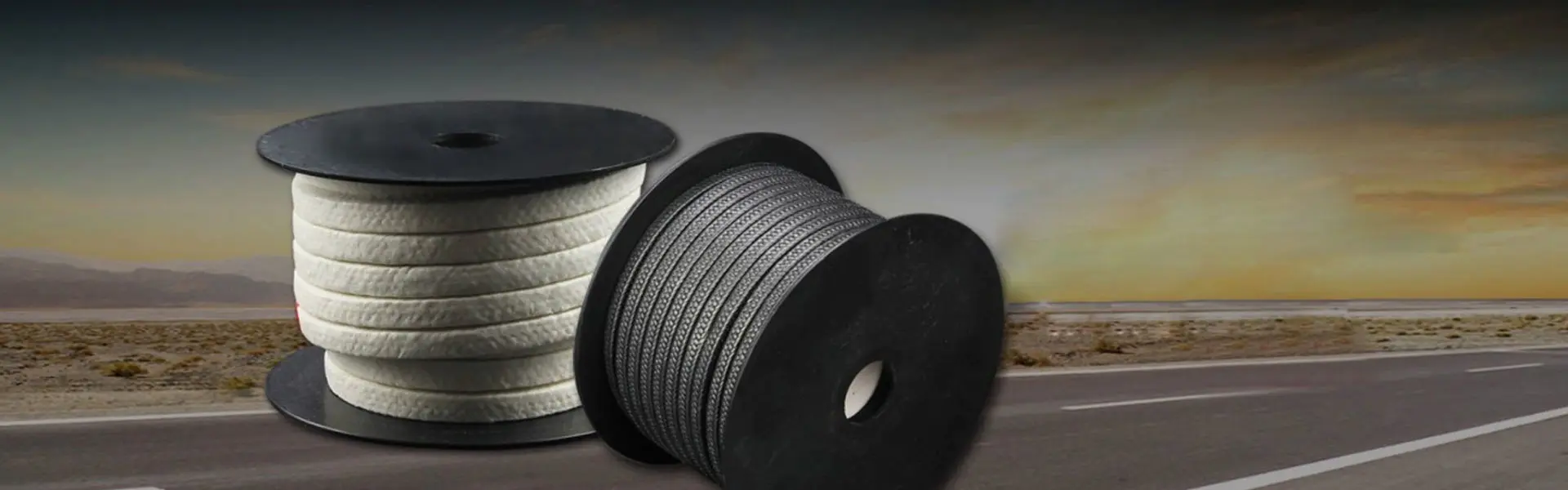
Aramid Fiber Packing: The High-Performance Sealing Solution for Demanding Applications
In the world of industrial sealing, where extreme pressures, aggressive chemicals, and punishing temperatures are daily challenges, standard packing materials often fall short. This is where advanced synthetic materials like Aramid Fiber Packing step in, offering a remarkable combination of strength, durability, and chemical resistance. Kaxite Seals, a leader in precision sealing solutions, has engineered a line of high-performance Aramid Fiber Packing designed to meet the most rigorous operational demands, reduce maintenance downtime, and deliver long-term reliability.
Aramid fiber, a class of heat-resistant and strong synthetic fibers, is best known for its use in ballistic armor and aerospace composites. Its application in sealing technology leverages these inherent properties: exceptional tensile strength, low creep, and outstanding resistance to wear, heat, and a wide range of chemicals. Unlike traditional packing materials like flax or cotton, which can degrade quickly under stress, or even some synthetic options, aramid maintains its structural integrity in environments that would cause others to fail.
**Core Advantages of Kaxite Seals Aramid Fiber Packing**
Our packing is not just another aramid product; it is specifically formulated and braided to optimize performance for dynamic and static sealing applications. Here are the key benefits:
* **Superior Strength & Abrasion Resistance:** The inherent high tensile strength of aramid fibers translates into exceptional resistance to extrusion and blow-out, even under high shaft speeds and pressures. It withstands abrasive media far better than many alternatives.
* **Excellent Thermal Stability:** Kaxite Aramid Packing performs reliably across a wide temperature range, typically from -100°F to 500°F (-73°C to 260°C), with intermittent peaks even higher. It does not melt or drip, instead charting at extreme temperatures.
* **Broad Chemical Compatibility:** It exhibits excellent resistance to most oils, fuels, solvents, acids, and alkalis, making it suitable for diverse chemical processing, petrochemical, and refining applications.
* **Low Friction & Long Service Life:** The braided structure, often impregnated with PTFE or specialized lubricants, ensures smooth running, reduces shaft wear, and extends the mean time between maintenance intervals.
* **Environmentally Adaptable:** Suitable for use in steam, hot water, and many corrosive liquid and gas services.
**Detailed Product Parameters & Specifications**
To ensure you select the correct packing for your application, Kaxite Seals provides comprehensive technical data. Our standard Aramid Fiber Packing is available in various styles and impregnations.
**Typical Physical & Mechanical Properties:**
| Property | Test Method | Typical Value / Range |
| :--- | :--- | :--- |
| **Fiber Type** | – | Para-aramid (e.g., Kevlar™-type) |
| **Specific Gravity** | ASTM D792 | 1.44 |
| **Tensile Strength** | ASTM D885 | Very High |
| **Continuous Temperature Range** | – | -100°F to 500°F (-73°C to 260°C) |
| **pH Range** | – | 2 – 13 |
| **Thermal Conductivity** | – | Low |
| **Limiting PV Value** | – | 300,000 psi-ft/min |
**Available Styles & Configurations at Kaxite Seals:**
* **Style 871:** Aramid yarn plaited with PTFE lubricant. Excellent general-purpose packing for pumps and valves.
* **Style 872:** Aramid yarn braided over an elastomeric core. Enhanced sealing force for more demanding services.
* **Style 873:** Pure aramid fiber braid, dry or with a corrosion inhibitor. Ideal for high-temperature, non-lubricated services.
* **Custom Braids:** We offer diamond braiding, square braiding, and custom die-molded rings to suit specific equipment geometries.
**Standard Size Range:**
Our packing is supplied in continuous spools or pre-cut rings in standard sizes. Common square section sizes include 1/4″, 3/8″, 1/2″, 5/8″, 3/4″, 1″, and metric equivalents. Custom sizes are available upon request.
**Chemical Resistance Guide (Selected Media):**
| Chemical Media | Resistance Rating | Notes |
| :--- | :--- | :--- |
| **Dilute Acids & Alkalis** | Excellent | Recommended for most concentrations at moderate temperatures. |
| **Hydrocarbons, Oils, Fuels** | Excellent | Primary application area for refineries and fuel handling. |
| **Steam & Hot Water** | Excellent | Widely used in power generation and steam valves. |
| **Strong Oxidizing Acids** | Poor | Not recommended for nitric, sulfuric at high concentrations. |
| **Chlorinated Solvents** | Fair to Good | Consult Kaxite engineering for specific media. |
**Aramid Fiber Packing – Frequently Asked Questions (FAQ)**
**Q: What are the primary applications for Aramid Fiber Packing?**
**A:** Kaxite Aramid Packing is extensively used in centrifugal and rotary pumps, mixers, agitators, valves (especially control valves), and expansion joints across industries such as oil & gas refining, chemical processing, pharmaceutical, power generation (for boiler feed pumps, steam services), marine, and pulp & paper. It is ideal for sealing hot oils, hydrocarbons, acids, alkalis, steam, and many solvents.
**Q: How does Aramid Fiber Packing compare to Graphite or PTFE Packing?**
**A:** Each material has its niche. Aramid offers vastly superior mechanical strength and abrasion resistance compared to flexible graphite, which is better for very high temperatures and corrosive chemicals but is mechanically weaker. Compared to pure PTFE, aramid has a much higher temperature ceiling and better resistance to cold flow (creep) under load. Often, Kaxite combines aramid with PTFE impregnation to get the benefits of both: strength from aramid and low friction/chemical inertness from PTFE.
**Q: Can this packing be used for high-speed rotary equipment?**
**A:** Yes, it is an excellent choice for high-speed applications due to its high tensile strength, which resists centrifugal forces and frictional heat buildup. The braided construction and lubricant impregnation in Kaxite's styles help manage heat and reduce shaft wear. Proper installation and break-in are critical for optimal performance at high speeds.
**Q: What is the proper installation procedure for this type of packing?**
**A:** Correct installation is key to performance and longevity. Always start with a clean shaft/sleeve and stuffing box. Rings should be cut cleanly and staggered so joints are 90 degrees apart. Use a gentle tightening force on the gland follower—hand-tight only initially. After startup, perform a controlled thermal "break-in" by gradually tightening the gland in small increments over several hours to allow the packing to adapt and seat properly without overheating.
**Q: How do I select the right style and size from Kaxite Seals?**
**A:** Selection depends on your specific service conditions: fluid media, temperature, pressure (PSI), shaft speed (RPM), and equipment type. Providing this information to Kaxite Seals' technical support team is the most reliable method. They can recommend the optimal style (e.g., 871, 872) and size based on your stuffing box dimensions and operational parameters.
**Q: Is Aramid Fiber Packing suitable for potable water applications?**
**A:** Standard aramid packing is generally not certified for potable water contact due to the lubricants and processing aids used. However, Kaxite Seals can offer special FDA-compliant or NSF-approved formulations upon request for applications requiring contact with drinking water or food processing media.
**Q: What are the signs that my Aramid Packing needs replacement?**
**A:** Indicators include a persistent increase in leakage beyond acceptable limits (a slight weep is normal for lubrication), excessive heat generation at the stuffing box, a noticeable increase in power consumption of the pump or motor, or visible physical damage to the packing rings upon inspection during maintenance.
**Q: Does Kaxite Seals offer custom-engineered aramid packing solutions?**
**A:** Absolutely. Beyond our standard product line, Kaxite Seals' engineering team specializes in developing custom solutions. This can include unique braid patterns, custom impregnations with different lubricants (e.g., silicone, graphite), hybrid braids combining aramid with other fibers like carbon or glass, and pre-formed sets for specific OEM equipment.