


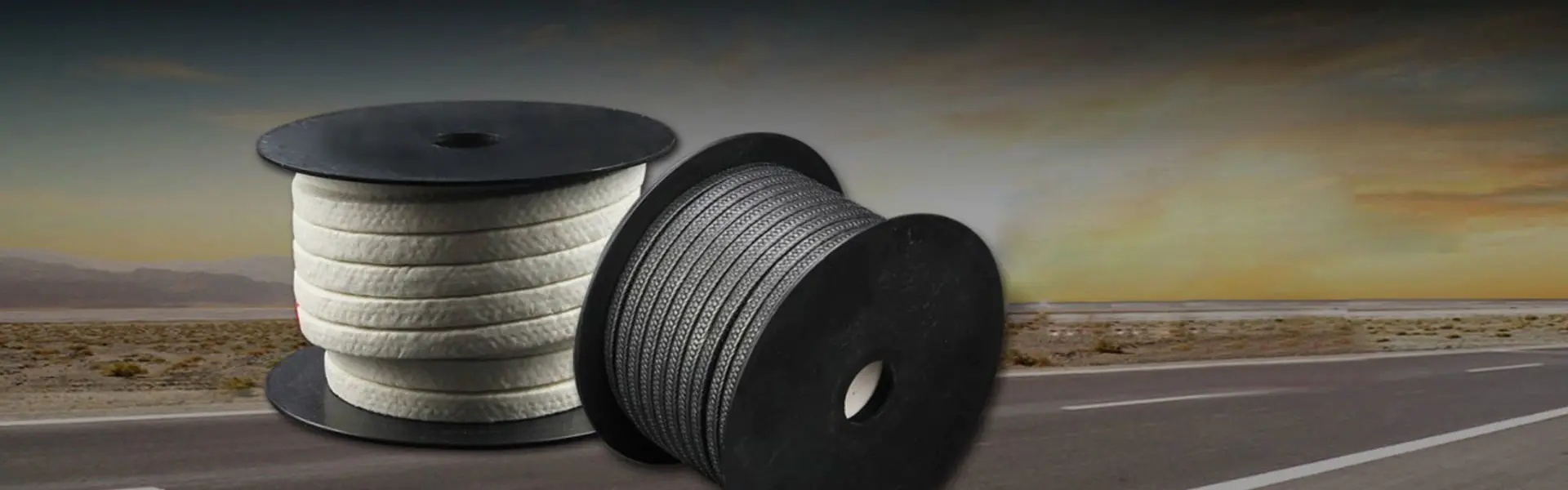
Picture this: A heat exchanger at your facility is down again. The maintenance lead shows you a jacketed gasket that has lost spring-back after only a few thermal cycles, and the flange face shows slight waviness caused by previous overloading. Your purchasing team is being asked to solve a problem that seems more like an engineering decision. This is the moment many buyers ask: Why choose Corrugated Gaskets over jacketed gaskets? The short answer is that corrugated metal gaskets use a formed metal core with concentric corrugations that act like controlled springs. Jacketed gaskets, on the other hand, depend on a metal jacket and a soft filler that can relax and extrude under fluctuating loads. For flanges with thermal movement, pressure pulses, or limited bolt load, corrugated gaskets often provide better recovery, lower leak rates, and reduced maintenance cost per cycle. Whether you are sourcing for a single heat exchanger or a plant-wide standardisation programme, the decision affects inventory, supplier qualification, and long-term reliability. This guide explains the technical differences, procurement considerations, and how to qualify suppliers. By the end, you will be able to compare these two sealing options with confidence, not guesswork.
In many plants, gasket cost is treated as a commodity line item, but the true cost appears in unplanned shutdowns, fugitive emissions, and maintenance labour. A gasket that leaks on a steam header or heat exchanger can force a full isolation, depressurisation, and re-torqueing cycle. Teams often respond by increasing bolt load. However, when a jacketed gasket loses compression under thermal cycling, higher bolt load may not restore the seal; it can distort the flange and worsen the leak.

Corrugated gaskets are designed to reduce this failure mode. Their formed metal core acts as a spring that follows flange movement and retains recovery, so the gasket continues to store energy after temperature changes. This is especially important for non-standard flanges, older equipment, and services with frequent start-stop cycles. Buyers who shift from repeated jacketed gasket replacement to a properly selected corrugated gasket often see fewer emergency orders and lower total cost of ownership.
A jacketed gasket usually consists of a soft filler—such as graphite, PTFE, or ceramic fibre—inside a metal jacket made of stainless steel, copper, or another alloy. The jacket protects the filler from the medium and provides some structural support. These gaskets work acceptably in narrow, smooth flanges with moderate temperature and pressure, especially where chemical compatibility is required.
But in heat exchanger flanges, large-diameter piping, or services with strong thermal swings, jacketed gaskets can struggle. The metal jacket is relatively stiff, while the filler can relax, extrude, or compact unevenly. Once the filler loses volume, the gasket cannot recover, and the seal depends entirely on bolt load. This creates a cycle of over-tightening, flange damage, and repeat leakage. In addition, jacketed gaskets often need higher seating stress, which may exceed the allowable gasket stress on non-metallic or lined flanges.
For procurement professionals, the key is not that jacketed gaskets are useless. They can be suitable for some low-pressure and low-movement applications. The problem arises when they are specified in demanding flanges where thermal movement and flange rotation are present. That is where a corrugated gasket design has measurable advantages.
The choice between these two gasket types becomes clearer when you compare them under real operating conditions. Corrugated metal gaskets are made by forming a metal ring or sheet with concentric corrugations, then adding a soft facing layer such as flexible graphite or PTFE. The corrugations concentrate bolt load on specific sealing rings, creating a tight metal-to-metal contact zone while the soft layer fills flange imperfections.
This design gives corrugated gaskets better recovery, lower required seating stress, and more tolerance for flange surface irregularities. In contrast, jacketed gaskets rely on a continuous metal envelope that can bridge minor irregularities but has limited elastic recovery.
| Parameter | Corrugated Gasket | Jacketed Gasket |
|---|---|---|
| Core construction | Formed metal core with concentric corrugations | Metal jacket with soft filler |
| Recovery after load | High elastic recovery under thermal cycles | Lower recovery, filler relaxation over time |
| Seating stress requirement | Generally lower | Often higher |
| Tolerance to flange irregularities | Good due to soft facing layer | Limited by stiff metal jacket |
| Typical service range | High temperature, pressure, thermal cycling | Moderate temperature, low movement |
| Maintenance impact | Lower leak rate per cycle, fewer retorques | May require frequent retorqueing and replacement |
Because corrugated gaskets maintain sealing energy during temperature swings. The corrugated metal core acts as a series of springs that recover when the flange moves, while the soft facing layer conforms to surface roughness. Jacketed gaskets are more likely to lose filler volume and require additional bolt load to control leakage. For buyers managing heat exchangers, large-bore flanges, or high-temperature steam systems, this difference can reduce unplanned downtime and total maintenance cost.
Selecting the right corrugated gasket requires more than choosing a material grade. You need to confirm the operating temperature, pressure class, flange standard, medium, and any cyclic conditions. A practical procurement checklist should include:
Ningbo Kaxite Sealing Materials Co., Ltd. helps procurement teams translate these technical requirements into clear specifications. The company supplies corrugated gaskets with custom metal cores and facings, supports sample testing, and provides the documentation needed for auditable supply chains. This reduces the risk of receiving generic gaskets that do not match the actual flange service conditions.
This is one of the most common questions from maintenance and procurement teams. Corrugated gaskets use a formed metal core that recovers like a spring, while jacketed gaskets can relax when the filler compacts. If your service includes frequent temperature changes, pressure pulses, or flange rotation, corrugated gaskets usually deliver a more stable seal and lower lifecycle cost.
Heat exchanger flanges often experience uneven thermal expansion. Corrugated gaskets accommodate this movement with built-in recovery and a soft graphite facing that seals minor irregularities. Jacketed gaskets, by contrast, may not recover after the first few thermal cycles, leading to leakage and the need for repeated retorqueing. For procurement teams, this means fewer emergency replacements and more predictable maintenance planning.
When you compare corrugated gaskets and jacketed gaskets, the supplier's technical capability is just as important as the product design. A gasket that looks correct on a drawing can fail if the metal core is not formed to the right pitch, the graphite facing is not laminated properly, or the material certifications do not match the application. Ningbo Kaxite Sealing Materials Co., Ltd. works directly with industrial buyers to close these gaps. The company offers custom corrugated gasket manufacturing, technical selection support, and traceable quality control for batch consistency.
For procurement teams, this means you can request material certificates, dimensional inspection reports, and practical guidance on installation torque. The goal is not to sell a one-size-fits-all product, but to help you choose a sealing solution that fits the flange, the process, and the maintenance strategy. This support reduces the number of trial samples, shortens sourcing time, and lowers the risk of field failures.
By partnering with a supplier that understands flange sealing behaviour, buyers gain a more reliable alternative to repeated jacketed gasket replacement.
If you are currently sourcing gaskets for heat exchangers, piping flanges, or high-temperature equipment, start by documenting your actual flange conditions and failure history. Share your service parameters with a sealing specialist and request comparative samples. A small bench test can reveal much more than catalogue data alone.
Ningbo Kaxite Sealing Materials Co., Ltd. is a sealing materials manufacturer focused on corrugated metal gaskets, spiral wound gaskets, and related sealing products. The company supports industrial buyers with custom sizing, material selection, and dependable export documentation. Visit https://www.kaxite-seal.net or contact [email protected] to discuss your requirements.
D. B. Barton, 2019. "Assessment of Corrugated Metal Gaskets for Bolted Flange Joints under Thermal Transients." Journal of Pressure Vessel Technology, 141(5).
S. Nagata, K. Sato, 2017. "Sealing Performance of Corrugated Metal Gaskets with Flexible Graphite Layers." International Journal of Pressure Vessels and Piping, 154.
J. R. Payne, L. M. Thompson, 2020. "Comparative Leakage Analysis of Jacketed and Corrugated Gaskets in Heat Exchanger Service." Sealing Technology, 2020(3).
A. K. Verma, P. C. Basu, 2016. "Influence of Flange Surface Roughness on Corrugated Gasket Conformance." Journal of Process Mechanical Engineering, 230(2).
H. J. Kim, Y. S. Lee, 2018. "Relaxation Behaviour of Jacketed Gaskets under Cyclic Thermal Loading." Journal of Mechanical Science and Technology, 32(7).
M. C. Oliveira, R. G. Nunes, 2021. "Numerical Simulation of Metal Gasket Recovery in Bolted Flange Connections." Engineering Failure Analysis, 128.
T. Yamamoto, H. Kobayashi, 2015. "The Effect of Corrugation Pitch on Sealing Stress Distribution of Metal Gaskets." Pressure Vessels and Piping Conference, PVP2015-45912.
E. P. Chen, J. A. Williams, 2022. "Fugitive Emission Performance of Graphite-Faced Corrugated Gaskets in Refinery Flanges." Process Safety Progress, 41(2).
R. A. Smith, L. B. Patel, 2014. "Long-Term Compression Set of Filler Materials in Jacketed Gaskets." Journal of Testing and Evaluation, 42(4).
D. K. Lee, H. S. Park, 2019. "Optimisation of Corrugated Metal Gasket Geometry for Low Bolt Load Applications." International Journal of Precision Engineering and Manufacturing, 20(6).
-


