


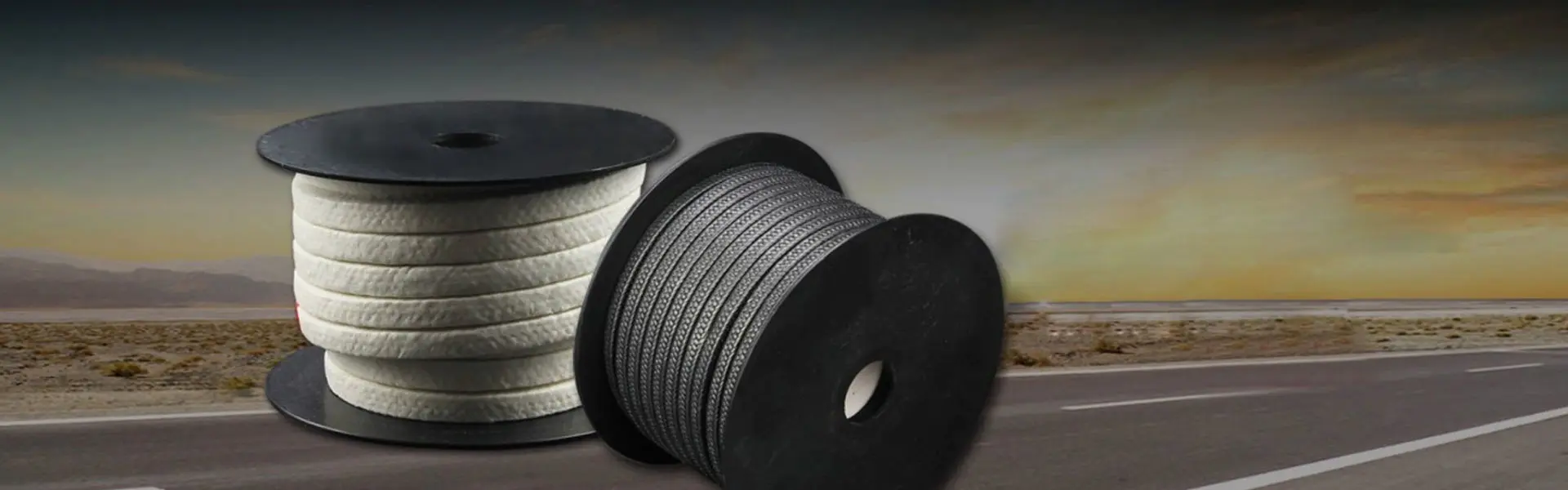
In the demanding world of industrial sealing, few materials offer the combination of strength, resilience, and thermal stability that carbon fiber packing does. Engineered for extreme service, carbon fiber packing is a premium sealing solution designed to handle aggressive media, high pressures, and elevated temperatures where traditional packings fail. At Kaxite Seals, we have refined the formulation and construction of our carbon fiber-based packings to deliver unparalleled sealing integrity, extended service life, and reduced maintenance costs for rotating and reciprocating equipment across critical industries.
Our high-performance packings are manufactured from high-strength, filament-reinforced carbon fibers, often combined with advanced lubricants and anti-wear additives. This creates a robust, self-lubricating structure that maintains its sealing force under dynamic conditions. Unlike generic braided packings, Kaxite Seals' carbon fiber packing exhibits minimal shaft wear, exceptional chemical resistance, and outstanding thermal conductivity, effectively dissipating frictional heat away from the sealing interface. This makes it the definitive choice for pumps, mixers, agitators, and valves in chemical processing, power generation, oil & gas, and pharmaceutical applications.
The superiority of Kaxite Seals' Carbon Fiber Packing stems from its unique material properties and precise engineering. Below are the core features that define its performance:
Selecting the correct packing requires a detailed understanding of its technical capabilities. The following table outlines the standard specifications for Kaxite Seals' Carbon Fiber Packing series. Custom formulations are available for specific applications.
| Parameter / Property | Specification / Value | Test Method / Notes |
|---|---|---|
| Material Composition | Carbon Filament Yarns, PTFE or Graphite Impregnation, Inorganic Lubricants | Core braid: High-purity carbon fiber; Fillers vary by grade |
| Temperature Range (Continuous) | -100°F to +600°F (-73°C to +315°C) | In air; Higher ranges achievable in steam/inert service |
| pH Range | 0 - 14 | Excellent resistance across full pH spectrum |
| Maximum Pressure (Dynamic) | Up to 2500 psi (172 bar) | Depends on shaft speed, size, and gland design |
| Shaft Speed (Maximum) | Up to 25 m/s (5000 ft/min) | Recommended for most standard pump applications |
| Density | 1.5 - 1.7 g/cm³ | Provides a robust seal with good flexibility |
| Thermal Conductivity | 15 - 25 W/m·K | Significantly higher than aramid or PTFE packings |
| Available Styles | Braided, Die-Formed Rings, Spool Packing, Lathe-Cut Coils | Standard sizes or custom-cut to your dimensions |
| Standard Sizes (Square Section) | 1/8", 3/16", 1/4", 5/16", 3/8", 1/2", 5/8", 3/4" | Other rectangular sizes available upon request |
| Color | Black (Standard) | Consistent with carbon fiber material |
Chemical resistance is a paramount consideration. The table below provides a general compatibility rating for Kaxite Seals Carbon Fiber Packing with common industrial media. Always consult our engineering team for specific fluid combinations.
| Chemical Media | Compatibility Rating | Remarks |
|---|---|---|
| Sulfuric Acid (various concentrations) | Excellent | Recommended for most concentrations at moderate temperatures. |
| Hydrochloric Acid | Excellent | Superior resistance; ideal for chemical transfer pumps. |
| Sodium Hydroxide (Caustic Soda) | Excellent | No degradation in strong alkaline environments. |
| Ammonia | Excellent | Suitable for both anhydrous and aqueous ammonia. |
| Hydrocarbons (Oil, Fuel, Solvents) | Excellent | No swelling or shrinkage; maintains seal. |
| Hot Water & Steam | Excellent | Standard choice for boiler feed pumps and steam services. |
| Strong Oxidizers (e.g., Conc. Nitric Acid) | Fair to Good | Consult for specific temperature and concentration limits. |
| Molten Salts & Metals | Not Recommended | Extreme temperatures require specialized materials. |
Q: What is the primary advantage of carbon fiber packing over traditional graphite or aramid packings?
A: The primary advantage is its exceptional combination of high tensile strength and outstanding thermal conductivity. While graphite packings are conductive and temperature-resistant, they can be mechanically weaker. Aramid packings are strong but have lower thermal conductivity, risking heat buildup. Kaxite Seals Carbon Fiber Packing offers superior strength to resist extrusion, excellent heat dissipation to prevent burnout, and broad chemical resistance, making it a more versatile and durable solution for demanding applications.
Q: How do I properly install carbon fiber packing rings?
A: Correct installation is critical for performance. Ensure the shaft/sleeve is clean, smooth, and within tolerance. Rings should be cut using a sharp blade on a mandrel of shaft diameter, with cuts staggered at 45-degree angles. Install rings one at a time, seating each firmly using a proper packing tool. Stagger the joints 90 to 120 degrees around the shaft. Follow the manufacturer's torque specifications for the gland follower, initially leaving it slightly loose to allow for a run-in period. After a short operational period, re-tighten to the recommended final torque. Kaxite Seals provides detailed installation guides with every order.
Q: Is carbon fiber packing suitable for high-speed pump applications?
A: Yes, it is an excellent choice for high-speed applications. Its inherent self-lubrication, low friction coefficient, and high thermal conductivity manage the frictional heat generated at high rotational speeds effectively. This prevents packing hardening and shaft scoring. For very high-speed applications (exceeding 25 m/s), Kaxite Seals offers specialized high-grade carbon fiber packing with enhanced lubricant systems and denser braid patterns to ensure stable, leak-free performance and maximum equipment protection.
Q: Can Kaxite Seals Carbon Fiber Packing handle abrasive slurries?
A: While carbon fiber packing has good resistance to many chemicals, its performance in highly abrasive slurries (e.g., fly ash, mining tailings) depends on the specific abrasives and concentrations. The carbon fibers themselves are very hard, but the packing style and additional fillers are key. For moderately abrasive services, our standard reinforced grades perform well. For severe abrasive slurry service, we recommend consulting with Kaxite Seals engineers for a custom solution, which may involve a composite packing or a different style better suited to trap and handle particulates.
Q: What is the typical service life I can expect?
A: Service life varies significantly based on operating conditions: fluid type, temperature, pressure, shaft speed, surface finish, and installation quality. Under standard conditions in a well-maintained pump handling hot water or a mild chemical, Kaxite Seals Carbon Fiber Packing can often provide 12 to 24 months of reliable service before needing adjustment or replacement—a life span typically 50-100% longer than standard braided packings. In more severe services, life will be shorter but generally exceeds that of alternative materials. Regular maintenance checks are essential to maximize lifespan.
Q: Does it require a break-in or run-in period?
A: Yes, a proper run-in period is crucial for optimal performance and longevity. After installation, the packing needs to seat itself against the shaft and gland walls. Start the equipment with the gland nuts finger-tight or very loose, allowing a slight initial leakage to cool and lubricate the packing. Gradually tighten the gland in small increments (usually 1/6 to 1/4 turn) at 15-30 minute intervals until the leakage is reduced to a controlled, minimal drip (typically 1-2 drops per minute). This process, which may take several hours, allows the packing to adapt without overheating, ensuring a stable, long-term seal.
Q: How does Kaxite Seals ensure the quality of its carbon fiber packing?
A: Kaxite Seals maintains rigorous quality control from raw material sourcing to final shipment. We use only certified, high-purity carbon fiber precursors. Our manufacturing process employs state-of-the-art braiding and impregnation equipment under controlled environments. Every batch is tested for key parameters such as density, tensile strength, lubricant content, and chemical resistance. Furthermore, we conduct performance validation testing in simulated service conditions. This commitment to quality ensures that every ring or spool of Kaxite Seals Carbon Fiber Packing delivers consistent, reliable performance that our customers can depend on for their most critical applications.


