


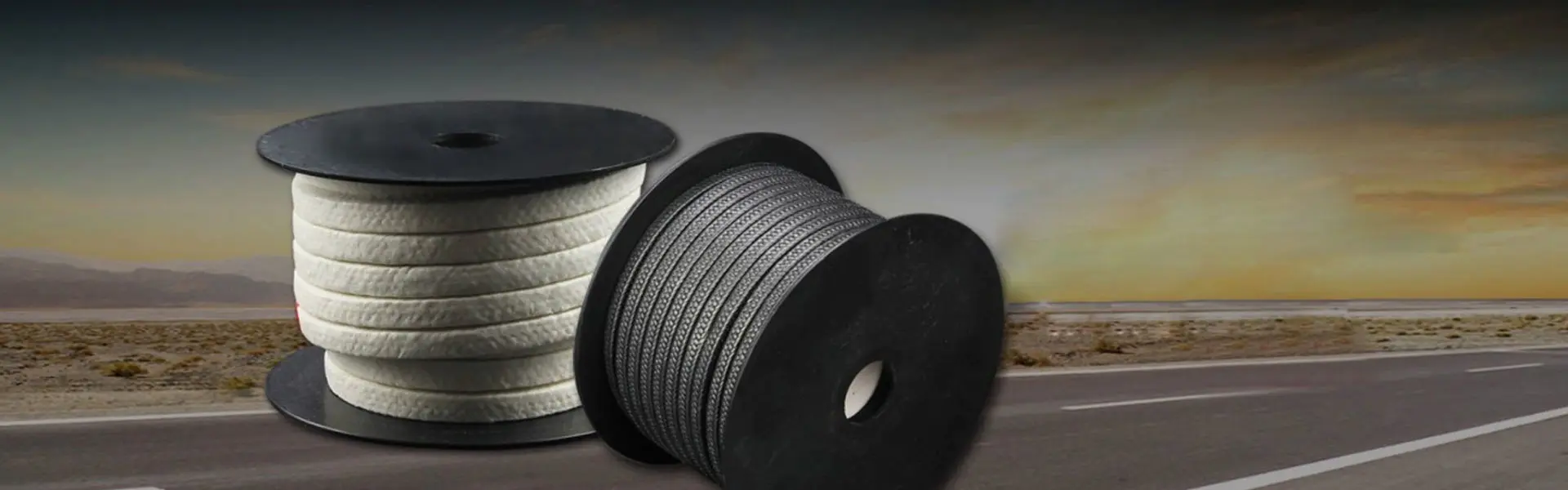
PTFE Fiber, or Polytetrafluoroethylene Fiber, represents a pinnacle of material engineering, renowned for its exceptional performance in the most demanding environments. As a specialized form of expanded PTFE, this advanced textile material inherits the legendary properties of Teflon™—such as supreme chemical resistance, a wide operating temperature range, and an extremely low coefficient of friction—while offering the flexibility, strength, and processability of a fabric. At Kaxite Seals, we have refined the production of high-quality PTFE fiber to create sealing solutions and industrial textiles that set the benchmark for reliability and longevity. This material is not merely a component; it is a critical asset in systems where failure is not an option, from aerospace and pharmaceutical processing to chemical manufacturing and high-purity food production.
The unique microstructure of PTFE fiber, characterized by its porous, node-and-fibril arrangement achieved through expansion processes, provides unparalleled versatility. It can be needled into high-performance felts, woven into robust fabrics, or skived into precise tapes. This adaptability allows engineers and designers to specify a material form that perfectly matches their application's mechanical, thermal, and chemical requirements. Kaxite Seals leverages this versatility to deliver custom-engineered sealing packings, gaskets, filtration media, and conveyor belts that outperform traditional materials like aramid, fiberglass, or graphite.
The superiority of PTFE fiber lies in its combination of inertness and durability. Its non-stick nature prevents material buildup, ensuring consistent performance and easy cleaning in processes involving adhesives or viscous fluids. Its exceptional dielectric strength makes it ideal for electrical insulation applications. Furthermore, as a inherently hydrophobic material, it repels water and oils, maintaining its properties in wet environments. Perhaps most importantly for dynamic applications, PTFE fiber exhibits excellent creep resistance and dimensional stability under load, meaning seals and packings maintain their shape and sealing force over extended periods, reducing maintenance downtime.
Kaxite Seals PTFE fiber is manufactured to precise specifications to ensure batch-to-batch consistency and predictable performance. Our fibers are available in various deniers, staple lengths, and finishes to suit different manufacturing processes, from wet-laid nonwovens to needle felting and spinning. The following table details the standard technical parameters of our flagship PTFE fiber product line.
| Parameter | Typical Value / Range | Test Method / Notes |
|---|---|---|
| Fiber Denier | 3.0 dTex, 6.7 dTex, 10 dTex | Custom deniers available upon request |
| Staple Length | 60 mm, 80 mm, 100 mm | Optimized for carding and needle punching |
| Tensile Strength | > 2.5 cN/dTex | ASTM D3822 |
| Elongation at Break | 15% - 45% | ASTM D3822 |
| Continuous Service Temperature | -268°C to +288°C (-450°F to +550°F) | Long-term thermal stability |
| Melting Point | 327°C (621°F) | ASTM D3418 |
| Limiting Oxygen Index (LOI) | > 95% | ASTM D2863; Essentially non-flammable |
| Specific Gravity | ~2.2 | ASTM D792 |
| Dielectric Strength | > 40 kV/mm | ASTM D149 |
| Coefficient of Friction (Dynamic) | 0.05 - 0.10 | ASTM D1894 |
| Chemical Resistance Rating | Excellent (E) for all common chemicals | Based on ASTM D543 testing |
When selecting a high-performance fiber, it is crucial to compare PTFE fiber against other common industrial materials. The table below provides a clear, at-a-glance comparison highlighting the distinct advantages of specifying Kaxite Seals PTFE fiber for critical applications.
| Material Property | PTFE Fiber | Aramid Fiber | Fiberglass | Carbon/Graphite Fiber |
|---|---|---|---|---|
| Max Continuous Temp. | +288°C (550°F) | +200°C (392°F) | +540°C (1000°F)* | +350°C (662°F) in inert atm. |
| Chemical Resistance | Excellent | Poor to Acids | Poor to HF & Strong Alkalis | Good (Oxidizes in air at high temp) |
| Flexibility/Hand | Excellent (Soft, Textile-like) | Good | Poor (Brittle) | Poor (Brittle) |
| Abrasion Resistance | Very Good | Excellent | Fair | Fair |
| Non-Stick Property | Excellent | Poor | Poor | Poor |
| Hydrophobicity | Excellent | Moderate | Poor | td>Poor|
| Primary Application Focus | Seals, Chemical Filters, Conveyor Belts | Ballistic Armor, Cut Resistance | Thermal Insulation, Composites | Structural Composites, High-Temp Seals |
* Note: While fiberglass can withstand higher temperatures, it becomes brittle and loses strength. PTFE fiber maintains flexibility and mechanical properties across its entire range.
Q: What is the primary difference between PTFE fiber and PTFE tape (skived tape)?
A: The fundamental difference lies in their structure and origin. PTFE tape is skived (shaved) from a solid, sintered PTFE block, resulting in a continuous, non-porous film or tape. PTFE fiber is created by expanding PTFE paste into a porous membrane, which is then fibrillated and processed into staple or continuous filament fibers. This gives PTFE fiber a textile-like quality—it can be woven, felted, or braided—offering greater design flexibility, higher tensile strength-to-weight ratios, and inherent porosity for filtration, which solid tape does not possess.
Q: Can Kaxite Seals PTFE fiber be used for packing in rotating equipment like pumps?
A: Absolutely. In fact, braided packings made from PTFE fiber are among the most common and effective applications. Kaxite Seals PTFE fiber packing is specifically engineered for centrifugal and rotary pumps handling corrosive fluids, acids, alkalis, and solvents. Its low friction coefficient minimizes heat generation and shaft wear, while its chemical inertness ensures the packing does not degrade. It often requires less gland adjustment and lubrication than traditional flax or aramid packings, leading to lower maintenance.
Q: How does PTFE fiber perform in high-temperature applications compared to fiberglass?
A: While fiberglass can tolerate higher peak temperatures (exceeding 500°C), it becomes extremely brittle and loses mechanical integrity upon thermal cycling. PTFE fiber maintains excellent flexibility, toughness, and sealability across its entire service range (up to 288°C continuous). It will not embrittle or develop micro-cracks from thermal shock. For dynamic sealing applications where flexibility is paramount, PTFE fiber is often the superior choice despite a lower maximum temperature threshold.
Q: Is PTFE fiber safe for use in food and pharmaceutical processing?
A: Yes, Kaxite Seals PTFE fiber is manufactured to meet stringent purity standards. It is compliant with U.S. FDA regulations (21 CFR 177.1550) and is suitable for repeated food contact. It is also USP Class VI certified, indicating its biocompatibility for pharmaceutical applications. The material does not support microbial growth, is non-toxic, and will not leach contaminants into sensitive processes, making it ideal for diaphragm seals, filter media, and conveyor belts in these industries.
Q: Can PTFE fiber be combined with other materials?
A: Yes, at Kaxite Seals, we often engineer composite materials to enhance specific properties. Common combinations include:
Q: How should products made from PTFE fiber be stored and handled?
A: PTFE fiber and its products are remarkably stable but benefit from proper handling. Store in a cool, dry place away from direct sunlight. Avoid contact with sharp edges or tools during installation to prevent cutting or fraying. While chemically resistant, it is good practice to keep it away from strong reducing agents like alkali metals. For cleaning, warm water and mild detergent are usually sufficient; avoid abrasive scrubbing pads that could damage the fibrillar structure.
Q: What are the key considerations when designing a seal with PTFE fiber?
A: Critical design factors include:


