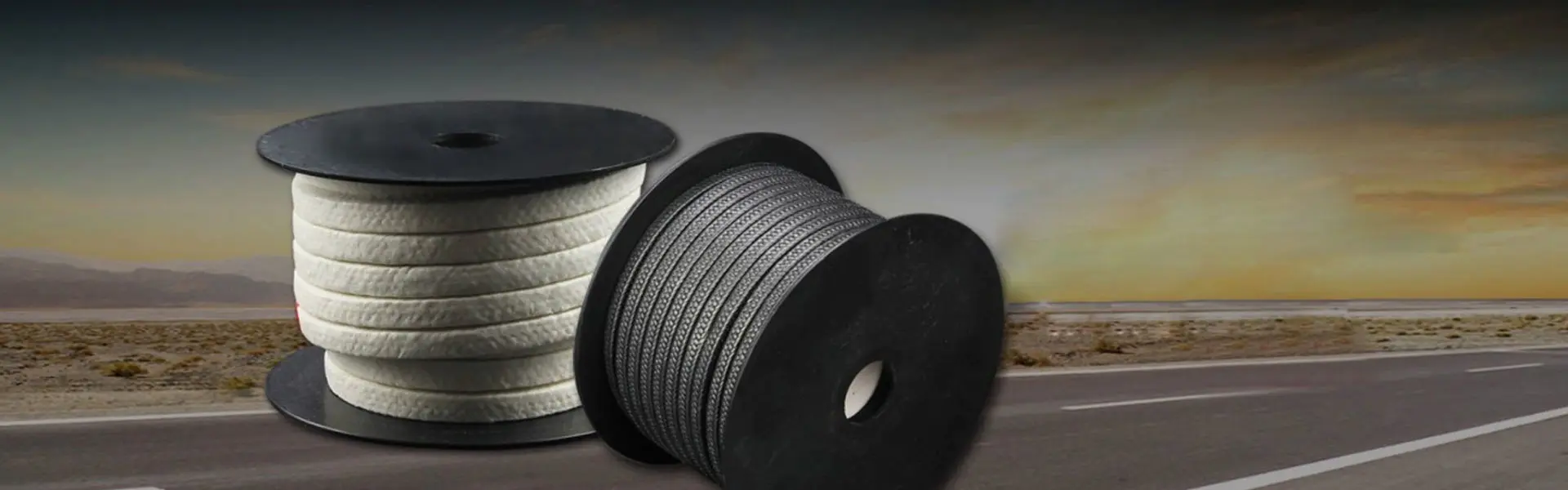
PTFE Film, commonly known as Polytetrafluoroethylene Film or Teflon® Film, represents a pinnacle of high-performance fluoropolymer materials. At Kaxite Seals, we engineer and supply premium-grade PTFE films that meet the most demanding industrial and technological requirements. This versatile material is celebrated for its exceptional chemical inertness, outstanding temperature resistance, low coefficient of friction, and excellent dielectric properties.
Our commitment at Kaxite Seals is to provide films that are not just materials, but engineered solutions for critical applications across aerospace, semiconductor manufacturing, medical devices, food processing, and electrical insulation.
### Core Properties and Advantages of Kaxite Seals PTFE Film
The intrinsic properties of PTFE make it an irreplaceable material in numerous high-stakes environments. Kaxite Seals films consistently deliver these key advantages:
* **Extreme Temperature Resistance:** Performs reliably in a continuous temperature range from -270°C to +260°C (-454°F to +500°F) without significant degradation.
* **Universal Chemical Resistance:** Virtually inert, it resists attack by almost all industrial chemicals, solvents, and aggressive agents.
* **Superb Non-Stick & Low Friction:** Possesses the lowest coefficient of friction of any solid material, providing excellent release properties and reducing wear.
* **Excellent Dielectric Strength:** An outstanding electrical insulator with high dielectric strength and a low dissipation factor across a wide frequency and temperature spectrum.
* **High Purity & Biocompatibility:** Grades are available that are USP Class VI compliant and suitable for food contact, making them ideal for medical and food processing applications.
* **Non-Flammability:** The material is inherently flame-retardant and meets various industry standards for flammability.
* **Weather & UV Resistance:** Unaffected by long-term exposure to sunlight, ozone, and harsh weather conditions.
### Detailed Product Parameters of Kaxite Seals PTFE Films
We offer a comprehensive range of
PTFE Film types to suit specific application needs. Below are the detailed parameters of our standard and engineered offerings.
#### Standard Film Types & Specifications
Kaxite Seals provides films in several standard forms, each with unique characteristics.
**Skived PTFE Film:**
Produced by precision skiving from a sintered billet, this film offers high strength, excellent dimensional stability, and good surface finish. It is ideal for gaskets, liners, and mechanical applications.
* **Thickness Range:** 0.025 mm to 3.0 mm (0.001" to 0.118")
* **Width:** Up to 1500 mm (59")
* **Standard Colors:** Natural white, black.
* **Key Features:** High tensile strength, low creep, uniform density.
**Cast PTFE Film:**
Manufactured by casting a PTFE dispersion, this film is characterized by its superior conformability, very smooth surface, and high purity.
* **Thickness Range:** 0.025 mm to 0.5 mm (0.001" to 0.020")
* **Width:** Up to 1600 mm (63")
* **Standard Colors:** Natural translucent.
* **Key Features:** Excellent chemical purity, very low particulate generation, excellent for sealing and diaphragm applications.
**Oriented PTFE Film (Expanded PTFE/ePTFE):**
Created by stretching PTFE to create a microporous structure, this film is breathable, lightweight, and highly flexible while retaining core PTFE properties.
* **Thickness Range:** 0.05 mm to 2.0 mm (0.002" to 0.079")
* **Width:** Up to 1200 mm (47")
* **Porosity:** Can be engineered from low to high permeability.
* **Key Features:** Waterproof yet breathable, excellent for filtration, venting, and medical barriers.
#### Technical Data Table: Comparative Properties
The following table provides a clear comparison of the typical properties across our main
PTFE Film product lines.
| Property |
Test Method |
Skived Film |
Cast Film |
Oriented (ePTFE) Film |
| Tensile Strength |
ASTM D638 |
20 - 35 MPa |
15 - 25 MPa |
10 - 50 MPa* |
| Elongation at Break |
ASTM D638 |
200 - 400% |
250 - 500% |
50 - 400%* |
| Dielectric Strength |
ASTM D149 |
> 100 kV/mm |
> 120 kV/mm |
40 - 100 kV/mm |
| Coefficient of Friction |
ASTM D1894 |
0.05 - 0.10 |
0.05 - 0.08 |
0.05 - 0.15 |
| Continuous Service Temp. |
- |
-270°C to +260°C |
-270°C to +260°C |
-240°C to +260°C |
| Density |
ASTM D792 |
2.15 - 2.20 g/cm³ |
2.15 - 2.18 g/cm³ |
0.4 - 1.5 g/cm³* |
*
Highly dependent on degree of expansion and porosity.
#### Specialized Grades and Modifications
Kaxite Seals goes beyond standard offerings with engineered solutions:
* **Glass Fiber Filled Film:** Enhanced compressive strength and reduced creep for heavy-duty gasketing.
* **Conductive PTFE Film:** Carbon or metal-filled variants for static dissipation or EMI/RFI shielding applications.
* **FDA-Compliant & USP Class VI Grades:** Certifiably pure films for food, pharmaceutical, and medical device manufacturing.
* **Pressure-Sensitive Adhesive (PSA) Backed Films:** For easy application and bonding to various surfaces without additional adhesives.
* **Custom Colors and Thicknesses:** Tailored to specific OEM requirements for branding or functional identification.
### Frequently Asked Questions (FAQ) About PTFE Film
What are the primary applications for PTFE Film?
PTFE Film is used in a vast array of industries. Key applications include high-temperature electrical insulation for wires and cables, non-stick liners for heat sealers and packaging equipment, release layers in composite manufacturing, chemically resistant gaskets and seals, breathable membranes in medical garments, diaphragms in pumps and valves, and as a substrate for flexible printed circuits.
How does Skived PTFE Film differ from Cast PTFE Film?
Skived film is mechanically shaved from a solid, sintered PTFE block, resulting in a denser, stronger film with superior mechanical properties and dimensional stability, making it perfect for machined parts and heavy-duty seals. Cast film is made from a PTFE dispersion dried on a belt, yielding a softer, more conformable film with exceptional smoothness, high purity, and uniformity, ideal for delicate seals and cleanroom applications.
Can PTFE Film be easily fabricated or converted?
Yes, Kaxite Seals PTFE films are highly fabricable. They can be cleanly die-cut, punched, stamped, slit, and skived to precise tolerances. They can also be heat-sealed (to themselves) and, with proper surface treatment (like sodium etching), can be laminated or bonded to other materials such as fabrics, foams, or metals.
Is PTFE Film safe for use in food and medical applications?
Absolutely. Pure, unfilled PTFE is biologically inert and non-toxic. Kaxite Seals offers specific grades that comply with FDA regulations (21 CFR 177.1550) for food contact and are certified USP Class VI for medical device applications. It is crucial to specify these compliant grades when designing for such uses.
What are the limitations of PTFE Film?
While exceptional in many areas, PTFE has some limitations. It has a relatively high coefficient of thermal expansion, which must be accounted for in dimensional design. It can be prone to creep (cold flow) under sustained heavy load, which can be mitigated using filled compounds. Pure PTFE is not radiation-resistant for prolonged periods. Additionally, it cannot be melt-processed like conventional plastics, limiting some fabrication techniques.
How do I select the right type of PTFE Film for my application?
Selection depends on your key performance requirements. For mechanical strength and stability, choose Skived Film. For high purity, conformability, and a smooth surface, choose Cast Film. For breathability, filtration, or lightweight sealing, choose Oriented (ePTFE) Film. Consider factors like required thickness, chemical exposure, temperature range, electrical needs, and regulatory compliance. The technical team at Kaxite Seals is always available to assist with material selection.
How should PTFE Film be stored and handled?
Store PTFE films in a cool, dry place away from direct sunlight and dust. Rolled films should be stored on end to prevent flattening. While chemically resistant, it is good practice to keep them clean before fabrication. Use standard workshop tools for cutting; no special handling is required, though wearing gloves is recommended to prevent oils from skin transferring to the film in critical clean applications.
Can Kaxite Seals provide custom-engineered PTFE Film solutions?
Yes, customization is a core strength at Kaxite Seals. We routinely work with clients to develop films with specific fillers (e.g., for wear resistance, conductivity), custom thicknesses and widths, unique porosity levels for ePTFE, specific adhesion treatments, and laminations with other materials. We provide comprehensive technical support from prototype development to full-scale production.