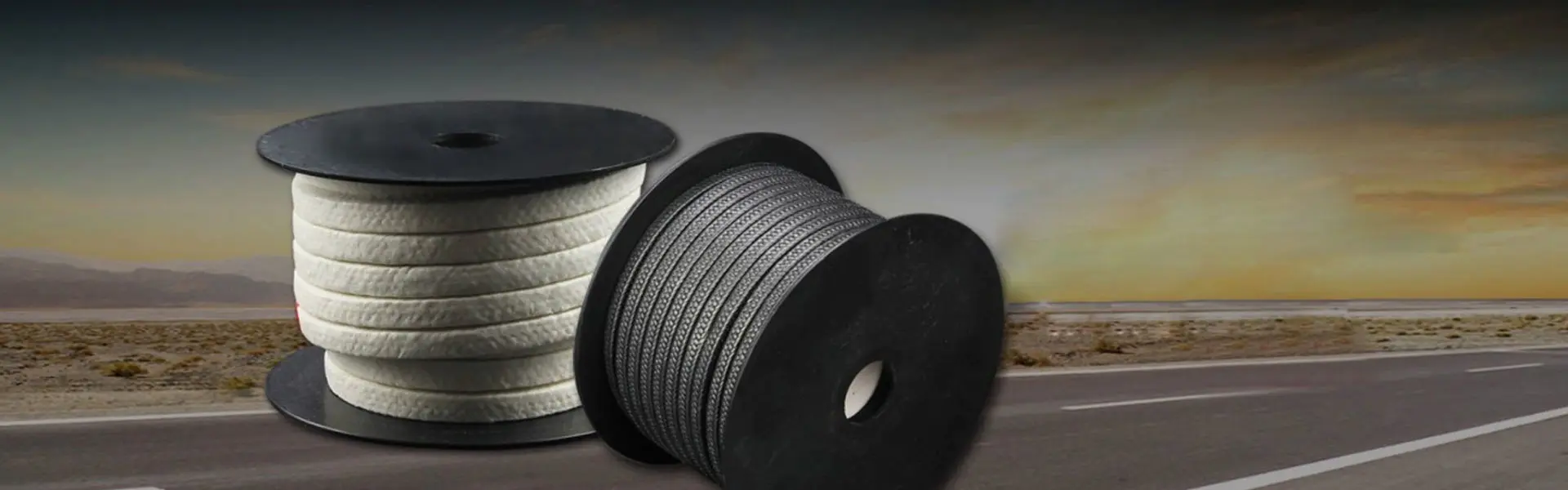
Graphite PTFE Packing is a premium sealing material engineered for demanding industrial applications where chemical resistance, thermal stability, and low friction are critical. As a leading manufacturer of high-performance sealing solutions, Kaxite Seals specializes in producing advanced Graphite PTFE Packing that meets the rigorous standards of modern processing industries. This material combines the unique benefits of expanded PTFE (Polytetrafluoroethylene) and high-purity graphite, resulting in a robust, versatile packing suitable for a wide range of services.
The core of the material consists of expanded PTFE, known for its exceptional chemical inertness and broad temperature range. This is intercalated or combined with high-grade graphite, which provides superior thermal conductivity, natural lubricity, and enhanced performance under compression. The synergy between these two materials creates a packing that is not only self-lubricating but also capable of handling aggressive media and extreme temperatures more effectively than many conventional options.
**Key Features and Benefits:**
* **Exceptional Chemical Resistance:** Inert to most industrial chemicals, solvents, and acids, making it suitable for corrosive environments.
* **Wide Temperature Range:** Performs reliably from cryogenic temperatures up to +550°F (+288°C) in oxidizing atmospheres and even higher in inert or reducing environments.
* **Low Friction & Self-Lubricating:** The inherent lubricity of both PTFE and graphite minimizes shaft wear and reduces breakout and running torque, leading to longer equipment life and energy savings.
* **Excellent Thermal Conductivity:** Graphite efficiently dissipates heat away from the shaft, preventing heat buildup and potential packing failure.
* **Non-Contaminating:** Clean-running and suitable for applications involving food, pharmaceuticals, or ultra-pure fluids where product purity is paramount.
* **Conformability:** Easily conforms to shaft surfaces and stuffing box geometries, ensuring a tight, effective seal with proper installation.
* **Long Service Life:** Resists hardening, cracking, and degradation over time, providing extended maintenance intervals and reduced downtime.
**Typical Applications for Graphite PTFE Packing**
This packing is the material of choice across numerous sectors:
* Chemical and Petrochemical Processing: Pumps, valves, and agitators handling acids, alkalis, and hydrocarbons.
* Pharmaceutical and Food & Beverage: Mixers, homogenizers, and filling equipment where FDA-compliance and cleanliness are required.
* Power Generation: Boiler feed pumps, condensate systems, and other utility services.
* Pulp and Paper: Pumps in bleaching and chemical recovery stages.
* Water and Wastewater Treatment: Centrifugal pumps and mixers.
* General Industrial: Any rotating or reciprocating equipment requiring a durable, chemical-resistant seal.
### Product Specifications and Technical Data
To ensure proper selection and performance, understanding the detailed specifications of Kaxite Seals' Graphite PTFE Packing is crucial. Below is a comprehensive breakdown of its parameters.
**Material Composition & Properties:**
| Property | Specification / Value | Test Method / Notes |
| :--- | :--- | :--- |
| **Base Materials** | Expanded PTFE, High-Purity Flake Graphite | - |
| **Form** | Braided Packing on Spools, Die-Formed Rings, Coil Packing | Available in various cross-sections (e.g., 1/4", 3/8", 1/2", 5/8") |
| **Color** | Black/Grey | - |
| **Specific Gravity** | 1.6 - 2.0 g/cm³ | ASTM D792 |
| **pH Range** | 0 - 14 | Suitable for full pH spectrum. |
| **Thermal Conductivity** | High | Graphite component facilitates heat dissipation. |
**Performance Characteristics Table:**
| Characteristic | Typical Value / Range | Conditions / Explanation |
| :--- | :--- | :--- |
| **Temperature Range** | -400°F to +550°F (-240°C to +288°C) | In air/oxidizing service. Up to +1200°F (+650°C) in non-oxidizing atmospheres. |
| **Maximum Shaft Speed** | Up to 25 m/s (5000 fpm) | For rotating applications; depends on equipment and conditions. |
| **Maximum Pressure** | Up to 2500 psi (172 bar) | For rotating shafts. Up to 5000 psi (345 bar) for static or slow-reciprocating service. |
| **Chemical Resistance** | Excellent | Resistant to virtually all chemicals except molten alkali metals and certain fluorine compounds at high temperature. |
| **Coefficient of Friction** | Very Low (0.05 - 0.10) | Dynamic, against polished stainless steel. |
| **Compression Recovery** | Good | Maintains seal under cyclic temperature and pressure changes. |
| **Thermal Expansion** | Low | Provides dimensional stability across the temperature range. |
**Standard Sizes & Packaging:**
Kaxite Seals' Graphite PTFE Packing is supplied in the following standard forms to suit different installation needs:
* **Braided Spools:** Continuous lengths of 50 ft (15.24 m) or 100 ft (30.48 m), available in various cross-sectional sizes (square or rectangular).
* **Die-Formed Rings:** Pre-cut rings for specific shaft/stuffing box diameters, ensuring a precise fit and faster installation.
* **Coil Packing:** Coiled lengths for convenient handling and storage.
**Available Cross-Sectional Sizes (inches and mm):**
* 1/8" x 1/8" (3.2mm x 3.2mm)
* 1/4" x 1/4" (6.4mm x 6.4mm)
* 3/8" x 3/8" (9.5mm x 9.5mm)
* 1/2" x 1/2" (12.7mm x 12.7mm)
* 5/8" x 5/8" (15.9mm x 15.9mm)
* 3/16" x 5/8" (4.8mm x 15.9mm)
* 1/4" x 1/2" (6.4mm x 12.7mm)
* Other sizes available upon request.
### Installation Guidelines for Optimal Performance
Proper installation is key to achieving the full potential and service life of Graphite PTFE Packing. Follow these general steps:
1. **Preparation:** Clean the stuffing box and shaft/sleeve thoroughly. Ensure all surfaces are smooth, undamaged, and free of old packing debris.
2. **Packing Selection:** Choose the correct cross-section size. A general rule is that the packing width should be approximately 1/8" to 1/4" less than the radial clearance of the stuffing box.
3. **Cutting Rings:** Cut individual rings using a sharp blade on a mandrel the exact size of the shaft diameter. Use a 45-degree scarf cut for braided packing, ensuring joints are staggered 90 to 120 degrees around the shaft.
4. **Installation:** Carefully install each ring one at a time, using a split bushing or proper tool to seat each ring firmly and evenly. Avoid twisting or over-stretching the rings.
5. **Gland Adjustment:** After installation, tighten the gland nuts finger-tight. Start the equipment and gradually tighten the gland in small increments (typically 1/6 of a turn) during warm-up until a slight leakage is observed (a few drops per minute). This initial leakage is necessary for lubrication and cooling. Allow the packing to run in and adjust further after several hours of operation if required.
### Frequently Asked Questions (FAQ) about Graphite PTFE Packing
**Q: What are the primary advantages of choosing Graphite PTFE Packing over traditional PTFE or graphite-only packings?**
A: Graphite PTFE Packing offers a superior balance of properties. Pure PTFE packing has excellent chemical resistance but can have higher friction and lower thermal conductivity. Pure graphite packing has outstanding thermal properties but may not be as chemically versatile or clean-running. The composite material from Kaxite Seals combines PTFE's broad chemical compatibility and low friction with graphite's excellent heat dissipation and self-lubrication under high temperatures, resulting in a more robust, longer-lasting seal for a wider array of challenging conditions.
**Q: Is Kaxite Seals' Graphite PTFE Packing suitable for use in food-grade or pharmaceutical applications?**
A: Yes, our specific grades of Graphite PTFE Packing are manufactured using components that comply with relevant FDA regulations for indirect food contact and other pharmaceutical standards. The material is non-toxic, non-contaminating, and clean-running, making it ideal for pumps and mixers in these sensitive industries. It is critical to specify your application requirements when ordering to ensure you receive the compliant grade.
**Q: How does this packing perform with abrasive fluids or slurries?**
A: While Graphite PTFE Packing has good wear resistance, highly abrasive fluids can accelerate wear on any soft packing material. For such applications, Kaxite Seals often recommends a reinforced variant or a different material composition. In moderate abrasive service, proper flushing plans and correct gland adjustment are essential to flush abrasive particles away from the packing interface and extend service life significantly.
**Q: What is the maximum pressure and temperature this packing can handle consistently?**
A: For dynamic sealing on rotating shafts, Kaxite Seals' Graphite PTFE Packing is typically rated for pressures up to 2500 psi (172 bar) and temperatures from -400°F to +550°F (-240°C to +288°C) in air. In static applications or very slow reciprocating service, it can handle pressures up to 5000 psi (345 bar). In non-oxidizing or reducing atmospheres, the temperature resistance can extend up to approximately 1200°F (650°C). Always consult Kaxite Seals' engineering data for your specific service conditions.
**Q: Does this packing require a break-in period, and what is the expected leakage rate?**
A: Yes, like most compression packings, a proper break-in period is essential. Initial adjustment should allow a slight visible leakage (a few drops per minute) to provide lubrication and cooling during the run-in phase, which can last several hours. After the packing has seated and conditioned, the leakage should diminish to a minimal film or occasional drop. Attempting to achieve zero leakage from the start will cause excessive friction, heat buildup, and rapid packing failure.
**Q: Can this packing be used on mixers with significant shaft runout or in older equipment with worn shafts?**
A: Graphite PTFE Packing is relatively forgiving and conformable, which makes it a good choice for equipment with minor shaft imperfections or runout. Its self-lubricating nature helps prevent shaft scoring. However, for equipment with severe runout or significant shaft wear, the primary recommendation is always to repair or replace the worn components. Using packing as a fix for mechanical issues will lead to short seal life and potential equipment damage. Kaxite Seals can advise on the best sealing strategy for such scenarios.
**Q: How do I determine the correct size and number of packing rings to order?**
A: You need to know the shaft diameter and the stuffing box bore diameter and depth. The packing cross-section is calculated as: (Stuffing Box Bore - Shaft Diameter) / 2. The number of rings is the stuffing box depth divided by the packing cross-sectional width. Our technical support team at Kaxite Seals can assist with these calculations and provide pre-cut ring sets for your exact dimensions, simplifying inventory and installation.
**Q: Is this packing compatible with all pump and valve types?**
A: Kaxite Seals' Graphite PTFE Packing is compatible with a vast majority of centrifugal pumps, rotary pumps, mixers, agitators, and valves (both stem and gate). It is suitable for both rotating and reciprocating motion, though speed and pressure limits differ. It is generally not recommended for high-speed, precision applications like some compressor rods where alternative sealing methods might be more appropriate.