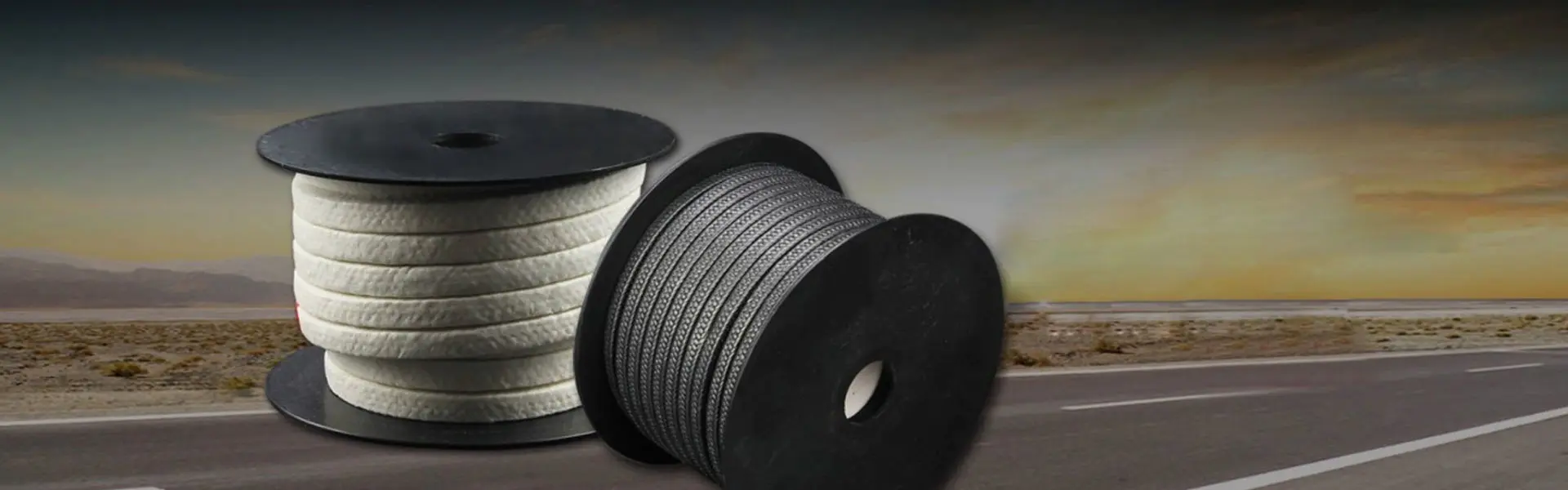
Expanded graphite gaskets represent a pinnacle of sealing technology, engineered to provide superior performance in the most demanding industrial environments. At Kaxite Seals, we specialize in manufacturing high-quality expanded graphite gaskets that meet and exceed the rigorous standards of various global industries. Unlike traditional gasket materials, our products are crafted from pure, exfoliated graphite, offering a unique combination of flexibility, thermal stability, and chemical resistance. This makes them an indispensable component for flanged connections in systems handling extreme temperatures, aggressive media, and high pressures. Our commitment at Kaxite Seals is to deliver sealing solutions that ensure long-term reliability, safety, and efficiency for your operations, minimizing downtime and maintenance costs.
Understanding the core properties of expanded graphite is key to appreciating its value. The material is produced by treating natural graphite flake with intercalation compounds and then rapidly heating it. This process causes the graphite layers to expand or exfoliate, creating a vermiform (worm-like) structure. This structure is then calendared into flexible sheets or foils without the use of binders. The result is a gasket material with exceptional characteristics:
* **High Temperature Resistance:** Capable of continuous operation from cryogenic temperatures up to 1600°F (870°C) in non-oxidizing atmospheres, and up to 1000°F (540°C) in oxidizing environments.
* **Excellent Chemical Resistance:** Inert to a wide range of chemicals, including acids, alkalis, solvents, and hydrocarbons, with the exception of strong oxidizing agents.
* **Superior Sealability:** The soft, conformable nature of graphite allows it to flow into microscopic imperfections on flange faces, creating a tight, leak-free seal even at low bolt loads.
* **Thermal Conductivity:** Excellent thermal conductivity helps dissipate heat evenly across the flange, reducing thermal stress and hot spots.
* **Stress Relaxation Resistance:** Exhibits minimal creep relaxation compared to many polymer-based gaskets, maintaining sealing force over long periods and thermal cycles.
* **Flexibility and Compressibility:** Can be easily cut and formed into complex shapes and provides effective sealing on uneven or slightly damaged flanges.
### Technical Specifications & Product Parameters of Kaxite Seals Expanded Graphite Gaskets
Our expanded graphite gaskets are available in multiple forms to suit specific application requirements. Below are the detailed parameters for our standard sheet and foil products, as well as custom-manufactured gaskets.
**Standard Sheet & Foil Properties:**
| Property | Test Method / Condition | Typical Value Range | Units |
| :--- | :--- | :--- | :--- |
| **Density** | ISO 21305-1 | 0.9 - 1.15 | g/cm³ |
| **Tensile Strength** | ASTM F152 | 4.5 - 7.0 (Machine Direction) | MPa |
| **Compressibility** | ASTM F36 | 40 - 60 | % |
| **Recovery** | ASTM F36 | 15 - 25 | % |
| **Stress Relaxation** | ASTM F38 | ≤ 15 | % |
| **Thermal Conductivity** | 100°C | 80 - 120 | W/(m·K) |
| **Continuous Temperature** | In Air (Oxidizing) | Up to 540 (1000) | °C (°F) |
| | Inert / Reducing | Up to 870 (1600) | °C (°F) |
| **pH Value** | Aqueous Extract | 5 - 7 | - |
| **Chloride Content** | Typically | < 50 | ppm |
| **Sulfur Content** | Typically | < 1000 | ppm |
**Available Forms & Configurations from Kaxite Seals:**
* **Plain Sheets & Rolls:** For on-site fabrication of gaskets, available in various thicknesses (0.4mm, 0.5mm, 0.8mm, 1.5mm, 3.0mm).
* **Die-Cut Gaskets:** Precision-cut to customer-provided drawings for ANSI, DIN, JIS, and other standard or custom flange dimensions.
* **Jacketed Gaskets:** Our graphite is often combined with metal inserts (e.g., stainless steel 304/316, Monel, titanium) or used as a filler in metal jacket gaskets (e.g., double-jacket, corrugated metal core) for enhanced blow-out resistance and handling strength in high-pressure applications (> Class 600).
* **Spiral Wound Gaskets:** Expanded graphite is used as the flexible filler material in conjunction with alternating windings of metal strip (V-profile), offering excellent resilience and performance for a broad range of pressures and temperatures.
* **Rings & Sets:** Supplied as complete gasket sets for heat exchangers, reactors, and other complex assemblies.
**Material Selection Guide:**
For optimal performance, the correct grade must be selected based on the service environment.
| Application Environment | Recommended Kaxite Seals Graphite Grade | Key Features |
| :--- | :--- | :--- |
| General Purpose, Oxidizing Atmospheres | KX-GPH-101 | Standard purity, excellent general service performance up to 540°C. |
| High Purity / Low Chloride (e.g., Pharmaceuticals, Food) | KX-GPH-201 | Chloride content < 10 ppm, low sulfur, certified for clean processes. |
| High-Temperature Reducing/Inert Atmospheres | KX-GPH-301 | Optimized for furnace, reactor, and heat treatment applications. |
| Graphite with Reinforcements | KX-GPH-401 | Laminated with thin metal or wire mesh for improved handling and mechanical strength. |
### Frequently Asked Questions (FAQ) About Expanded Graphite Gaskets
**What are the main advantages of expanded graphite gaskets over traditional asbestos or rubber gaskets?**
Expanded graphite gaskets offer significant advantages including a much wider temperature range, superior chemical resistance (especially to hydrocarbons and solvents), and excellent sealability at low flange pressures. They are non-toxic, environmentally friendly, and provide better long-term stress relaxation resistance, leading to a more reliable seal with less need for re-torquing compared to many elastomeric gaskets.
**Can expanded graphite gaskets be used for all types of flanges and fluids?**
While exceptionally versatile, they are not universal. They are highly recommended for most hydrocarbon processing, chemical, power generation, and high-temperature heating applications. However, they should not be used with strong oxidizing agents like concentrated nitric acid, sulfuric acid above 98%, or bromine at high temperatures. Always consult the Kaxite Seals technical datasheet or our engineering team for specific media compatibility.
**How do I determine the correct thickness and density for my application?**
The selection depends on flange type, surface finish, pressure, and temperature. As a general rule:
* For standard raised face flanges (RF) with a serrated finish, a 1.5mm thickness is common.
* For flat face (FF) or smooth finish flanges, a thinner gasket (0.8mm) may be sufficient.
* Higher density gaskets (closer to 1.15 g/cm³) offer better mechanical strength and extrusion resistance for higher pressures, while lower densities (around 0.9 g/cm³) provide higher compressibility for imperfect flanges. Our technical support can assist with precise selection.
**Why is low chloride content important in some graphite gaskets?**
In applications involving stainless steel flanges and elevated temperatures, the presence of chlorides can lead to Stress Corrosion Cracking (SCC), a serious and catastrophic form of corrosion. For critical services in chemical processing, power plants (particularly nuclear), and offshore platforms, specifying a low-chloride grade like Kaxite Seals' KX-GPH-201 is essential to prevent this failure mode.
**What is the shelf life of an expanded graphite gasket?**
When stored properly in its original, unopened packaging in a cool, dry place away from direct sunlight and oxidizing chemicals, an expanded graphite gasket has an almost indefinite shelf life. The material itself does not degrade or harden over time like elastomers.
**Can I reuse an expanded graphite gasket after it has been compressed?**
It is strongly discouraged. Once compressed, the graphite's internal structure has deformed to match the specific flange face imperfections. Reusing it on a different flange or even re-installing it on the same flange after disassembly may not provide the same leak-tight seal, as the material may have undergone some relaxation or may not re-conform perfectly. For critical sealing integrity, always use a new gasket.
**How do I handle and install expanded graphite gaskets properly?**
Handle with clean hands or gloves to avoid contamination. Ensure flange faces are clean, dry, and free of old gasket material and scratches. Do not use sealants or adhesives. Center the gasket carefully on the flange. Use a cross-bolt tightening pattern (star pattern) and tighten in multiple incremental steps (typically 30%, 60%, 100% of final torque) to achieve even compression. Always follow the equipment manufacturer's or relevant standard's (e.g., ASME PCC-1) bolt-torquing procedures.
**What are jacketed gaskets, and when should I use them instead of plain graphite?**
Jacketed gaskets consist of a soft expanded graphite filler enclosed in a metallic shell (usually stainless steel). They are used for higher pressure applications, for services with severe thermal cycling, or where the graphite alone might be prone to mechanical damage during handling or installation. The metal jacket contains the graphite, prevents blow-out, and provides structural stability. Kaxite Seals offers a full range of jacketed gasket designs.
**Are Kaxite Seals expanded graphite gaskets certified?**
Yes, our manufacturing process and specific product grades can be supplied with relevant certifications such as ISO 9001:2015 for quality management. Low-chloride grades can be provided with material test reports (MTRs) certifying chemical composition. We can also produce gaskets to meet specific industry standards like API 601, ASME B16.20, and DIN EN 1514-1.