


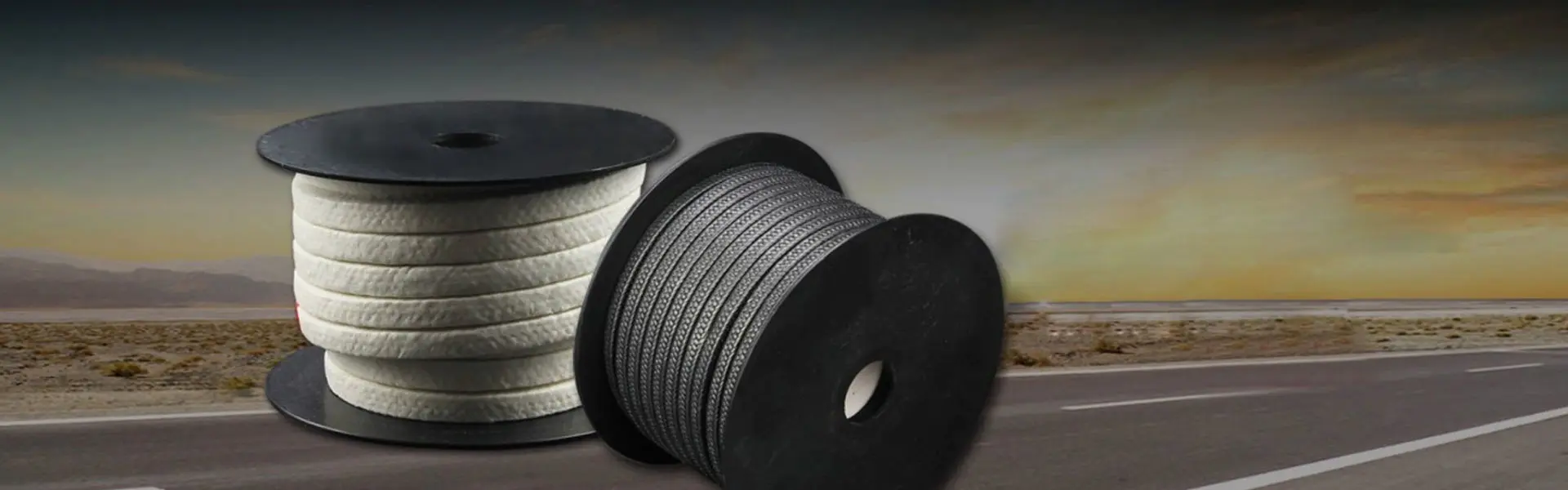
Non-asbestos gaskets are specialized sealing components engineered to replace traditional asbestos-based materials. As industries worldwide phased out asbestos due to its severe health risks, these advanced gaskets emerged as the superior, safe, and high-performance alternative. They are designed to create a reliable seal between two mating surfaces, preventing leakage of fluids or gases under various pressure and temperature conditions. At Kaxite Seals, we specialize in manufacturing premium non-asbestos gaskets that meet rigorous international standards, ensuring safety without compromising on durability or sealing efficiency. These gaskets are integral to operational safety, environmental protection, and equipment longevity in demanding applications.
Selecting the right sealing material is critical for system integrity. Our non-asbestos gaskets offer a compelling set of benefits:
Kaxite Seals non-asbestos gaskets are engineered to precise specifications. Below are the core parameters that define our product range.
Our gaskets are composite materials, typically consisting of:
| Property | Typical Value / Range | Test Standard | Significance |
|---|---|---|---|
| Density | 1.6 - 2.0 g/cm³ | ASTM D380 | Indicates material compactness and quality. |
| Tensile Strength | ≥ 8.0 MPa | ASTM F152 | Measures resistance to pulling forces. |
| Compression Set | ≤ 40% | ASTM F36 | Shows ability to recover after compression; lower is better. |
| Temperature Range | -40°C to +400°C (-40°F to +752°F)* | ASTM D412 | Defines safe operating thermal limits. |
| pH Range | 2 - 12 | N/A | Suitable for most acidic and alkaline media. |
| Flammability | Self-extinguishing | ASTM D229 | Enhanced fire safety characteristic. |
Kaxite Seals offers a variety of grades tailored for specific applications:
These are available in sheets, rolls, or custom-cut shapes (rings, full-face, etc.) to meet exact flange specifications.
Q: What exactly are non-asbestos gaskets made of?
A: Non-asbestos gaskets are composite sheets made from organic or inorganic fibers (such as aramid, glass, or cellulose) bound together by an elastomer like nitrile or styrene-butadiene rubber. Fillers and other additives are included to enhance specific properties like heat resistance, flexibility, or chemical stability. This composition provides a safe, durable, and effective sealing solution.
Q: Are non-asbestos gaskets as durable and effective as the old asbestos ones?
A: Yes, modern non-asbestos gaskets from reputable manufacturers like Kaxite Seals are not only as effective but often superior. Advancements in material science have produced fibers and binders that match or exceed the temperature resistance, strength, and sealing capability of asbestos. They also offer better creep relaxation and recovery, leading to a more reliable, longer-lasting seal without the associated health hazards.
Q: In which industries are non-asbestos gaskets commonly used?
A: They are used across virtually every industry that requires pipeline or flange sealing. Key sectors include Oil & Gas (for refineries and pipelines), Chemical Processing, Power Generation (including nuclear), Marine & Shipbuilding, Pharmaceutical Manufacturing, Food & Beverage Processing, and Water Treatment facilities. Any application requiring a safe, robust seal is a candidate for these gaskets.
Q: How do I select the right non-asbestos gasket for my application?
A: Selection requires considering several factors: the fluid or gas being sealed (chemical compatibility), the continuous operating temperature and pressure, the flange type and surface finish, and any regulatory requirements (e.g., FDA, TA-Luft). Consulting the manufacturer's technical data sheets is crucial. Kaxite Seals provides comprehensive support to help customers choose the correct grade (e.g., NA4000 for fuel oil) based on these parameters.
Q: How should non-asbestos gaskets be installed for optimal performance?
A: Proper installation is key. Ensure flange surfaces are clean, undamaged, and aligned. Use a new gasket—never reuse an old one. Follow a star-pattern bolt tightening sequence to apply even compression, torquing bolts to the manufacturer's specified values in multiple stages. This prevents over-compression (which can damage the gasket) or under-compression (which can cause leaks). Refer to ASME PCC-1 guidelines for best practices.
Q: Can Kaxite Seals provide custom-shaped non-asbestos gaskets?
A: Absolutely. Kaxite Seals specializes in providing both standard sheet stock and precision die-cut or CNC-cut gaskets in any custom shape or size. We can produce full-face, ring-type, or irregular shapes to match your exact blueprints or flange dimensions, ensuring a perfect fit and optimal seal for specialized equipment.
Q: What certifications do Kaxite Seals non-asbestos gaskets hold?
A: Our manufacturing process and products are designed to meet and exceed major international standards. We hold certifications and our materials are tested for compliance with standards such as ISO 9001 for quality management, and our products meet performance specifications outlined in ASTM F104, DIN 3754, and JIS B 2403. Specific grades are also tested for FDA compliance where required.


