


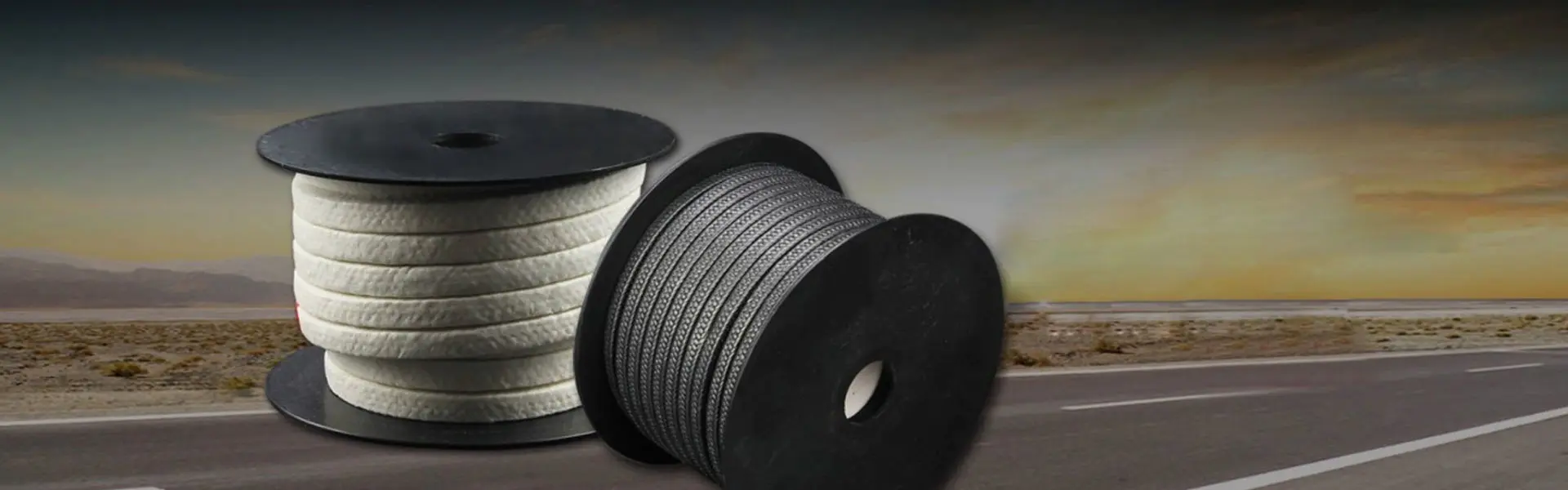
In the intricate world of industrial operations, the reliability of your equipment hinges on the smallest, yet most critical components: Packing materials. These unsung heroes form the primary seal in pumps, valves, mixers, and other rotary or reciprocating equipment, preventing leaks, containing pressure, and excluding contaminants. Choosing the wrong packing can lead to catastrophic downtime, significant product loss, and severe safety hazards. At Kaxite Seals, with our decades of engineering expertise, we provide a comprehensive range of high-performance packing solutions designed to meet the most demanding applications across diverse industries, from chemical processing and water treatment to power generation and marine.
Our philosophy is rooted in understanding that no single packing material fits all scenarios. Factors such as media (the fluid being sealed), temperature, pressure, shaft speed (PV value), and pH levels dictate the optimal choice. This guide delves into the core product parameters that define performance and longevity, empowering you to make an informed decision.
Evaluating packing materials requires a close look at their technical specifications. Below is a detailed breakdown of the key parameters we engineer into every Kaxite Seals product.
To illustrate our product range's capabilities, here is a comparative table of our flagship packing materials. This matrix serves as a starting point for selection.
| Product Name | Primary Material | Temp. Range (°F/°C) | Max. Pressure (psi/bar) | pH Range | Best For |
|---|---|---|---|---|---|
| KaxiBraide PTFE | Pure White PTFE Filament | -100 to 500°F / -73 to 260°C | 2,500 psi / 172 bar | 0-14 | Aggressive chemicals, food & pharmaceutical, high purity |
| KaxiFlex Aramid | Aramid Fiber (e.g., Kevlar®) | -40 to 500°F / -40 to 260°C | 3,000 psi / 207 bar | 2-12 | High-pressure steam, hot oils, abrasive slurries |
| KaxiCarbon Graphite | Reinforced Flexible Graphite | -400 to 1200°F / -240 to 650°C (inert atm.) | 2,200 psi / 152 bar | 0-14 (excluding strong oxidizers) | Extreme temperatures, heat exchangers, valve stems |
| KaxiGuard GFO | Graphite Fiber & Inorganic Oxide | -100 to 1200°F / -73 to 650°C | 3,500 psi / 241 bar | 1-13 | High-temperature pumps & valves, fire-safe applications |
| Kaxilube 9000 | PTFE-Impregnated Specialty Fibers | -50 to 450°F / -46 to 232°C | 1,800 psi / 124 bar | 4-10 | General service, water, mild chemicals, easy installation |
Beyond the matrix, understanding the nuanced properties of each material family is crucial.
Polytetrafluoroethylene (PTFE) packing is renowned for its near-universal chemical inertness and low friction.
Aramid fibers offer exceptional strength, thermal stability, and resistance to abrasion.
Flexible graphite is the go-to material for extreme temperatures and high thermal cycling.
Q: How do I determine the correct size and quantity of packing rings for my pump or valve?
A: The correct size is determined by the shaft or stem diameter and the stuffing box bore diameter. The packing cross-section is calculated as (Bore Diameter - Shaft Diameter) / 2. The number of rings required depends on the depth of the stuffing box; a general rule is 5-7 rings for pumps and 4-6 for valves. Always refer to the equipment manual. Kaxite Seals provides detailed sizing charts and technical support to assist with this calculation.
Q: What is the proper procedure for installing braided packing?
A: Proper installation is critical. Clean the stuffing box thoroughly. Rings should be cut using a sharp blade on a mandrel of the exact shaft diameter—never cut freehand. Stagger the joints by 90 degrees on successive rings. Use a split bushing or appropriate tool to seat each ring firmly without over-compressing. Tighten the gland follower hand-tight only initially, then adjust after the equipment has been run and warmed up, allowing for run-in wear.
Q: Can packing materials be used for both rotary and reciprocating motion?
A: Most braided packings, like our KaxiFlex Aramid and Kaxilube 9000, are designed to handle both types of motion. However, the choice of material and style is influenced by the motion. Reciprocating applications often benefit from softer, more conformable packings with good radial recovery, while high-speed rotary applications require materials with excellent heat dissipation and wear resistance, such as our KaxiGuard GFO. Always confirm the application details with the manufacturer's specifications.
Q: How often should packing be adjusted or replaced?
A: Adjustments are typically needed during the initial run-in period (first 24-48 hours) to compensate for seating. After that, a slight weep of fluid is normal for cooling and lubrication. If leakage becomes excessive (more than a few drops per minute) and cannot be controlled by gentle gland adjustment, replacement is necessary. Service life varies widely based on operating conditions, but with proper material selection and installation, Kaxite Seals packing can last for many months or even years in moderate service.
Q: What is the difference between "braided" and "die-formed" packing?
A: Braided packing, like most of our products, is created by interweaving yarns into a square, round, or ply-over style. It offers flexibility, ease of installation, and conformability. Die-formed (or molded) packing is pre-shaped into solid rings under high pressure and temperature. It provides very consistent density and dimensional accuracy, excellent for automated installation and applications requiring minimal adjustment. Kaxite Seals offers both types, with our die-formed rings excelling in high-volume, repeatable sealing tasks.
Q: Are there packing materials suitable for potable water or food-grade applications?
A: Absolutely. For these sensitive applications, non-toxic and FDA-compliant materials are mandatory. Our KaxiBraide PTFE packing made from 100% virgin PTFE is an excellent choice as it is inert, non-tainting, and meets relevant food and water contact regulations. Other options include pure flax packing with food-grade lubricants. Always specify the need for food-grade or NSF-certified materials when ordering.
Selecting the optimal packing material is a technical decision that directly impacts operational efficiency, safety, and maintenance costs. The detailed parameters and comparisons provided here are foundational. For applications involving unique media combinations, extreme conditions, or critical safety requirements, the engineering team at Kaxite Seals is available to perform a detailed analysis and recommend a customized sealing solution. Our goal is to ensure your equipment runs seamlessly, with maximum uptime and minimal environmental impact.


