


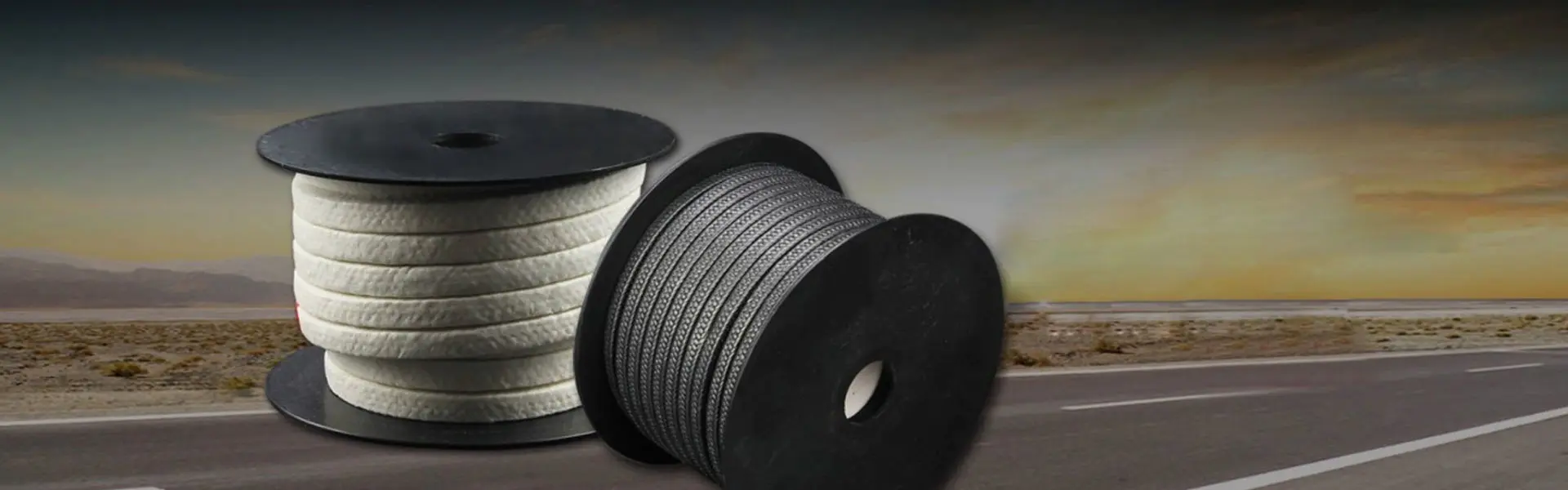
In the world of industrial sealing, reliability, chemical resistance, and longevity are non-negotiable. Among the myriad of materials available, PTFE Packing stands out as a premier choice for engineers and maintenance professionals tackling the most aggressive media and extreme conditions. Known chemically as Polytetrafluoroethylene, PTFE packing offers a near-universal compatibility that few other materials can match. At Kaxite Seals, we have refined the manufacturing and application of PTFE-based sealing products to deliver unmatched performance in pumps, valves, mixers, and compressors across diverse sectors from chemical processing and pharmaceuticals to food and beverage, and water treatment.
This specialized form of sealing utilizes the inherent properties of PTFE—its exceptional lubricity, wide temperature tolerance, and complete inertness to most chemicals—to create a dynamic seal that maintains integrity under pressure and movement. Unlike traditional packing materials that may degrade, swell, or cause significant shaft wear, high-quality PTFE packing provides a robust seal that minimizes friction, reduces maintenance downtime, and extends the operational life of rotating equipment. Choosing the correct packing style, braid, and filament type is critical to optimizing performance, which is why understanding the detailed specifications and application guidelines is essential.
The following tables outline the standard specifications for our range of PTFE packing products. These parameters are crucial for proper selection and installation.
| Product Code | Description | Primary PTFE Form | Additives / Fillers | Typical Color |
|---|---|---|---|---|
| KX-PTFE-100 | Pure White PTFE Yarn Packing | 100% Virgin PTFE Fibers | None | White |
| KX-PTFE-250 | Graphite-Filled PTFE Braided Packing | PTFE Filament Yarn | 15-20% Premium Graphite | Black |
| KX-PTFE-300 | Carbon-Filled PTFE Braided Packing | PTFE Fibers & Film | 15-25% Amorphous Carbon | Black |
| KX-PTFE-450 | PTFE/Inconel® Wire Reinforced Packing | Expanded PTFE & Fibers | Inconel 625 Wire | Silver/Grey |
| KX-PTFE-500 | FDA Compliant PTFE Packing | 100% Virgin PTFE, USP Class VI | None | White |
| Parameter | Test Standard | KX-PTFE-100 | KX-PTFE-250 | KX-PTFE-450 | KX-PTFE-500 |
|---|---|---|---|---|---|
| Density (g/cm³) | ASTM D792 | 1.1 - 1.3 | 1.4 - 1.6 | 2.0 - 2.2 | 1.1 - 1.3 |
| Tensile Strength (MPa) | ASTM D2256 | ≥ 120 | ≥ 100 | ≥ 150 | ≥ 110 |
| Temperature Range (°C) | Continuous Service | -260 to +260 | -200 to +280 | -200 to +290 | -260 to +260 |
| pH Range | Full Spectrum | 0 - 14 | 0 - 14 | 0 - 14 | 0 - 14 |
| Shaft Speed (m/s) | Max Recommended | 20 | 18 | 25 | 18 |
| Pressure (Bar) | Max Dynamic | 25 | 30 | 45 | 20 |
Q: What is the main difference between pure PTFE packing and graphite/carbon-filled PTFE packing?
A: Pure PTFE packing, like our KX-PTFE-100, is made from 100% virgin PTFE fibers and is ideal for applications requiring absolute chemical purity, non-contamination, and FDA compliance. Graphite or carbon-filled PTFE packing, such as KX-PTFE-250/300, incorporates these fillers to enhance thermal conductivity, reduce friction further, and improve wear resistance. The fillers help dissipate heat from the packing area more effectively, which is beneficial in high-speed or high-pressure applications, and can provide better sealing with lower breakout torque.
Q: How do I properly install and adjust PTFE packing in a pump stuffing box?
A: Correct installation is key to performance. First, ensure the shaft/stem and stuffing box are clean and free of old packing debris. Cut new packing rings using a mandrel or by wrapping around the shaft, using a sharp knife for a clean, square cut—never use scissors. Stagger the ring joints by 90 degrees as you install each ring. Use a proper packing tool to seat each ring firmly but without excessive force. After installing all rings (typically 4-6), tighten the gland follower finger-tight only. Start the equipment and allow it to run for a brief period to let the packing heat up and conform. Then, make gradual adjustments to the gland nut—no more than a quarter turn at a time—until a slight leakage (a few drops per minute) is observed for cooling and lubrication. Overtightening will cause excessive heat and rapid wear.
Q: Can PTFE packing be used for both rotary and reciprocating equipment?
A: Yes, PTFE packing is versatile and suitable for both rotary (centrifugal pumps, mixers) and reciprocating (piston pumps, plunger pumps) motion. However, the specific construction matters. For reciprocating service, a braided packing with a denser, more resilient structure is often recommended to handle the back-and-forth motion and pressure reversals. Products like our KX-PTFE-450, with Inconel wire reinforcement, offer superior stability and extrusion resistance for demanding reciprocating applications. Always consult the manufacturer's guidelines for the specific service.
Q: Is PTFE packing suitable for valves, including control valves?
A: Absolutely. PTFE packing is an excellent choice for valve stems, including those in control valves, gate valves, and globe valves. Its low friction ensures smooth operation and easy actuation without stick-slip effect, which is critical for precise control. Its chemical inertness protects the stem from corrosion. For high-temperature steam valves or applications with frequent thermal cycling, a filled-PTFE or wire-reinforced grade from Kaxite Seals may provide longer service life and better dimensional stability under heat.
Q: How does Kaxite Seals ensure the quality and consistency of its PTFE packing?
A: Kaxite Seals employs a rigorous quality management system from raw material sourcing to final inspection. We use only high-purity, virgin PTFE polymers and premium-grade fillers. Our braiding and manufacturing processes are controlled to precise tolerances, ensuring consistent density, squareness, and dimensional accuracy in every spool. Each batch undergoes testing for key parameters like density, tensile strength, and chemical composition. Furthermore, our technical support team provides application engineering to help customers select the optimal packing type, size, and installation procedure for their specific operating conditions.
Q: What are the signs that my PTFE packing needs to be replaced?
A: Common indicators include a significant increase in leakage beyond the normal controlled weepage, inability to control leakage even after proper gland adjustment, a noticeable increase in power consumption or operating temperature of the equipment, visible physical damage to the packing (fraying, hardening, extrusion), or excessive shaft/stem wear. Regular maintenance schedules should include inspection of the packing condition. Proactive replacement based on service hours or observed performance degradation is better than waiting for a complete failure.
Making the correct selection involves analyzing several factors related to the operating environment. Consider the following checklist when specifying packing for your equipment:
For complex applications or when in doubt, the engineering team at Kaxite Seals is an invaluable resource. With decades of collective experience, we can analyze your specific parameters and recommend the most cost-effective and reliable PTFE packing solution to maximize uptime and minimize total cost of ownership.


