• Gaskets

    What Are Gaskets and Why Are They Critical?

    In the world of industrial machinery, automotive systems, and fluid processing plants, there exists a silent guardian against leaks, pressure loss, and system failure: the gasket. A gasket is a mechanical seal designed to fill the space between two or more mating surfaces, primarily to prevent leakage from or into the joined components while under compression. They are the unsung heroes ensuring that everything from your car's engine to a massive chemical refinery operates safely, efficiently, and reliably. Without a properly specified and installed gasket, even the most robust engineering systems are vulnerable to downtime, safety hazards, and costly repairs. At Kaxite Seals, we understand that the integrity of your entire system often hinges on this critical component.

    Kaxite Seals: Your Partner in Sealing Solutions

    With decades of engineering expertise, Kaxite Seals has established itself as a leading manufacturer and supplier of high-performance sealing solutions. We specialize in the design and production of gaskets that meet the most demanding applications across diverse industries. Our commitment to precision, material science, and rigorous quality control ensures that every Kaxite gasket delivers unmatched reliability, longevity, and performance under extreme conditions of temperature, pressure, and chemical exposure.

    Detailed Product Parameters of Kaxite Gaskets

    Selecting the correct gasket requires a deep understanding of its technical parameters. Kaxite Seals provides comprehensive specifications for each product line to enable perfect system integration.

    Key Material Properties

    • Material Composition: We utilize a wide range of base materials including:
      • Elastomers (NBR, EPDM, FKM/Viton®, Silicone)
      • Graphite & PTFE (Teflon®)
      • Compressed Non-Asbestos Fibre (CNAF)
      • Metal (Stainless Steel 304 & 316, Carbon Steel, Monel)
      • Composite & Spiral-Wound Designs
    • Temperature Range: Our gaskets are engineered to perform in environments from cryogenic temperatures as low as -328°F (-200°C) up to extreme heat exceeding 1500°F (815°C) for specialized metallic types.
    • Pressure Rating: Designed to withstand system pressures from vacuum conditions to over 2500 psi (172 bar), depending on the material and design.
    • Chemical Compatibility: Each material is tested for resistance to a vast array of media, including oils, fuels, acids, alkalis, steam, and solvents. Detailed chemical resistance charts are available for every product.
    • Compression Set Resistance: High resistance to permanent deformation ensures the seal maintains its shape and sealing force over long periods and thermal cycles.
    • Tensile Strength & Density: Measured to ensure mechanical integrity and appropriate conformability to flange surfaces.

    Standard Specifications & Dimensions

    Kaxite gaskets are manufactured to meet global standards and can be produced in any custom dimension.

    Gasket Type Common Standards Typical Thickness Range Common Inner Diameter (ID) / Outer Diameter (OD) Range Primary Applications
    Sheet Gaskets (CNAF, Rubber) ASTM F104, DIN 3750 1/64" to 1/8" (0.4mm to 3mm) 1/4" to 60" + (6mm to 1500mm+) Piping flanges, Covers, Manways
    PTFE Gaskets ASTM D3294, DIN 3754 1/32" to 1/4" (0.8mm to 6mm) 1/2" to 48" (12mm to 1200mm) Chemical Processing, Food & Pharma, Aggressive Media
    Graphite Gaskets ASTM F607, DIN 2690 1/16" (1.5mm) Standard 1/2" to 100" (12mm to 2500mm) High-Temp Heat Exchangers, Boilers, Exhaust Systems
    Spiral Wound Gaskets ASME B16.20, EN 1514 0.175" to 0.250" (4.45mm to 6.35mm) 1/2" to 120" (15mm to 3000mm) NPS High-Pressure/Temperature Oil & Gas, Refinery Piping
    Metal Jacketed Gaskets ASME B16.20 Varies by design 1/2" to 24" (15mm to 600mm) Heat Exchangers, Reactor Flanges
    Rubber O-Rings & Formed Seals AS568, ISO 3601 Cross-sections from 0.04" to 0.275" (1mm to 7mm) ID from 0.029" to 40" + (0.74mm to 1000mm+) Hydraulic/Pneumatic Fittings, Static Face Seals, Enclosures

    Frequently Asked Questions (FAQ) About Gaskets

    Q: How do I choose the right gasket material for my application?
    A: The selection is based on the "P.T.A.M." principle: Pressure, Temperature, Application Media, and Movement. First, identify the maximum operating pressure and temperature (both continuous and peak). Next, determine the chemical compatibility with the fluid or gas being sealed. Finally, consider any flange movement, vibration, or misalignment. Consulting Kaxite Seals' technical team with these parameters ensures a perfect match, balancing performance, longevity, and cost.

    Q: What is the difference between a gasket and an O-ring?
    A: Both are static seals but differ in form and function. A gasket is typically a flat seal cut to fit between two stationary, flat surfaces (flanges). An O-ring is a torus (doughnut-shaped) elastomeric seal that sits in a gland (groove), creating a seal through radial compression. Gaskets are generally used for larger, bolted flanges, while O-rings are common in cylinders, valves, and assembled components with machined grooves.

    Q: Why did my gasket fail prematurely?
    A: Premature failure can stem from several root causes: Material Incompatibility: Chemical attack or temperature extremes degrading the material. Improper Installation: Incorrect bolt torque sequence or uneven loading, causing uneven compression and blowout. Flange Issues: Damaged, warped, or improperly machined flange surfaces. Over-Compression: Using a gasket too thin for the application, leading to crushing. A failure analysis from Kaxite Seals can pinpoint the exact cause and recommend a corrective solution.

    Q: Can I reuse a gasket after disassembly?
    A: It is almost universally not recommended to reuse a gasket. Once compressed during installation, the material undergoes a compression set, conforming to the flange imperfections and losing its original resilience and sealing force. Reusing it will likely result in a leak. Always replace with a new, specified gasket from a reliable source like Kaxite Seals during any maintenance procedure.

    Q: What is a spiral wound gasket and when should I use it?
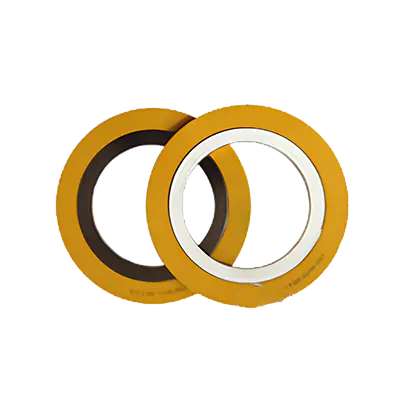
    A: A spiral wound gasket is a semi-metallic seal constructed by winding a pre-formed metal strip (e.g., 304 SS) and a filler material (e.g., graphite) in a V-shape. It is used for high-pressure and high-temperature applications in the oil & gas, power, and chemical industries (common in ASME B16.5 flanges). Its design provides excellent resilience and sealing under variable loads and thermal cycling, making it superior to static, solid gaskets in demanding service.

    Q: How important is surface finish on the flanges where the gasket is installed?
    A: Extremely important. The flange surface finish directly impacts the gasket's ability to seal. A finish that is too rough can prevent the gasket from properly conforming and filling microscopic voids, causing leak paths. A finish that is too smooth (e.g., mirror polish) may not provide enough "bite" for the gasket to grip, leading to extrusion under pressure. Kaxite Seals provides recommended surface finish ranges (typically 125 to 500 microinches Ra) for each gasket type to ensure optimal performance.

    Q: What are the advantages of using PTFE (Teflon) gaskets?
    A: PTFE gaskets from Kaxite Seals offer exceptional chemical resistance to almost all aggressive industrial chemicals, solvents, and acids. They have a wide service temperature range (from -400°F to 500°F / -240°C to 260°C), outstanding anti-stick properties, and are FDA compliant for food and pharmaceutical applications. Their low friction and excellent dielectric properties also make them suitable for specialized uses. They are available in pure, filled, and expanded forms to tailor performance.

    Q: How does Kaxite Seals ensure the quality of its gaskets?
    A: Quality is engineered into every step at Kaxite Seals. We start with certified raw materials from approved suppliers. Our manufacturing processes utilize precision cutting (die-cutting, waterjet, laser) and forming technology. Every batch undergoes stringent quality checks, including dimensional verification, material property testing (density, tensile strength), and for critical applications, we can provide material certifications (Mill Test Reports). Our Quality Management System is designed to deliver consistent, reliable products that meet or exceed industry specifications.

    View More +
    Gaskets
  • Braided Packing

    Introduction to Braided Packing for Industrial Sealing

    In the demanding world of industrial fluid and gas handling, achieving a reliable, leak-free seal is paramount for safety, efficiency, and environmental compliance. For over a century, braided packing has stood as a cornerstone technology in mechanical sealing solutions. Unlike single-use gaskets or complex mechanical seals, braided packing offers a robust, adjustable, and versatile method for sealing pumps, valves, mixers, and other rotating or reciprocating equipment. Its unique braided construction allows it to conform to shaft surfaces, absorb vibrations, and maintain integrity under extreme pressures and temperatures. At Kaxite Seals, we leverage decades of material science and engineering expertise to manufacture advanced braided packing that meets the rigorous standards of modern industry, from chemical processing and power generation to maritime and pulp & paper applications.

    Deep Dive: Construction and Key Parameters of Braided Packing

    Understanding the construction and specifications of braided packing is critical to selecting the optimal product for your application. Performance hinges on several interdependent parameters.

    Core Construction Elements

    • Yarn Material: The foundation of any packing. Common materials include Aramid (e.g., Kevlar®), Carbon Graphite, PTFE (Teflon®), Flexible Graphite, and various fiberglass blends. Each offers distinct properties for temperature, chemical resistance, and lubrication needs.
    • Braiding Pattern: The method of intertwining yarns (e.g., square braid, interbraid, twisted braid) determines density, flexibility, and structural stability. A tighter braid generally offers better extrusion resistance.
    • Lubricant/Impregnation: Most packings are impregnated with lubricants like PTFE, graphite, or silicone to reduce friction, dissipate heat, and enhance sealing capability during the run-in period.
    • Jacket or Casing: Some high-performance packings feature an outer jacket (often of PTFE or a similar material) to improve chemical resistance and reduce shaft wear.

    Critical Performance Parameters

    The following parameters must be carefully matched to your operating conditions. At Kaxite Seals, every spool of packing is engineered with these factors in mind.

    Parameter Description Why It Matters Kaxite Seals Focus
    Temperature Range The minimum and maximum continuous operating temperatures the packing can withstand without degradation. Exceeding limits causes hardening, loss of lubrication, or melting, leading to rapid failure and shaft damage. We specify clear, tested ranges for each material grade, ensuring suitability for cryogenic to high-heat applications.
    Pressure (PSI/Bar) The maximum system pressure the packing set is designed to seal effectively. Inadequate pressure rating leads to extrusion of the packing into the gland clearance, causing leakage and failure. Our braiding density and material combinations are optimized to resist extrusion under high-pressure conditions common in refinery and chemical feed pumps.
    pH/Chemical Compatibility The range of pH and specific chemicals the packing material is resistant to. Chemical attack swells, dissolves, or embrittles packing fibers, compromising the seal and contaminating the process fluid. Kaxite provides detailed chemical compatibility charts for our entire product line, based on material science data and field verification.
    Shaft Speed (RPM or FPM) The maximum surface speed of the rotating or reciprocating shaft. Excessive speed generates frictional heat beyond the packing's ability to dissipate it, resulting in overheating and accelerated wear. Our formulations include advanced lubricants and wear-resistant materials to handle higher speeds with minimal heat generation.
    Density (Specific Gravity) The mass per unit volume of the packing, indicating its tightness and fiber content. Higher density packings are more rigid and extrusion-resistant but may require more break-in; lower density offers easier conformability. We offer multiple density options within material families to give engineers precise control over installation and performance characteristics.

    Kaxite Seals Braided Packing Product Portfolio

    Our product range is designed to cover the vast majority of industrial sealing challenges. Below is a summary of our flagship braided packing series.

    Product Series Primary Material Max Temp (°C/°F) Max Pressure (PSI) pH Range Ideal Applications
    KX-GraphiteFlex Reinforced Flexible Graphite 650°C / 1200°F 2500 0-14 High-temperature steam valves, heat exchangers, expansion joints.
    KX-ArmorWeave Aramid Fiber with PTFE 290°C / 550°F 1800 2-12 General-purpose pumps, agitators, mixers handling acids, alkalis, solvents.
    KX-ChemiPro PTFE 100% Virgin PTFE Filament 260°C / 500°F 1500 0-14 (Full chemical inertness) Food & beverage, pharmaceutical, ultra-pure chemical processes.
    KX-CarbonSeal HD Carbon & Graphite Yarn 350°C / 660°F 2200 1-13 Hot water, mild chemicals, boiler feed pumps, paper stock.

    Braided Packing FAQ: Expert Answers from Kaxite Seals

    Q: How many rings of braided packing should I install in a stuffing box?
    A: The number of rings depends on the depth of the stuffing box and the packing cross-section. As a general rule, the box should be filled with enough rings so that, after proper gland follower tightening, the packing occupies the space without being over-compressed. Typically, this is 5-7 rings for a standard pump. A good practice is to use a packing kit sized for your specific equipment, which Kaxite Seals can provide with precise ring counts and lengths pre-cut.

    Q: What is the "run-in" or "break-in" period for new braided packing?
    A: The run-in period is a critical phase where the packing adjusts to the shaft and the internal lubricants distribute evenly. After installation and initial hand-tightening of the gland, start the equipment and allow it to run for 10-15 minutes. It should leak slightly (a few drops per minute) to lubricate and cool the shaft. Gradually tighten the gland nut in 1/6-turn increments every 5-10 minutes until the leakage reduces to a slight weep. Rushing this process by overtightening immediately generates excessive heat and glazes the packing, causing premature failure.

    Q: Can I mix different types or brands of braided packing in the same stuffing box?
    A: It is strongly discouraged. Different materials have varying coefficients of friction, thermal expansion rates, and wear characteristics. Mixing packings can lead to uneven load distribution, where one ring wears out faster than others, creating paths for leakage. It can also cause galvanic corrosion if dissimilar fibers are used. Always use identical packing rings from the same manufacturer and product batch for a consistent, reliable seal. Kaxite Seals recommends a complete set replacement.

    Q: My packing is failing quickly due to excessive shaft wear. What could be the cause?
    A: Rapid shaft wear is often a symptom of incorrect packing selection or installation. Causes include: 1) Using a packing material that is too abrasive for your shaft material (e.g., some aramid fibers on stainless steel may require a sacrificial sleeve). 2) Chronic overtightening of the gland, creating excessive friction. 3) A damaged, pitted, or scored shaft surface that acts like a file on the packing. 4) Running the equipment without the proper run-in procedure. Kaxite Seals technical team can help analyze the failure mode and recommend a softer, self-lubricating packing or advise on shaft conditioning.

    Q: How do I choose between braided packing and a mechanical seal?
    A: Both are valid solutions with different strengths. Braided packing is often preferred for its lower initial cost, simplicity, adjustability while running, and ability to handle shaft misalignment or runout. It is also field-repairable by tightening or adding a ring. Mechanical seals offer near-zero leakage, require less maintenance, and eliminate shaft wear. The choice depends on the fluid's value/hazard, environmental regulations, maintenance schedules, and budget. For many general service and abrasive slurry applications, modern high-performance braided packing from Kaxite Seals remains the most economical and practical choice.

    Q: Does Kaxite Seals offer custom-engineered braided packing solutions?
    A: Absolutely. While our standard product line covers most needs, we specialize in developing custom braided packing for unique challenges. This can involve custom braid patterns, proprietary lubricant blends, specific material hybrids, or non-standard sizes. If you have an application with extreme temperatures, aggressive media, or unusual geometry, our engineering team can work with you to design, prototype, and test a packing solution that delivers optimal performance and longevity.

    View More +
    Braided Packing
  • Compression Sheets

    What Are Compression Sheets and Why Are They Essential?

    In the realm of industrial sealing and gasketing, the integrity of a connection is paramount. Compression Sheets, often referred to as compressed non-asbestos sheets or gasket sheets, are engineered materials designed to create a reliable, leak-proof seal between two mating flanges or surfaces under compression. Unlike simple cut gaskets, these sheets are the raw material from which custom gaskets are fabricated, offering unparalleled flexibility in addressing unique dimensional and environmental requirements. At Kaxite Seals, we understand that a one-size-fits-all approach is inadequate for critical applications. Our compression sheets are manufactured to the highest standards, providing a robust solution for containing fluids, gases, and vapors in systems ranging from pipelines and pumps to engines and heat exchangers. The core principle is their ability to deform under bolt load, flowing into microscopic imperfections on the flange faces, thereby creating a barrier that prevents leakage under varying pressures and temperatures.

    In-Depth Technical Specifications of Kaxite Seals Compression Sheets

    Selecting the correct compression sheet material is a technical decision that impacts safety, efficiency, and total cost of ownership. Kaxite Seals offers a comprehensive portfolio, each grade formulated for specific service conditions. Below are the detailed parameters that define our product lines.

    Material Composition & Key Properties

    • Base Materials: Our sheets are primarily composed of high-quality aramid fibers, synthetic rubber binders (such as NBR or SBR), and mineral fillers. We rigorously exclude asbestos, ensuring a safe, environmentally compliant product.
    • Temperature Range: Standard grades perform consistently from -40°C to +200°C (-40°F to +392°F). Special high-temperature formulations can withstand up to +400°C (+752°F) for intermittent service.
    • Pressure Tolerance: Designed to handle sealing pressures exceeding 1500 psi (100 bar) for standard water, oil, and steam services, with specific grades engineered for higher pressure applications.
    • Chemical Resistance: Formulated to resist a wide spectrum of media, including oils, fuels, steam, hot water, alkalis, and many acids. Chemical compatibility charts are available for precise selection.
    • Compressibility & Recovery: Excellent compressibility (typically 8-15%) allows the sheet to conform to flange faces, while high recovery (≥ 50%) ensures the seal maintains integrity during pressure and thermal cycling.

    Detailed Product Grade Comparison Table

    Kaxite Grade Color Code Primary Application Max Temp (°C/°F) Density (g/cm³) Key Media Resistance
    KS-1000 Standard Blue General purpose water, air, oils 200 / 392 1.6 - 1.8 Water, Steam, Oils, Fuels
    KS-2000 HT Red High-temperature steam & exhaust 400 / 752 1.8 - 2.0 Superheated Steam, Hot Gases
    KS-3000 Chemical Green Aggressive chemicals & acids 150 / 302 1.7 - 1.9 Dilute Acids, Alkalis, Solvents
    KS-4000 Food White FDA-compliant food & beverage 180 / 356 1.5 - 1.7 Fats, Oils, Alcohols, Sanitizers

    Standard Sizes and Thickness

    • Sheet Dimensions: Standard sheets are available in 1500mm x 1500mm (59" x 59") and 1250mm x 1250mm (49" x 49"). Custom roll or sheet sizes can be produced to meet specific project needs.
    • Thickness Range: We supply a precise thickness range from 0.5mm (0.020") to 6.0mm (0.236"). Common stocked thicknesses include 1.5mm (1/16"), 3.0mm (1/8"), and 4.5mm (3/16").
    • Tolerance: Thickness is held to a tight tolerance of ±0.1mm for sheets under 3mm and ±0.15mm for thicker sheets, ensuring consistent gasket performance.

    Frequently Asked Questions (FAQ) About Compression Sheets

    Q: How do I choose the right thickness for a compression sheet gasket?

    A: The correct thickness depends on flange conditions, pressure, and the type of fluid. For standard ANSI flanges with serrated faces, 1.5mm is common. Thicker sheets (3.0mm) are used for flanges with more significant imperfections or lower bolt loads. For high-pressure systems, a thinner, denser sheet may be preferable to prevent blow-out. Always consult Kaxite Seals' engineering guidelines, which consider flange finish, bolt load, and internal pressure to recommend the optimal thickness.

    Q: Can Kaxite Seals compression sheets be used for potable water systems?

    A: Absolutely. Our KS-4000 Food Grade compression sheet is specifically formulated to comply with FDA CFR 21.177.2600 and other international standards for food contact, making it perfectly safe for potable water, beverage, and pharmaceutical applications. It is non-toxic, odorless, and resistant to mold and bacterial growth.

    Q: What is the shelf life of your compression sheet materials, and how should they be stored?

    A: When stored correctly, Kaxite Seals compression sheets have a shelf life of 5 years from the date of manufacture. They should be stored in a cool, dry place away from direct sunlight, heat sources (above 40°C/104°F), ozone generators, and chemicals. Sheets should lie flat or be rolled without tight bends to prevent permanent deformation or cracking.

    Q: How do I fabricate a gasket from a compression sheet?

    A: Gaskets are typically fabricated by cutting, punching, or water-jet cutting. For best results:

    1. Ensure the flange surfaces are clean and the sheet is free of debris.
    2. Use a sharp blade or die for cutting; avoid tearing or delaminating the material.
    3. The gasket should be cut to match the flange ID and OD precisely. For raised face flanges, it can cover the entire face.
    4. Bolt holes should be cleanly punched, not drilled, as drilling can cause fraying.
    5. Never reuse a cut gasket.
    Kaxite Seals also offers custom die-cutting services for high-volume or complex shapes.


    Q: What is the difference between compressed non-asbestos sheets and rubber sheets?

    A: Traditional rubber sheets are homogeneous elastomeric materials with good flexibility but often lack the structural integrity and temperature resistance for demanding flange gasketing. Kaxite Seals compression sheets are composite materials where reinforcing fibers (like aramid) provide high tensile strength and dimensional stability, while the rubber binder provides compressibility and sealing. This results in far superior resistance to blow-out, creep relaxation, and a much broader operating temperature and chemical resistance range.

    Q: How do I calculate the torque for bolting a gasket made from your sheet?

    A: Proper bolt torque is critical. It is calculated based on the target gasket stress (yield stress), bolt size/grade, number of bolts, and flange dimensions. As a general rule, our sheets require a gasket stress in the range of 5,000 to 15,000 psi to achieve proper sealing. We strongly recommend using the ASME PCC-1 guidelines for bolted joint assembly or consulting with a Kaxite Seals engineer. Under-torquing can cause leakage; over-torquing can crush the sheet, destroying its recovery properties.

    Applications and Industry Use Cases

    The versatility of Kaxite Seals compression sheets makes them indispensable across a multitude of sectors. In the oil & gas industry, they seal flanges in pipelines, refineries, and offshore platforms, handling crude oil, natural gas, and harsh chemicals. The power generation sector relies on our high-temperature grades for steam turbines, heat exchangers, and boiler manways. Chemical processing plants utilize our chemical-resistant sheets for reactors, pumps, and valve bonnets. In marine engineering, they provide reliable seals for engine systems, fuel lines, and cooling water intake. Furthermore, food and pharmaceutical manufacturing depends on our FDA-compliant grade to maintain hygiene and prevent contamination in processing lines. This broad applicability stems from our commitment to formulating materials that meet specific industry standards such as ASTM F104, DIN 3754, and JIS B 2403.

    View More +
    Compression Sheets

About Us

Ningbo Kaxite Sealing Materials Co., Ltd.
Ningbo Kaxite Sealing Materials Co., Ltd. is based in Ningbo, Zhejiang Province, China. Kaxite is one of the biggest sealing and heat preservation products manufacturer in China. Kaxite supply the overall solution of Metal Gaskets, Non-metallic Gaskets, Braided Packings, Compressed Gasket Sheets. To assure create more valve for customers from all over the world.
View More +

News

X
We use cookies to offer you a better browsing experience, analyze site traffic and personalize content. By using this site, you agree to our use of cookies.Privacy Policy
RejectAccept