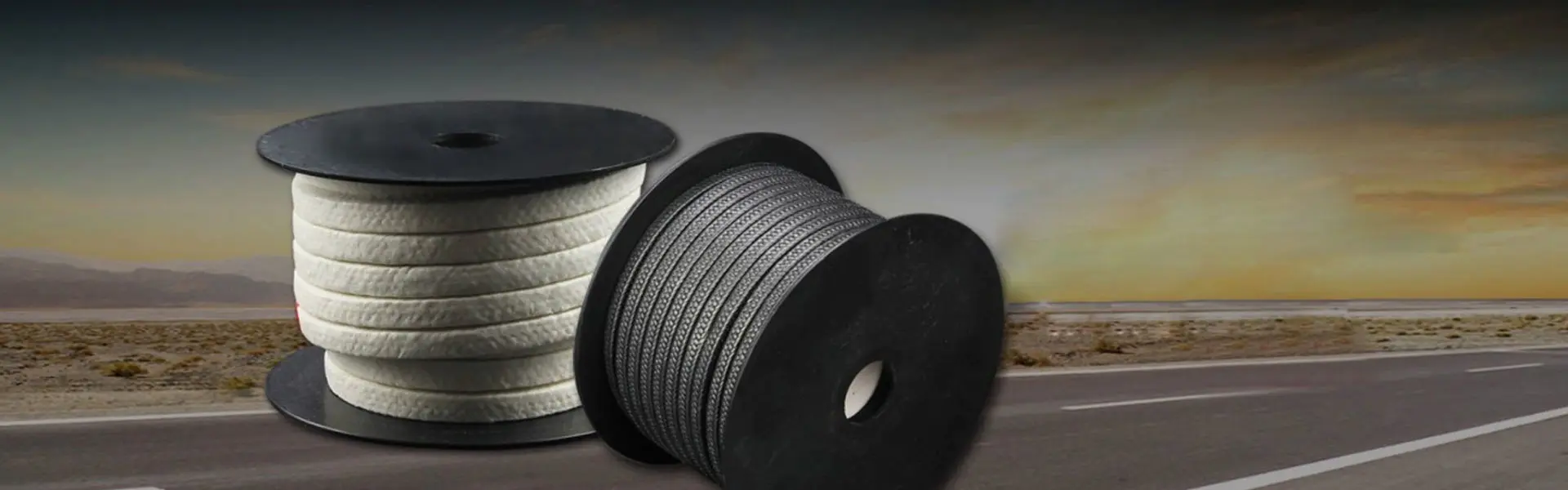
Carbon fiber composites represent the pinnacle of modern material engineering, offering an unparalleled combination of strength, lightweight properties, and durability. For industries demanding peak performance—from aerospace and automotive to high-end sporting goods and industrial machinery—understanding and utilizing advanced carbon fiber solutions is critical. At Kaxite Seals, we specialize in engineering and manufacturing premium carbon fiber components that meet the most rigorous standards. This guide provides a detailed technical overview of carbon fiber, the specifications of our products, and answers to common questions professionals like you may have.
### The Science and Advantages of Carbon Fiber
Carbon fiber is a polymer, often known as graphite fiber. It is composed of long, thin strands of carbon atoms bonded together in a crystalline alignment. This alignment gives the fiber exceptional strength-to-volume ratio. These fibers are then combined with a resin matrix, such as epoxy, to form a composite material that can be molded into various shapes.
**Key Material Advantages:**
* **Exceptional Strength & Stiffness:** Carbon fiber boasts a tensile strength significantly higher than steel while being about five times lighter. Its modulus of elasticity (stiffness) is also superior to most metals.
* **Low Density & Light Weight:** The primary driver for its use in performance applications. Reducing weight directly improves fuel efficiency, acceleration, and agility.
* **High Chemical Resistance:** Inert to many corrosive chemicals, solvents, and oils, making it ideal for harsh industrial environments.
* **Low Thermal Expansion:** Carbon fiber maintains its shape and dimensions across a wide temperature range, ensuring dimensional stability.
* **Fatigue Resistance:** Unlike metals, carbon fiber composites do not suffer from metal fatigue in the same way, leading to longer service life under cyclic loading.
### Kaxite Seals Carbon Fiber Product Specifications
Our products are manufactured using state-of-the-art processes like autoclave curing and resin transfer molding (RTM) to ensure void-free consolidation and optimal fiber-resin ratio. Below are the detailed parameters for our standard carbon fiber composite sheets and custom-formed components.
**Standard Mechanical & Physical Properties:**
| Property | Test Method | Unit | Typical Value (Unidirectional) | Typical Value (Woven Fabric) |
| :--- | :--- | :--- | :--- | :--- |
| **Tensile Strength** | ASTM D3039 | MPa | 2,200 - 2,800 | 600 - 800 |
| **Tensile Modulus** | ASTM D3039 | GPa | 130 - 170 | 60 - 70 |
| **Flexural Strength** | ASTM D790 | MPa | 1,400 - 1,800 | 700 - 900 |
| **Flexural Modulus** | ASTM D790 | GPa | 110 - 140 | 50 - 60 |
| **Compressive Strength** | ASTM D6641 | MPa | 1,000 - 1,400 | 400 - 500 |
| **Density** | ASTM D792 | g/cm³ | 1.55 - 1.60 | 1.50 - 1.55 |
| **Fiber Volume Fraction** | - | % | 58 - 62 | 50 - 55 |
| **Glass Transition Temp (Tg)** | DMA | °C | 120 - 180 (Epoxy) | 120 - 180 (Epoxy) |
**Available Product Forms & Customization:**
Kaxite Seals provides carbon fiber in various forms to suit different design and manufacturing needs:
1. **Pre-preg Rolls & Sheets:** Uncured fabric pre-impregnated with resin. Available in multiple weave styles (plain, twill, satin) and weights (e.g., 200gsm, 300gsm).
2. **Custom Molded Parts:** Complex components manufactured to precise customer drawings and tolerances.
3. **Finished Panels & Tubes:** Standard and custom-dimension panels, rods, and tubes with a high-gloss UV-resistant finish.
4. **Specific Resin Systems:** We offer composites with different matrix systems for specialized requirements:
* **Standard Epoxy:** Balanced properties for general use.
* **High-Tg Epoxy:** For sustained performance in elevated temperature environments.
* **Thermoplastic Matrices (PEEK, PAEK):** For superior impact resistance and recyclability.
### Carbon Fiber: Frequently Asked Questions (FAQ)
**Q: What exactly is the difference between "carbon fiber" and "carbon fiber composite"?**
**A:** The term "carbon fiber" typically refers to the individual filaments or tows of carbon. A "carbon fiber composite" is the finished material, where these fibers are embedded within a resin matrix (like epoxy). The composite's final properties depend on the type of fiber, the resin, the fiber orientation, and the manufacturing process. When you purchase a part, you are buying a carbon fiber composite component.
**Q: How does carbon fiber compare to fiberglass and Kevlar®?**
**A:** All three are fiber-reinforced polymers but with distinct characteristics. Carbon fiber offers the highest stiffness and strength-to-weight ratio, making it best for applications where rigidity and lightness are paramount. Fiberglass is less strong and stiff but is more flexible, impact-resistant, and significantly less expensive. Kevlar® (aramid fiber) excels in tensile strength and impact/toughness resistance (notably against abrasion), but it is less stiff in compression than carbon fiber. The choice depends on the primary performance requirement.
**Q: Can Kaxite Seals carbon fiber parts withstand high temperatures?**
**A:** Yes, within specified limits. The limiting factor is usually the resin matrix, not the carbon fibers themselves. Our standard epoxy systems perform consistently up to their Glass Transition Temperature (Tg), typically between 120°C and 180°C. For applications requiring continuous exposure above 150°C, we recommend and supply parts made with high-temperature epoxy or specialty thermoplastic resins like PEEK, which can withstand much higher temperatures.
**Q: Is carbon fiber electrically conductive?**
**A:** Yes, carbon fiber composites are electrically conductive. This is an important consideration in applications where electrical insulation is required. The conductivity can also be beneficial for applications requiring electrostatic dissipation (ESD) or EMI shielding. If electrical insulation is needed, a protective insulating layer must be applied.
**Q: How do you ensure quality and consistency in your carbon fiber products?**
**A:** At Kaxite Seals, quality is integral to our manufacturing process. We employ several rigorous controls:
* **Raw Material Certification:** All fibers and resins are sourced from tier-1 suppliers with full traceability and certificates of analysis.
* **Process Control:** Manufacturing parameters like temperature, pressure, and vacuum are digitally monitored and logged for every production run.
* **Non-Destructive Testing (NDT):** We utilize ultrasonic testing to detect internal voids or delaminations.
* **Mechanical Testing:** Batch testing is performed on coupon samples to verify they meet published mechanical property specifications.
**Q: What are the main design considerations when switching from metal to carbon fiber?**
**A:** Designing with carbon fiber requires a different philosophy than with isotropic metals like aluminum or steel. Key considerations include:
* **Anisotropic Nature:** Strength and stiffness are directional, aligned with the fiber orientation. The laminate stack-up sequence ([0°/90°/±45°]) must be designed for the specific load paths.
* **Joint Design:** Traditional bolting or riveting requires special attention to prevent crushing; bonded joints are often preferred and require specific surface preparation.
* **Cost Analysis:** While unit cost may be higher, the total lifecycle cost, including weight savings, fuel efficiency, durability, and reduced maintenance, often justifies the investment.
**Q: How repairable are carbon fiber composite parts?**
**A:** Minor damage, such as scratches or small cracks in the resin, can often be sanded and re-coated. Structural damage requires a more involved repair process, typically involving scarfing out the damaged area, applying new pre-preg plies in a patch, and curing under vacuum and heat. It is crucial that repairs are performed by technicians trained in composite repair protocols to restore structural integrity.
**Q: Does Kaxite Seals offer prototyping and low-volume production?**
**A:** Absolutely. We work closely with clients from the conceptual design phase through to full-scale production. Our facility is equipped to handle both rapid prototyping for form, fit, and function testing, as well as low to medium-volume production runs using advanced tooling and manufacturing techniques. We recommend engaging with our engineering team early to optimize the design for manufacturability and performance.