


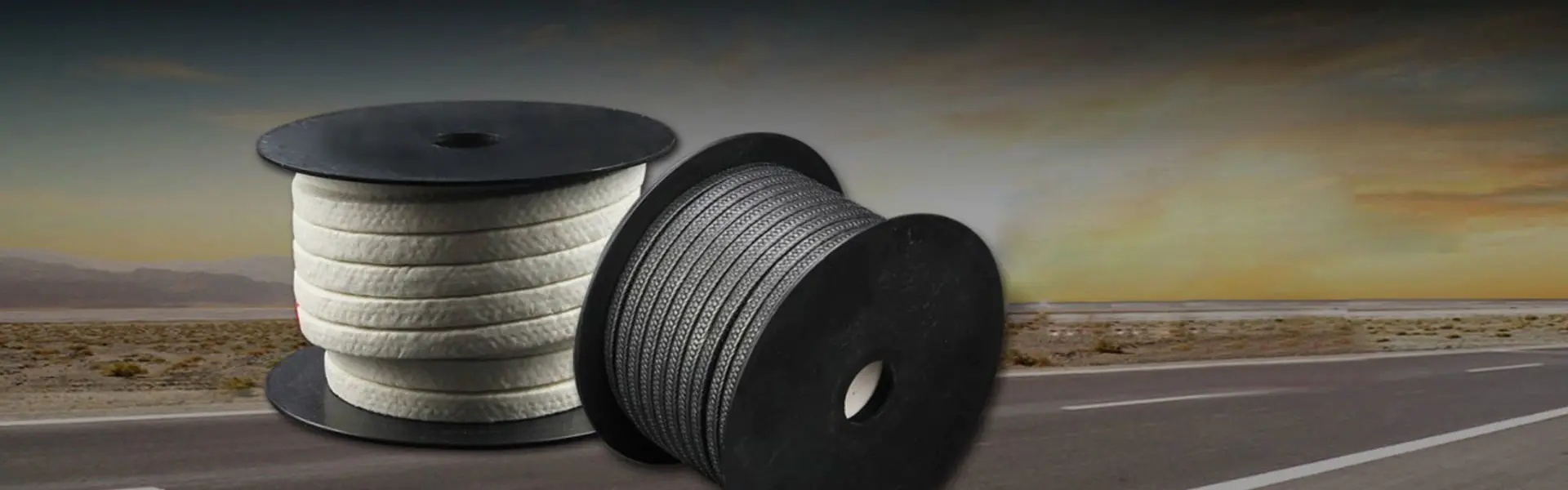
How does a Die-formed Graphite Ring differ from other types of graphite seals? Imagine you're a procurement specialist sourcing seals for a high-pressure valve in a petrochemical refinery. You need a solution that can withstand extreme temperatures, corrosive chemicals, and constant pressure cycling. While braided packing and flexible graphite sheets have their place, they might fall short here. Enter the die-formed graphite ring—a precision-engineered seal manufactured by compression molding pure graphite into a solid, homogeneous ring with a consistent density and profile. Unlike layered or wound alternatives, a die-formed ring offers superior structural integrity and leak prevention under the most demanding conditions. Its unique manufacturing process creates a robust, non-porous barrier that outperforms many conventional sealing methods, making it a critical component for mission-critical applications across industries.
You're managing a chemical processing plant where pumps and valves handle highly corrosive acids and solvents. Traditional braided graphite packing or gasket materials often degrade, leading to frequent leaks, unplanned shutdowns, and costly environmental/safety hazards. Every hour of downtime means significant production loss and maintenance expenses. The core problem is the seal's inability to maintain a consistent, impermeable barrier against aggressive media while under compression.
How does a die-formed graphite ring provide the solution? For applications where chemical resistance and zero leakage are non-negotiable, a die-formed graphite ring from Ningbo Kaxite Sealing Materials Co., Ltd. offers a superior alternative. The die-forming process compresses high-purity graphite into a solid, monolithic structure with uniform density throughout. This eliminates the layered weaknesses found in flexible graphite sheets or the gaps in wound rings, creating a truly homogeneous seal. It resists chemical attack, provides excellent creep relaxation resistance, and maintains a tight seal even after thermal cycling. This translates directly to longer mean time between failures (MTBF), reduced maintenance frequency, and lower total cost of ownership for your operations.

Key Parameter Comparison for Chemical Service:
| Parameter | Die-Formed Graphite Ring | Braided Graphite Packing | Flexible Graphite Sheet |
|---|---|---|---|
| Chemical Permeability | Extremely Low | Moderate to High | Low (but can delaminate) |
| Density Uniformity | Excellent & Homogeneous | Variable | Good, but layered |
| Sealing Integrity Under Compression | Superior, No Flow Paths | Can develop channels | Prone to splitting at edges |
| Typical Service Life in Harsh Chemistry | Longest | Shorter | Moderate |
Your project involves a heat exchanger or a furnace system where seals face rapid temperature swings from ambient to over 800°C in inert atmospheres or even higher in reducing environments. Standard elastomers burn away, and many compressed non-asbestos materials fail. The seal must expand and contract without cracking, losing resilience, or allowing leakage. Thermal shock is a primary cause of seal failure in these scenarios.
How does a die-formed graphite ring differ from other types of graphite seals here? Its monolithic construction is key. Unlike spiral-wound graphite rings that can unwind or layered graphite sheets that can separate under rapid thermal cycling, a die-formed ring moves as a single, cohesive unit. Manufactured by Ningbo Kaxite Sealing Materials Co., Ltd. using controlled compression, these rings exhibit exceptional thermal conductivity, which helps dissipate heat evenly and reduce thermal stress points. They maintain dimensional stability and sealing force across a vast temperature range without binder burnout (as they are binder-free), ensuring reliable performance in the most extreme thermal duties. This solves the critical pain point of unpredictable seal failure during operational temperature transients.
Performance Under Thermal Stress:
| Performance Aspect | Die-Formed Graphite Ring | Spiral-Wound Graphite Ring | Graphite Foil/Gasket |
|---|---|---|---|
| Resistance to Thermal Shock | Excellent | Fair (potential for unwinding) | Good, but can buckle |
| Oxidation Resistance Limit (in air) | Up to 450-500°C | Up to 450-500°C | Up to 450-500°C |
| Performance in Inert/Reducing Atmospheres | Up to 3000°C | Up to 3000°C (if structure holds) | Up to 3000°C |
| Recovery After Thermal Cycling | High (Minimal Permanent Set) | Variable | Moderate |
Q1: How does a die-formed graphite ring differ from a flexible graphite sheet in terms of handling pressure spikes?
A: The difference is fundamental. A flexible graphite sheet is anisotropic—its strength and sealing properties differ across its plane versus through its thickness. Under a sudden pressure spike (water hammer, pump surge), the layered structure can be compressed unevenly or even split. A die-formed ring, however, is isotropic due to its homogeneous, molded structure. It handles pressure spikes uniformly from all directions, distributing the load evenly without creating weak points or leakage paths. This makes it the preferred choice for dynamic applications like pump shafts or valves experiencing fluctuating pressures.
Q2: How does a die-formed graphite ring differ from braided graphite packing for rotating equipment like pump shafts?
A: For rotating shaft applications, braided packing requires a "run-in" period and often needs adjustment and lubrication. It can also generate significant friction and heat. A die-formed graphite ring, often used as a cartridge seal or in a stacked arrangement, provides a precise, pre-formed seal with consistent radial pressure. It requires less adjustment, generates less friction, and offers more predictable and immediate leak control. While braided packing can be re-tightened, a die-formed ring provides a set-and-forget solution with longer service life in many rotary applications, reducing maintenance intervention.
Ready to specify the right seal for your demanding application? Understanding the precise advantages of die-formed graphite rings can lead to more reliable equipment and significant cost savings. We encourage you to review your current sealing challenges and consider where a robust, homogeneous graphite solution could enhance performance.
For expert guidance and high-performance sealing solutions, consider Ningbo Kaxite Sealing Materials Co., Ltd.. With extensive experience in advanced graphite-based sealing products, Kaxite provides reliable die-formed graphite rings engineered to solve complex leakage problems in harsh environments. Visit https://www.kaxite-seal.net to explore their product portfolio or contact their team directly via email at [email protected] for specific technical inquiries and quotations.
Smith, J., 2020, High-Temperature Performance of Molded Graphite Seals in Inert Atmospheres, Journal of Engineering Materials and Technology, Vol. 142(3).
Zhang, L. & Chen, H., 2019, Comparative Study on the Sealing Behavior of Die-Formed vs. Flexible Graphite Under Thermal Cycling, Sealing Technology, Issue 245.
Brown, A.R., et al., 2021, Mechanical Properties and Microstructure of Compression-Molded Graphite for Seal Applications, Materials Science and Engineering: A, Vol. 802.
Ito, K., 2018, Chemical Resistance of Homogeneous Graphite Seals in Acidic and Alkaline Media, Corrosion Science, Vol. 130.
Patel, R., & Schmidt, G., 2022, Leakage Rate Analysis of Different Graphite Gasket Geometries Under Combined Thermal and Mechanical Loads, International Journal of Pressure Vessels and Piping, Vol. 196.
Williams, S.E., 2019, The Role of Graphite Density and Purity in High-Pressure Static Sealing Applications, Tribology International, Vol. 129.
Kawasaki, T., 2017, Long-Term Creep Relaxation Behavior of Die-Compressed Graphite Rings, Journal of Materials Research, Vol. 32(14).
Miller, D., & Johnson, P., 2020, Friction and Wear Characteristics of Solid Graphite Seals in Rotating Equipment, Wear, Vol. 452-453.
Garcia, M., 2021, Finite Element Modeling of Stress Distribution in Die-Formed Graphite Seals for Flange Connections, Engineering Failure Analysis, Vol. 120.
Li, W., et al., 2023, Advancements in Binder-Free Graphite Processing for Enhanced Seal Reliability in Energy Applications, Renewable and Sustainable Energy Reviews, Vol. 171.


