


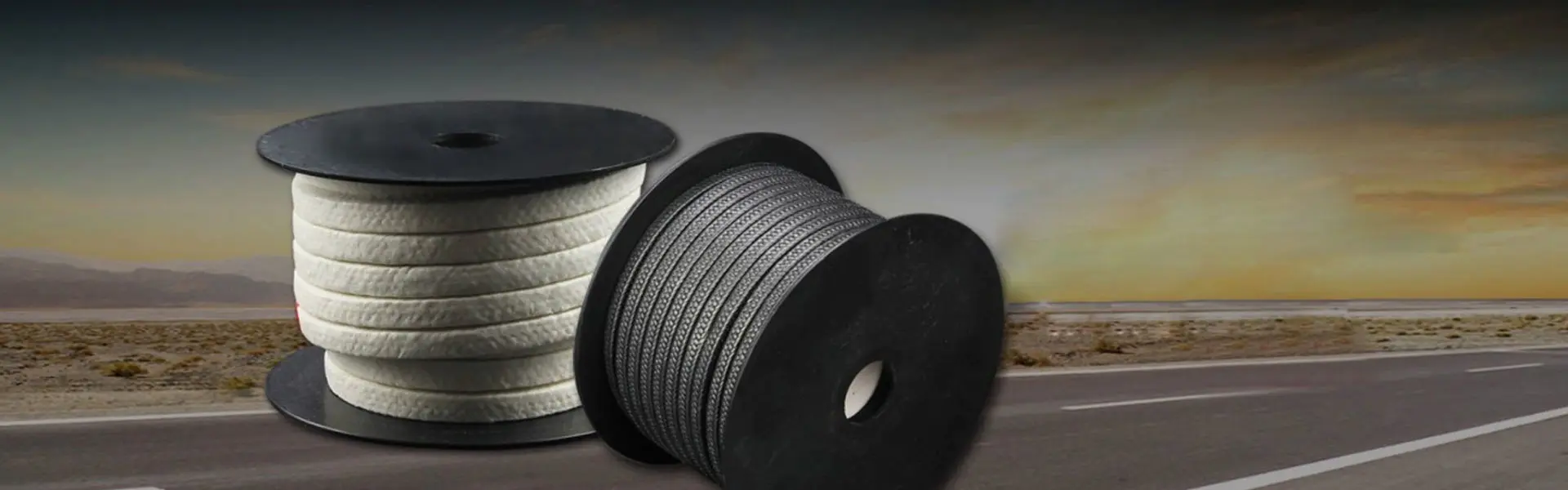
In high-temperature and high-pressure industrial applications, managing heat and ensuring safety is paramount. Traditional asbestos, while effective as a sealing and insulating material, poses significant health risks due to the release of airborne fibers during handling, cutting, or degradation. Dust free asbestos represents a major technological evolution, engineered to eliminate this primary hazard. This advanced material is a specialized composite where the core asbestos fibers are securely encapsulated within a matrix of other binding agents, such as rubber, polymers, or specific resins. This encapsulation process is critical—it binds the fibers in place, preventing them from becoming friable and airborne. The result is a robust, high-performance sealing material that retains the excellent thermal resistance, durability, and compressibility of traditional asbestos but without the associated dust hazard. This makes it a responsible and compliant choice for modern industry, aligning performance with stringent occupational health and safety standards.
Choosing Kaxite Seals dust free asbestos products provides a multifaceted solution that addresses performance, safety, and regulatory needs.
To ensure precise engineering selection, below are the detailed technical parameters for standard Kaxite Seals dust free asbestos grades. These specifications are typical values; custom formulations are available to meet specific application requirements.
| Property | Test Method | Unit | Value Range | Remarks |
|---|---|---|---|---|
| Temperature Range | Continuous Service | °C / °F | -100 to +500 / -148 to +932 | Short peaks up to 550°C (1022°F) possible. |
| Compression Strength | ASTM F36 | MPa (psi) | 120 - 150 (17,400 - 21,750) | At 10% strain. |
| Tensile Strength | ASTM F152 | MPa (psi) | ≥ 11.0 (≥ 1,595) | Minimum typical value. |
| Compression Set | ASTM F36 (22h @ 300°C) | % | ≤ 45 | Indicates good recovery and sealing force retention. |
| Thermal Conductivity | ASTM C518 | W/m·K | 0.15 - 0.20 | At 100°C (212°F). |
| pH Range | Immersion Test | - | 4 - 12 | Suitable for most alkaline and mildly acidic media. |
| Fire Resistance | ASTM E84 | Flame Spread / Smoke Developed | 0 / 0 | Non-combustible; will not contribute to fire. |
Q: Is dust free asbestos truly safe to handle?
A: Yes, when sourced from a reputable manufacturer like Kaxite Seals, it is significantly safer than traditional asbestos materials. The encapsulation process locks the fibers within a binder matrix, preventing them from becoming airborne during normal handling, cutting, or installation. This drastically reduces inhalation risk. However, it is still classified as an asbestos-containing material (ACM). We recommend following good industrial hygiene practices: using local exhaust ventilation during machining, avoiding dry cutting with high-speed tools, and cleaning debris with a HEPA-filtered vacuum.
Q: How does the performance compare to non-asbestos materials like aramid or fiberglass?
A: Dust free asbestos offers a unique balance of properties that can be superior in specific high-demand applications. It typically provides better thermal stability and creep resistance at sustained temperatures above 300°C (572°F) compared to many organic fiber sheets. It also maintains excellent sealability under high flange pressure. While non-asbestos materials are excellent general-purpose solutions, dust free asbestos from Kaxite Seals is often specified for extreme temperature/pressure services where other materials might experience rapid relaxation or degradation.
Q: Is this material legal to use in my country?
A: Regulations vary globally. In many countries, the use of new asbestos is banned or heavily restricted. However, encapsulated or dust-free formulations for specific, critical industrial applications may be permitted under strict controls or exemptions (e.g., for military, aerospace, or legacy refinery equipment where no technically suitable alternative exists). It is the customer's responsibility to verify local, national, and industry-specific regulations (e.g., EPA, OSHA, REACH, COSHH) before purchase and use. Kaxite Seals provides all necessary Material Safety Data Sheets (MSDS) and technical documentation to support regulatory evaluation.
Q: Can Kaxite Seals dust free asbestos be used with all media types?
A: It exhibits strong resistance to a wide range of media, including steam, hot oils, hydrocarbons, and many chemicals within a pH range of 4-12. However, it is not recommended for use with strong acids (e.g., hydrochloric, sulfuric), strong oxidizing agents, or certain polar solvents that may degrade the rubber binder over time. Always consult the Kaxite Seals chemical resistance guide or our engineering team for compatibility with specific service fluids.
Q: What is the recommended installation torque for gaskets made from this material?
A: Installation torque depends on flange design, bolt size/grade, and gasket thickness. As a general guideline, for standard raised face (RF) flanges, a compressive stress of 70-85 MPa (10,000 - 12,500 psi) on the gasket is often effective. This typically translates to achieving a bolt stress of approximately 50-60% of the bolt material's yield strength. We strongly advise following ASME PCC-1 guidelines for bolted joint assembly and referencing our specific product data sheet for detailed torque recommendations. Proper surface finish (125-250 µin Ra / 3.2-6.3 µm Ra) is also crucial for optimal sealing.
Q: How should waste and used gaskets be disposed of?
A: Despite being dust-free, scrap material and used products must be treated as asbestos-containing waste (ACW). Do not dispose of it with regular industrial waste. It must be handled according to local and national regulations for hazardous waste. This usually involves wetting the material to suppress any potential dust, sealing it in approved, labeled leak-tight containers or bags, and arranging for disposal by a licensed hazardous waste contractor at a designated facility. Kaxite Seals can provide guidance on proper disposal procedures based on your region.


