


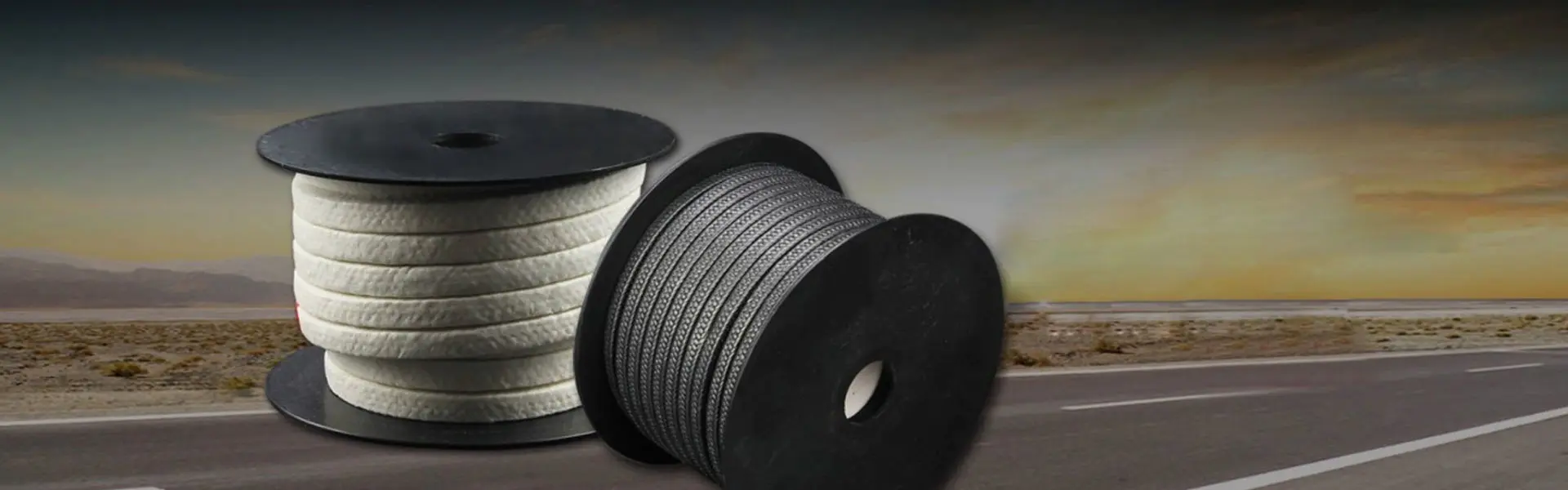
In the demanding world of industrial components, the performance of seals is non-negotiable. Two materials consistently stand out for their exceptional properties: PTFE (Polytetrafluoroethylene) and PEEK (Polyetheretherketone). These high-performance polymers are engineered to thrive where others fail, offering unparalleled reliability in extreme conditions. At Kaxite Seals, we specialize in manufacturing precision-engineered PTFE & PEEK seals that are the benchmark for durability and performance across countless industries.
The selection of seal material is critical to application success. Below, we detail the intrinsic properties that make PTFE and PEEK the materials of choice for critical sealing applications.
Our seals are manufactured to exacting standards using premium virgin polymers and advanced machining techniques. Below are the detailed specifications for our standard product line.
| Parameter | PTFE Seals (Virgin) | PEEK Seals (Virgin) | Test Standard |
|---|---|---|---|
| Density | 2.15 - 2.20 g/cm³ | 1.30 - 1.32 g/cm³ | ISO 1183 |
| Tensile Strength | 25 - 35 MPa | 90 - 100 MPa | ISO 527 |
| Elongation at Break | 300 - 500% | 30 - 50% | ISO 527 |
| Compressive Strength | 12 MPa | 120 MPa | ISO 604 |
| Continuous Service Temp. | -200°C to +260°C | -60°C to +250°C | - |
| Coefficient of Friction | 0.05 - 0.10 | 0.25 - 0.40 | ASTM D1894 |
| PV Limit (Dry) | 10,000 psi-fpm | 20,000 psi-fpm | - |
| Water Absorption (24h) | < 0.01% | 0.1 - 0.5% | ISO 62 |
| Dielectric Strength | 60 kV/mm | 20 kV/mm | IEC 60243 |
Kaxite Seals offers a comprehensive range of seal profiles to meet diverse application requirements.
The unique properties of these materials make them indispensable in numerous sectors.
| Industry | Typical Applications | Primary Material Benefit |
|---|---|---|
| Chemical Processing | Pump seals, valve stems, flange gaskets, reactor agitators | Unmatched chemical resistance |
| Oil & Gas (Upstream/Downstream) | Wellhead equipment, subsea components, sour gas service, compressor rings | High pressure/temperature capability, corrosion resistance |
| Pharmaceutical & Food | Sanitary fittings, CIP/SIP systems, homogenizer valves, filling machines | FDA compliance, purity, cleanability, steam resistance |
| Semiconductor Manufacturing | Wafer processing, CVD/PVD chambers, vacuum robotics, gas delivery systems | Ultra-high purity, low outgassing, plasma resistance |
| Aerospace & Defense | Fuel systems, hydraulic actuators, engine components, cryogenic fittings | Wide temperature range, lightweight, high strength-to-weight ratio |
| Automotive | Transmission seals, fuel injectors, EGR systems, turbocharger components | Heat and fluid resistance, dimensional stability |
Q: What is the main difference between PTFE and PEEK for sealing applications?
A: The core difference lies in their mechanical behavior and temperature/chemical profiles. PTFE is highly flexible, has a lower coefficient of friction, and offers broader chemical resistance at a lower cost. PEEK is a rigid, high-strength thermoplastic with superior mechanical properties, higher continuous temperature limits, and excellent resistance to wear and abrasion. PTFE is often chosen for its chemical inertness and non-stick properties, while PEEK is selected for high-load, high-temperature dynamic applications.
Q: Can PTFE or PEEK seals handle high-pressure applications?
A: Yes, both can be used in high-pressure systems, but their application differs. Virgin PTFE is relatively soft and can experience cold flow (extrusion) under high pressure. Therefore, PTFE seals for high-pressure service often include fillers (like glass or bronze) for anti-extrusion or are used as energizer elements in composite seals. PEEK possesses excellent compressive strength and rigidity, making it inherently more resistant to extrusion. PEEK back-up rings are specifically designed to protect softer primary seals in ultra-high-pressure environments.
Q: Are Kaxite PTFE seals suitable for food contact?
A: Absolutely. Kaxite Seals manufactures PTFE seals from 100% virgin polymer grades that comply with FDA regulations under 21 CFR 177.1550 for repeated food contact. They are also compliant with EU regulations (EC) No 1935/2004 and other global food safety standards. This makes them ideal for pumps, valves, and fittings in food, beverage, dairy, and pharmaceutical processing where purity and non-contamination are paramount.
Q: How do I choose between a PTFE O-ring and a PTFE envelope gasket?
A: The choice depends on the flange design and sealing requirements. A PTFE O-ring is used in groove-based designs (like face seal grooves or radial glands) and is excellent for containing aggressive fluids. A PTFE envelope gasket consists of a PTFE jacket (the envelope) filled with a resilient material like rubber. It is used between flat or raised-face flanges and is superior for compensating for flange irregularities, vibration, or thermal cycling, while still providing the chemical resistance of PTFE on the wetted surface.
Q: Does PEEK absorb water, and how does it affect performance?
A: PEEK is considered a low-absorption polymer, typically absorbing only 0.1-0.5% water in 24 hours and up to ~0.8% at saturation. This minimal absorption can lead to slight dimensional swelling, which is often factored into precision seal designs. In most applications, this effect is negligible. The key advantage is that PEEK retains its excellent mechanical properties even when saturated, unlike many nylons or other hygroscopic polymers that plasticize and weaken.
Q: Can you machine custom PTFE or PEEK seal geometries?
A: Yes, custom machining is a core capability at Kaxite Seals. We specialize in producing seals from solid PTFE and PEEK stock to meet non-standard sizes, complex cross-sections, or specific performance requirements not met by off-the-shelf products. Our CNC machining centers ensure tight tolerances, excellent surface finishes, and complete traceability of materials. Simply provide your detailed drawing or specifications for a quotation.
Q: What are the limitations of PTFE seals?
A: While PTFE is exceptional in many areas, it has limitations to consider: 1) Creep/ Cold Flow: It can deform under sustained load, so design must account for this. 2) Poor Radiation Resistance: It degrades under high levels of nuclear radiation. 3) Low Strength: It has lower tensile and compressive strength compared to PEEK or metals. 4) Permeability: Some small molecule gases and liquids can permeate through PTFE over time. These factors guide proper material selection and seal design.
Q: How does temperature cycling affect PEEK seals?
A: PEEK handles thermal cycling exceptionally well due to its high glass transition temperature (Tg ~143°C) and low coefficient of thermal expansion (CTE). It maintains dimensional stability and sealing force across wide temperature fluctuations, preventing leaks that can occur with materials that expand and contract significantly. This makes Kaxite PEEK seals ideal for applications like instrumentation in oil & gas or components in aerospace that experience rapid and extreme temperature changes.


