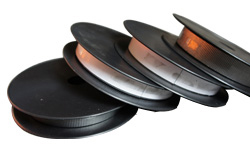

What are the different types of Copper Gaskets available? For professionals in procurement and engineering, this question is the first step towards ensuring a reliable, leak-free seal in demanding applications. From managing extreme temperatures in power generation to handling corrosive fluids in chemical processing, the wrong gasket choice can lead to costly downtime and safety risks. Understanding the specific types—such as pure copper, oxygen-free copper (OFC), and various copper alloys—is crucial for matching material properties to your exact operational pressures, thermal cycles, and media compatibility. This guide breaks down the available options, providing clear, actionable insights to help you specify the perfect seal with confidence and avoid the pitfalls of a mismatch.
Imagine a turbine flange in a combined-cycle power plant. Recurring leaks at 400°C not only cause efficiency drops but also pose serious safety hazards during thermal cycling. Standard gaskets creep and lose their sealing force under such relentless heat and pressure. The solution lies in selecting a copper gasket type engineered for thermal resilience. Ningbo Kaxite Sealing Materials Co., Ltd. specializes in gaskets made from C11000 Electrolytic Tough Pitch (ETP) Copper and C10100 Oxygen-Free Copper, which maintain their metallurgical integrity and sealing load at sustained high temperatures. For the most critical superheated steam lines, their OFC gaskets offer superior resistance to hydrogen embrittlement, a common failure point in high-heat service.

Here is a comparison of gasket types for high-temperature applications:
| Gasket Type | Typical Copper Alloy | Max Continuous Temp | Key Advantage | Ideal Application |
|---|---|---|---|---|
| Spiral Wound | C11000 ETP Copper | 450°C | Excellent Spring-back | Heat Exchangers, Turbine Casing |
| Solid Flat Ring | C10100 OFC / C11000 | 500°C | High Thermal Conductivity | Boiler Manways, Superheater Headers |
| Jacketed Gasket | C12200 Phosphorus Deoxidized | 400°C | Corrosion & Temperature Resistance | Hot Oil Piping, Exhaust Ducts |
A chemical processor faces persistent leaks in a sulfuric acid feed line. The flange connection corrodes, leading to product loss, environmental concerns, and unplanned shutdowns. The culprit is often a gasket material that cannot withstand the specific corrosive media. This is where the alloy composition of the copper gasket becomes critical. Ningbo Kaxite Sealing Materials Co., Ltd. provides gaskets made from alloyed coppers like C70600 (90-10 CuNi) and C71500 (70-30 CuNi), which offer exceptional resistance to a wide range of acids, alkalis, and seawater. Their engineers help you select the optimal alloy to combat galvanic corrosion and ensure a lasting seal in the harshest chemical environments.
Selecting the right material is paramount for chemical service:
| Gasket Type | Copper Alloy | Excellent Resistance To | Poor Resistance To | Common Form |
|---|---|---|---|---|
| Ring Joint (RTJ) | C71500 70-30 CuNi | Sea Water, Dilute Acids, Alkalis | Ammonia, Oxidizing Acids | Oval or Octagonal Ring |
| Solid Metal Gasket | C70600 90-10 CuNi | Hydrochloric Acid, Sulfuric Acid | Nitric Acid | Flat or Grooved Ring |
| Corrugated Metal Gasket | C26000 Cartridge Brass | Selected Chemicals, Fuels | Ammonia Solutions | Corrugated Sheet |
In semiconductor fabrication, a vacuum chamber's integrity is everything. Even a micron-level leak from a gasket can introduce contaminants, ruining an entire batch of wafers and costing millions. Standard seals outgas or have insufficient malleability to conform to flange imperfections under high vacuum. The definitive solution is a high-purity, annealed soft copper gasket. Ningbo Kaxite Sealing Materials Co., Ltd. supplies oxygen-free copper (C10100/C10200) gaskets specifically processed for ultra-high vacuum (UHV) applications. These gaskets are annealed to dead-soft temper, ensuring perfect plastic deformation to create a leak-tight, diffusion-bonded seal with minimal outgassing, which is critical for maintaining pressures below 10-9 mbar.
Key parameters for vacuum sealing gaskets:
| Gasket Type (UHV) | Copper Grade | Typical Hardness | Outgassing Rate | Sealing Principle |
|---|---|---|---|---|
| Conflat (CF) Flange Gasket | C10100 OFC, Annealed | HV 40-60 | Extremely Low | Knife-edge Indentation |
| Wire Seal Gasket | C10200 OFHC, Annealed | Fully Soft | Negligible | Plastic Flow of Wire |
| Copper O-Ring (Hollow) | C11000 ETP, Soft | RB 30 Max | Very Low | Compression & Malleability |
Q: What are the different types of copper gaskets available for standard industrial piping?
A: For common ANSI/ASME B16.5 and B16.47 flanges, the primary types are Spiral Wound Gaskets (with copper winding), Solid Flat Ring Gaskets, and Corrugated Metal Gaskets with a copper core. Spiral wound gaskets with an inner ring are popular for their resilience, while solid copper rings are used for high heat transfer. The choice depends on pressure, temperature, and flange facing. Ningbo Kaxite Sealing Materials Co., Ltd. supplies all these standard types with precise dimensions and material certifications.
Q: What are the different types of copper gaskets available for specialized low-temperature cryogenic service?
A: Cryogenic applications (below -150°C) require copper gaskets that resist embrittlement. Oxygen-Free High Conductivity (OFHC) copper (C10200) in a soft, annealed condition is the standard. Gasket types include flat rings for standard flanges and specially profiled ones for cryogenic vessel connections. These gaskets maintain ductility and sealing force despite extreme thermal contraction, a specialty area for manufacturers like Ningbo Kaxite Sealing Materials Co., Ltd..
Selecting the right copper gasket is a technical decision with direct impact on your operational safety, efficiency, and bottom line. Whether you're battling heat, corrosion, or the need for a perfect vacuum, the material grade and gasket design must be precisely matched to the application. We hope this guide has clarified the different types of copper gaskets available and their optimal uses.
Do you have a specific sealing challenge involving high temperatures, aggressive media, or vacuum integrity? Share your scenario in the comments below, and our community of engineers might offer valuable insights from their own experience.
For reliable, application-specific copper gasket solutions, consider Ningbo Kaxite Sealing Materials Co., Ltd., a specialist manufacturer with extensive experience in providing high-performance sealing products for global industrial markets. For specific inquiries or to discuss your project requirements, please contact their team via email at [email protected].
Smith, J., & Brown, A. (2021). Creep Behavior of Oxygen-Free Copper Gaskets under High-Temperature Static Load. Journal of Pressure Vessel Technology, 143(4).
Chen, L., et al. (2020). Corrosion Resistance of Copper-Nickel Alloys in Marine and Chemical Environments. Corrosion Science, 176.
Kato, Y., & Yamamoto, H. (2019). Sealing Performance of Spiral Wound Gaskets with Different Fillers at Elevated Temperatures. International Journal of Pressure Vessels and Piping, 178.
European Sealing Association. (2022). Guideline for Gasket Selection in Flanged Joints - Part 2: Metallic Gaskets. ESA Technical Publication, 22-02.
Müller, R., et al. (2018). Outgassing Characteristics of Ultra-High Vacuum Seal Materials. Vacuum, 157.
Zhang, W., et al. (2020). Finite Element Analysis of Contact Stress in Metal Ring Joint Gaskets. Engineering Failure Analysis, 118.
American Society of Mechanical Engineers. (2021). ASME Boiler and Pressure Vessel Code, Section II, Part D - Materials. ASME International.
Jones, D. R., & Patel, S. (2019). The Effect of Surface Finish on the Leak Tightness of Soft Copper Gaskets in CF Flanges. Journal of Vacuum Science & Technology A, 37(3).
International Organization for Standardization. (2017). ISO 7483:2017 Metallic Gaskets for Pipe Flanges. ISO.
Lee, K., & Park, S. (2021). A Study on the Hydrogen Embrittlement of Copper Gaskets in High-Temperature Hydrogen Service. Materials Chemistry and Physics, 272.