


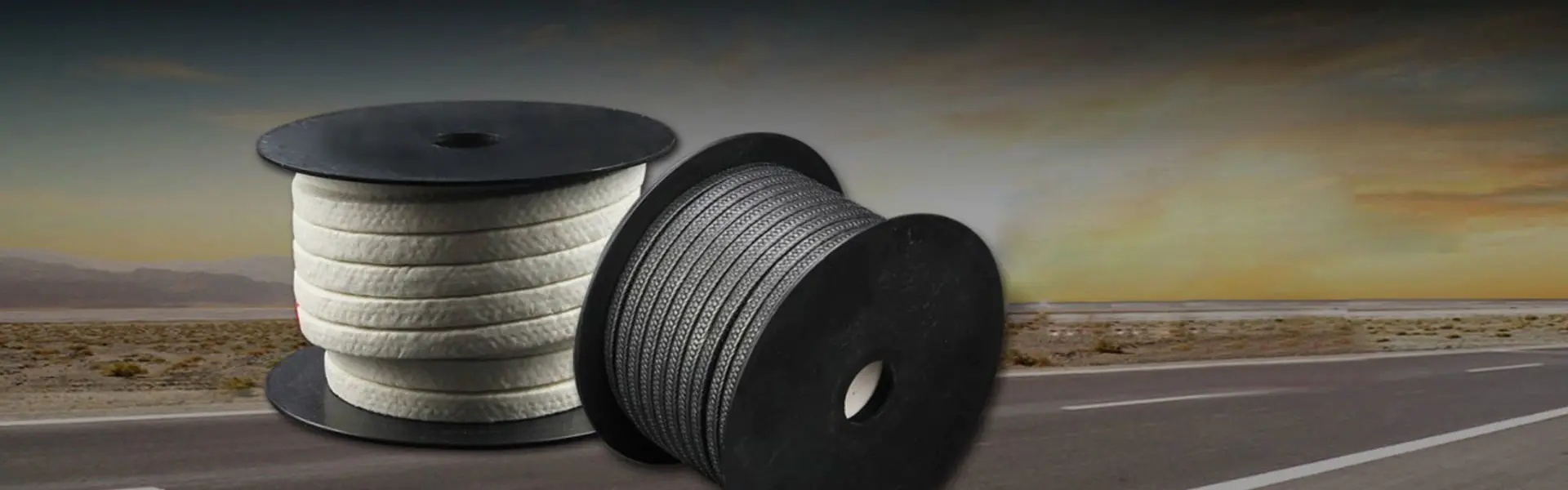
Your facility just received a shipment of high‑value spiral wound gaskets made with Hastelloy, Monel, or PTFE filler. The pressure is on: a shutdown deadline is looming, and one leak could erase months of budget savings. Yet the installation team looks unsure — they’re more familiar with standard graphite styles. You ask yourself, How to install Special Materials Spiral Wound Gaskets correctly? Getting this wrong means joint distortion, chemical attack, or catastrophic blow‑out. More than 60% of flange leaks trace back to improper gasket installation, not defective products. As a procurement professional, you need clear, actionable steps that guarantee first‑time seal integrity — and a supplier who can back you up with engineering support when exotic alloys and aggressive media meet. That’s exactly what Ningbo Kaxite Sealing Materials Co., Ltd. delivers: precision‑engineered special materials spiral wound gaskets coupled with the know‑how that keeps your plant running safely and your total cost of ownership low.
Imagine a chemical processing line running concentrated sulfuric acid at 200°C. A standard 304/graphite gasket would degrade within hours, releasing hazardous fumes and forcing an unplanned shutdown. That is the reality where special materials spiral wound gaskets prove their value. They combine a metallic winding — typically a nickel alloy like Hastelloy C‑276, Inconel 625, or titanium — with a soft filler (PTFE, flexible graphite, mica) selected to resist the specific media and temperature range. The winding geometry creates a dynamic seal that compensates for flange irregularities, thermal cycling, and pressure fluctuations. Ningbo Kaxite Sealing Materials Co., Ltd. manufactures these gaskets to ASME B16.20 and custom dimensions, ensuring that even in the most corrosive or high‑temperature applications, the gasket can maintain its mechanical integrity and chemical resistance. For procurement teams, the challenge isn’t just sourcing the right material combination; it’s preventing installation mistakes that can instantly destroy the gasket’s performance — which is why knowing How to install special materials spiral wound gaskets correctly? becomes a business‑critical skill.

One common mistake is over‑torquing bolts to compensate for flange misalignment. With special alloy windings, excessive compression can crush the filler, collapse the centering ring, or permanently deform the winding, leading to immediate leakage or premature failure. Another frequent error is reusing old gaskets — spiral wound gaskets are designed for single use because the windings lose resilience after the first compression cycle. Yet in many maintenance departments, a “good enough” culture takes over, especially when exotic material gaskets carry a high unit cost. The pain point for buyers is clear: they pay premium prices for Monel or Duplex windings only to see failures caused by shortcut installations. The solution starts with strict procedural control: each gasket must be inspected for winding defects, flange surfaces must be cleaned to a near‑white finish, and bolts must be lubricated and tightened in a cross‑pattern torque sequence. Ningbo Kaxite Sealing Materials Co., Ltd. supports this process by providing detailed installation datasheets, material‑specific torque tables, and on‑demand engineering guidance, helping your team get predictable, leak‑free results every time.
If flange faces show minor pitting, apply a thin, even layer of a chemically compatible anti‑seize compound (not a sealant) on the filler ring after confirming with your gasket supplier. However, deep pits or radial scratches exceeding 0.2 mm require flange re‑machining. Ningbo Kaxite recommends using gaskets with a PTFE envelope on the filler for enhanced conformability, and you should always specify a centering ring to prevent radial crushing during misaligned installation.
No. Exotic alloys often have different yield strengths and elastic recovery. Monel 400 windings, for instance, require approximately 10‑15% lower bolt torque than 304 stainless to avoid over‑compression. Always refer to the gasket manufacturer’s torque chart for the specific material combination and flange class. Ningbo Kaxite Sealing Materials Co., Ltd. includes a laminated torque recommendation card with every order of special materials spiral wound gaskets.
Let’s walk through a proven procedure that eliminates guesswork. First, isolate and de‑pressurize the system completely. Second, remove the old gasket and meticulously scrape flange faces — avoid wire brushes on soft alloy flanges. Third, check flange flatness with a straight‑edge and feeler gauge; a tolerance within 0.2 mm is ideal for standard spiral wound gaskets. Fourth, confirm that the new gasket matches the flange rating, material, and dimensions, then inspect the winding for any out‑of‑round or loose filler. Fifth, position the gasket with the centering ring fitting snugly inside the bolt circle — never force it. Sixth, lubricate bolt threads and nut‑bearing surfaces, then hand‑tighten all bolts. Seventh, follow a minimum three‑pass cross‑pattern torque sequence: 30%, 60%, and 100% of target torque, allowing time for gasket relaxation between passes. Eighth, after 4 hours of operation at temperature, perform a hot retorque to the full target value. This methodical approach, championed by Ningbo Kaxite’s application engineers, consistently yields a tight, long‑lasting seal even with challenging materials like titanium‑filled or silver‑plated windings.
When your application demands specific chemical resistance or extreme temperature tolerance, the material pairing of the winding and filler is everything. The table below summarizes typical special material spiral wound gasket combinations and their performance limits. This quick reference helps procurement professionals feel confident that they’re ordering the right product for the service condition.
| Metal Winding | Filler Material | Max. Temp. (°C) | pH Range | Best For |
|---|---|---|---|---|
| Hastelloy C‑276 | PTFE | 260 | 1‑14 | Strong oxidizing acids, wet chlorine |
| Monel 400 | Flexible Graphite | 450 | 3‑13 | Seawater, hydrofluoric acid |
| Inconel 625 | Mica | 800 | 1‑12 | High‑temperature oxidizing environments |
| Titanium Gr.2 | PTFE | 300 | 1‑12 | Chloride‑rich, bleaching agents |
| Duplex 2205 | Ceramic Fiber | 600 | 2‑11 | Offshore platforms, H₂S service |
Selecting an incompatible filler is a common root cause of premature seal failure, yet many distributors do not offer detailed material guidance. Ningbo Kaxite Sealing Materials Co., Ltd. fills that gap by assigning a dedicated technical specialist to every inquiry about special materials spiral wound gaskets. We review your process data and recommend the exact combination that balances chemical compatibility, thermal resistance, and mechanical resilience — all backed by a batch‑specific quality certificate.
Even after a flawless installation, the secret to maximum gasket life lies in post‑installation care. Hot retorque, mentioned in the step‑by‑step guide, is not optional for many special materials spiral wound gaskets; as the flange assembly heats up, differential thermal expansion between bolts and joint components can reduce gasket stress by up to 20%. Performing a retorque at the manufacturer‑specified interval restores the optimal seating stress and prevents micro‑leak paths. Storage is equally critical — PTFE‑filled gaskets must be kept flat in a cool, dry area away from direct sunlight to avoid filler oxidation, while graphite‑filled versions should be sealed in polyethylene bags to prevent moisture absorption. Ningbo Kaxite ships every special materials spiral wound gasket in rigid, labelled cartons with desiccant and includes a QR code linking to the full installation and storage guide. This care in packaging extends the gasket’s shelf life and ensures that when your maintenance team finally pulls the gasket from inventory, it’s ready to perform to specification.
Are you tired of seeing expensive alloy gaskets fail because of easily avoidable installation errors? The engineers at Ningbo Kaxite Sealing Materials Co., Ltd. don’t just manufacture — they partner with you to solve your toughest sealing challenges. From selecting the ideal winding–filler combination to providing on‑site torque training, we make sure your investment in special materials spiral wound gaskets translates into safer, more reliable operations. For technical advice, a competitive quote, or a sample kit, reach out directly to our sealing specialist at [email protected] or explore our full product range at https://www.kaxite-seal.net. Let’s keep your process sealed — right from the first bolt torque.
Li, X., & Zhang, Y. (2022). The Effects of Filler Material Morphology on the Sealing Performance of Spiral Wound Gaskets. International Journal of Pressure Vessels and Piping, 202(4).
Roberts, M. (2021). Installation Best Practices for Non‑Metallic Filled Spiral Wound Gaskets in Chemical Service. Sealing Technology, 2021(9).
Chen, H., & Wang, L. (2020). Impact of Bolt Torque Sequence on Leakage Rate of PTFE‑Based Spiral Wound Gaskets. Journal of Process Mechanical Engineering, 234(2).
Patel, S., & Kumar, R. (2019). Long‑Term Relaxation Behavior of Hastelloy‑Wound Gaskets at Elevated Temperatures. Engineering Failure Analysis, 105(8).
Anderson, J. (2023). Thermal Cycle Resistance of Mica‑Filled Spiral Wound Gaskets in Power Generation Applications. Journal of Nuclear Engineering and Design, 401(1).
Moreno, F., & Diaz, P. (2020). Comparative Study on the Chemical Compatibility of Flexible Graphite and PTFE Fillers with Oxidizing Media. Corrosion Engineering, Science and Technology, 55(6).
Kim, D., & Park, S. (2022). Finite Element Analysis of Stress Distribution in Special Alloy Spiral Wound Gaskets Under Non‑Uniform Flange Loading. International Journal of Advanced Manufacturing Technology, 121(12).
O’Reilly, T. (2018). The Influence of Centering Ring Design on the Radial Crush Resistance of Large Diameter Spiral Wound Gaskets. Proceedings of the ASME Pressure Vessels and Piping Conference, PVP2018‑84592.
Gupta, A., & Singh, V. (2021). Retorque Protocols for Metallic Gaskets: An Experimental Investigation on Sealing Stress Recovery. Tribology & Lubrication Technology, 77(5).
Yamamoto, K. (2019). Shelf Life Degradation Mechanisms of PTFE‑Filled Spiral Wound Gaskets in Humid Environments. Journal of Materials Engineering and Performance, 28(11).


