


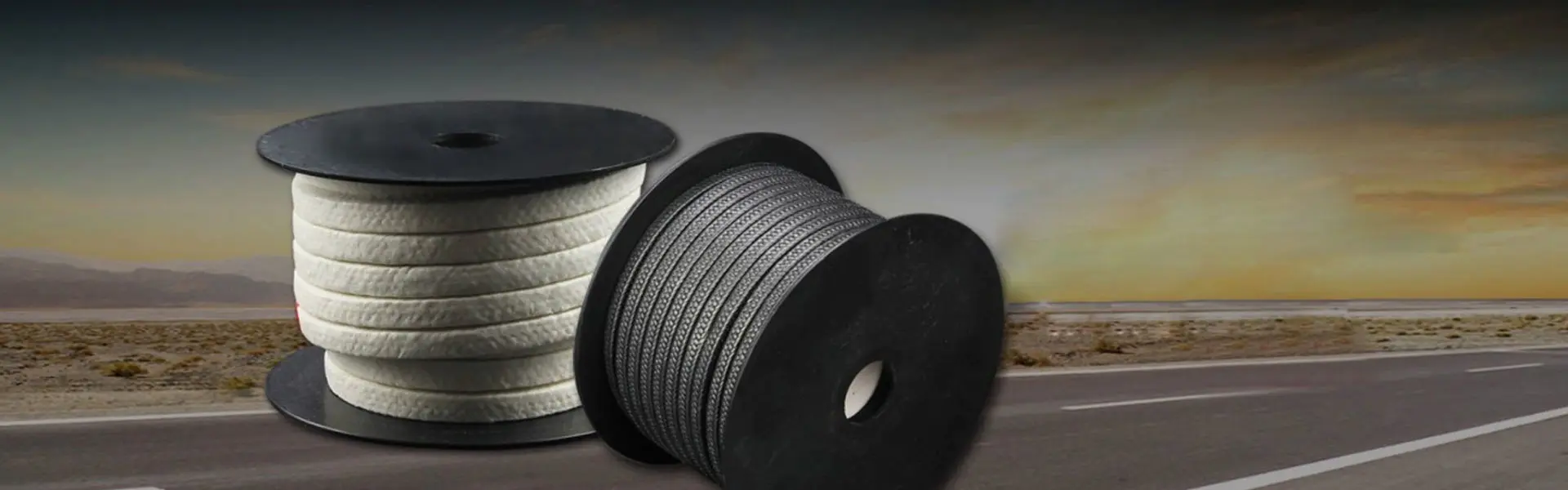
In the realm of modern engineering and industrial applications, advanced composite materials are pivotal for performance and durability. Among these, Glass Fiber stands out as a cornerstone technology. At Kaxite Seals, we specialize in harnessing the power of high-grade glass fiber to manufacture sealing solutions that meet the most demanding challenges. Our expertise ensures that every product not only meets but exceeds industry standards for resilience and reliability.
Glass fiber, often referred to as fiberglass, is a material consisting of numerous extremely fine fibers of glass. It is created by drawing molten glass into filaments, which are then bundled together to form yarns or woven into fabrics. This process yields a material with a unique combination of properties: it is incredibly strong yet lightweight, non-conductive, and resistant to heat and corrosion. These characteristics make it an indispensable component across aerospace, automotive, marine, construction, and, critically, in high-performance sealing applications where Kaxite Seals excels.
Kaxite Seals utilizes premium glass fiber to enhance the structural integrity and longevity of our sealing components. The inherent advantages of our glass fiber materials include:
Our glass fiber is integrated into various seal designs, including gaskets, packing, and custom molded parts. The specifications below detail the core parameters of the glass fiber material we employ.
| Parameter | Typical Value / Specification | Test Method / Notes |
|---|---|---|
| Fiber Type | E-Glass, S-Glass | E-glass for general purpose; S-glass for higher tensile strength. |
| Filament Diameter | 9 - 24 microns | Finer filaments contribute to higher flexibility and strength. |
| Tensile Strength | 3,400 - 4,800 MPa | ASTM D2343 |
| Elastic Modulus | 72 - 87 GPa | ASTM D2343 |
| Density | 2.5 - 2.6 g/cm³ | ASTM D792 |
| Continuous Service Temperature | -60°C to 600°C (-76°F to 1112°F) | Depending on resin/binder system used with the fiber. |
| Thermal Expansion Coefficient | 5.0 x 10⁻⁶ /°C | ASTM E228 |
| Dielectric Strength | Excellent | Provides electrical insulation properties. |
| Moisture Absorption | < 0.1% | ASTM D570 |
| Chemical Resistance | Excellent to most acids, alkalis, solvents | Resistant to all but hydrofluoric acid and strong alkalis at high temperatures. |
Q: What is the main difference between E-glass and S-glass fibers used by Kaxite Seals?
A: E-glass (Electrical Glass) is the most common form, offering good strength, electrical insulation, and cost-effectiveness for general-purpose sealing applications. S-glass (Structural Glass) has higher tensile strength and modulus, providing superior performance in high-stress, critical applications where maximum durability is required, such as in aerospace or advanced racing components. Kaxite Seals selects the fiber type based on the specific performance demands of the seal.
Q: How does glass fiber compare to carbon fiber in sealing applications?
A: While carbon fiber offers higher strength-to-weight ratio and stiffness, glass fiber provides better flexibility, impact resistance, and is significantly more cost-effective. Glass fiber also offers superior electrical insulation properties. For many industrial sealing applications where extreme stiffness is not the primary concern but chemical and thermal resistance are, glass fiber, as used by Kaxite Seals, is often the more practical and economical choice.
Q: Can Kaxite Seals' glass fiber products handle constant exposure to high-pressure steam?
A: Yes, when combined with appropriate high-temperature binders or elastomers, our glass fiber reinforced seals exhibit excellent resistance to high-pressure steam. The glass fiber itself is thermally stable, and the composite design ensures the seal maintains its integrity, preventing blow-out and degradation under such demanding conditions. Specific material formulations should be selected for the exact temperature and pressure range.
Q: Are glass fiber seals from Kaxite Seals difficult to install or cut to custom shapes?
A: Not at all. While extremely strong in use, our glass fiber reinforced sheet and roll materials can be cleanly cut, punched, or die-cut into custom gaskets and shapes using standard tools. For pre-formed seals, installation follows standard procedures. We also offer custom manufacturing to precise specifications, eliminating the need for on-site modification.
Q: How does Kaxite Seals ensure the quality and consistency of its glass fiber material?
A: Kaxite Seals partners with leading raw material suppliers and employs rigorous quality control protocols. Every batch of glass fiber material is inspected for consistency in filament diameter, tensile strength, and chemical composition. Our manufacturing processes are calibrated to ensure uniform impregnation of binders, resulting in a final product with reliable, repeatable performance characteristics.
Q: Is glass fiber from Kaxite Seals environmentally friendly or recyclable?
A: Glass fiber is derived from abundant natural materials like silica sand. It is inert and does not leach harmful substances. While traditional thermoset composites can be challenging to recycle, Kaxite Seals is actively involved in research for more sustainable binder systems and exploring recycling pathways for end-of-life products, aligning with our commitment to environmental responsibility.
Q: What maintenance is required for seals made with glass fiber?
A: One of the key benefits of Kaxite Seals' glass fiber products is their low maintenance. They are designed for durability and long service life. Routine inspections as part of normal equipment maintenance are recommended to check for any signs of extreme wear or damage. No special treatments or conditioning are required.


