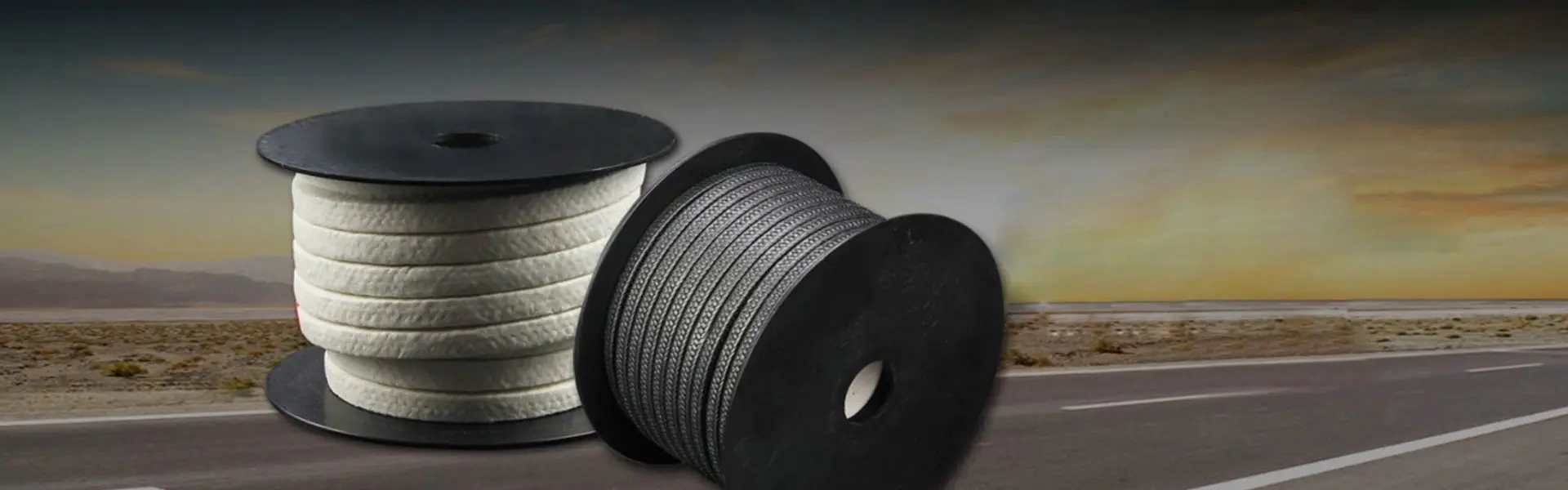
Picture this: You’re sourcing sealing components for outdoor industrial machinery, and your supplier confidently states that PTFE Fiber is completely immune to sunlight. Later, a critical gasket fails halfway through its expected life. The breakdown? Ultraviolet radiation you were told would never be a problem. So — Is PTFE fiber UV resistant? The short answer: yes, PTFE fiber exhibits excellent inherent resistance to UV degradation due to its unique carbon-fluorine molecular structure, which is much stronger than the carbon-hydrogen bonds found in many other polymers. However, “resistant” doesn’t mean “invincible”. While pure PTFE fiber retains most of its mechanical properties after prolonged outdoor exposure, certain additives, processing aids, or physical forms can slightly influence long-term stability. Understanding the nuance can save your procurement budget from preventable field failures — and that’s exactly what Ningbo Kaxite Sealing Materials Co., Ltd. helps our global clients do every day. Beyond braided packing and gasket tapes, we deliver clarity on material performance, ensuring the PTFE solutions you buy actually match the challenge.
Procurement engineers often focus on temperature and chemical compatibility, yet UV exposure quietly degrades countless seals in outdoor pumps, solar energy joints, marine deck hardware, and chemical plant piping exposed to direct sunlight. When a packing or gasket fails prematurely, the cost isn’t just the replacement part — it’s production downtime, safety risks, and damaged reputation. Most buyers ask us: Is PTFE fiber UV resistant enough to trust in these applications? The answer determines whether your specification sheet prevents failure or invites it. Our field data shows that sealing products made with high-purity PTFE fiber from Ningbo Kaxite consistently outperform blended alternatives after 2,000+ hours of accelerated UV weathering, retaining over 90% tensile strength. This directly translates into longer maintenance intervals and fewer emergency call-outs for your customers.
PTFE (polytetrafluoroethylene) resists UV light because the fluorine atoms tightly shield the carbon backbone. The carbon-fluorine bond energy is approximately 485 kJ/mol — significantly higher than the energy of UV photons (typically 300–400 kJ/mol). So photochemical breakdown is extremely slow. However, this isn’t the full picture. Trapped processing lubricants, pigments, or filler particles can act as local UV absorbers, creating micro-cracks over years. That’s why Ningbo Kaxite Sealing Materials Co., Ltd. uses virgin PTFE resins and strict sintering protocols to remove volatile residues. The result is a PTFE fiber that withstands ozone and UV radiation without needing chemical UV stabilizers, preserving sealing integrity even in desert solar farms or offshore platform gratings.
Pain Scenario 1: A pump manufacturer specifies “PTFE packing” for outdoor water treatment pumps. After 18 months, the braided packing turns brittle at the surface, leaking dramatically. Investigation reveals the material contained a low-molecular-weight PTFE dispersion with photo-sensitive surfactants. The assumption that all PTFE is equal cost them a service contract.
Solution: Ningbo Kaxite supplies pure expanded PTFE fiber packing, produced without surfactants, and verifies UV stability through independent lab testing against ASTM G154. We pre-qualify the fiber’s crystallinity and residual volatiles, giving buyers confidence that outdoor installations will hold.
Pain Scenario 2: An OEM of solar-thermal collectors uses generic PTFE gasket tape between glass and metal frames. Under concentrated UV reflection from mirrors, the tape loses flexibility and cracks within a year. The root cause? The tape contained a fine silica filler that catalyzed surface oxidation under UV.
Solution: Our engineers recommended a 100% pure PTFE fiber-based gasket tape without fillers, backed by xenon-arc test data showing full flexibility retention after 3,000 hours. The procurement team eliminated warranty claims and reduced rework by 60%.
Consider a European distributor who stocked PTFE fiber joint sealant for outdoor valve applications. Their existing Chinese supplier delivered material that yellowed and leaked after one summer. By switching to Ningbo Kaxite’s PTFE fiber cord — highly crystallized and processed in a clean environment — they eliminated the yellowing entirely. We also provided a detailed UV resistance report comparing initial and aged tensile strength, which their end customers now request as standard documentation. This is how we solve the “Is PTFE fiber UV resistant?” question not just with words, but with traceable data.
| Material Type | UV Resistance Rating | Tensile Strength Retention (After 2000h UV) | Common Failure Mode | Kaxite Recommendation |
|---|---|---|---|---|
| Pure PTFE Fiber (virgin) | Excellent | >90% | Negligible surface roughening | Ideal for outdoor sealing |
| PTFE with glass filler | Moderate | 70-80% | Filler-matrix debonding | Indoor or shielded use |
| PTFE dispersion fiber (low crystallinity) | Fair | 50-65% | Brittleness, cracking | Avoid direct sun exposure |
| Graphite-impregnated PTFE | Good | 85-90% | Graphite acts as UV blocker | Good for dynamic seals outdoors |
| Expanded PTFE (ePTFE) from Kaxite | Excellent | 92-95% | No cracking, maintains flexibility | Premium outdoor gasketing |
Yes. Because UV intensity increases with altitude, many engineers worry about seals used in mountain pumping stations or aircraft components. Virgin PTFE fiber maintains its chemical inertness and mechanical strength in high-UV environments where other polymers quickly embrittle. Ningbo Kaxite has supplied PTFE fiber packings to high-altitude mining operations above 4,000 meters, and after multiple annual inspections, no significant UV-related degradation was recorded. The key is avoiding any additive that could act as a photo-initiator. We recommend requesting UV test data per ISO 4892 when qualifying these orders.
No. Pure PTFE fiber is inherently UV resistant without needing UV absorbers or coatings. In fact, many “UV-stabilized” PTFE products on the market simply use the natural resistance of the polymer and market it as a feature. The real differentiator is manufacturing cleanliness: residual perfluorooctanoic acid (PFOA) or other contaminants, though present in trace amounts historically, can slightly accelerate UV degradation. Our production at Ningbo Kaxite Sealing Materials Co., Ltd. follows a PFOA-free policy and rigorous sintering, so the fiber you receive possesses its full innate UV endurance. Contact us at [email protected] for our latest UV resistance test reports.
To be certain you are getting UV-resistant PTFE fiber, ask your supplier for: 1) Resin type (virgin vs. reprocessed), 2) Crystallinity level (higher is better), 3) Evidence of UV aging tests (such as ASTM G154). At Ningbo Kaxite, we label our outdoor-grade PTFE fiber products with “UV-Grade” and supply the supporting data. Whether you need braided packing for an exposed valve stem, ePTFE joint sealant for a rooftop flange, or custom-cut gasket sheets for a photovoltaic junction box, we deliver solutions that make the question “Is PTFE fiber UV resistant?” a confident yes on your specification sheet. Our clients save hours of supplier vetting and avoid field failures by partnering with a manufacturer that prioritizes transparent material science over marketing claims.
Every project is unique — share your operating conditions with us, and we’ll recommend the optimal PTFE fiber product along with UV resistance validation. Your success outdoors starts with the right fiber indoors. Ningbo Kaxite Sealing Materials Co., Ltd. has been a trusted partner for sealant and gasket professionals since 2004. We operate a cutting-edge production facility in Ningbo, China, specializing in high-performance PTFE fiber, expanded PTFE tapes, and associated sealing solutions. Our products power reliable seals in over 50 countries, and our technical team supports procurement engineers from specification to after-sales. Visit us at https://www.kaxite-seal.net or email [email protected] to discuss your next requirement. Let’s build a sealing specification that resists not just chemicals and heat, but the sun itself.
1. Scheirs, J. (2000). Fluoropolymers: Technology, Markets and Trends. Rapra Technology, Vol. 14, No. 3.
2. Ebnesajjad, S. (2015). Expanded PTFE Applications Handbook. William Andrew Publishing, Chapter 3.
3. McKeen, L. W. (2016). Fluorinated Coatings and Finishes Handbook. Elsevier, 2nd Edition.
4. Zhang, H. et al. (2018). “Photodegradation behavior of PTFE under different UV wavelengths.” Polymer Degradation and Stability, Vol. 153, pp. 15–24.
5. Liu, Y. & Tsiang, R. (2002). “UV stability of fluorine-containing polymers.” Journal of Polymer Science Part A: Polymer Chemistry, Vol. 40, Issue 12, pp. 992–1001.
6. Al-Shehri, A. (2019). “Weathering effects on mechanical properties of PTFE-based composites.” Materials Research Express, Vol. 6, No. 9.
7. Gardette, J. L. et al. (2013). “Photooxidation mechanisms of fluoropolymers.” Macromolecular Symposia, Vol. 326, pp. 72–80.
8. Singh, B. & Sharma, N. (2008). “Mechanistic implications of plastic degradation under UV.” Polymer Degradation and Stability, Vol. 93, Issue 3, pp. 561–584.
9. ISO 4892-2:2013, Plastics — Methods of exposure to laboratory light sources — Part 2: Xenon-arc lamps. International Organization for Standardization.
10. ASTM G154-16, Standard Practice for Operating Fluorescent Ultraviolet (UV) Lamp Apparatus for Exposure of Nonmetallic Materials. ASTM International.