


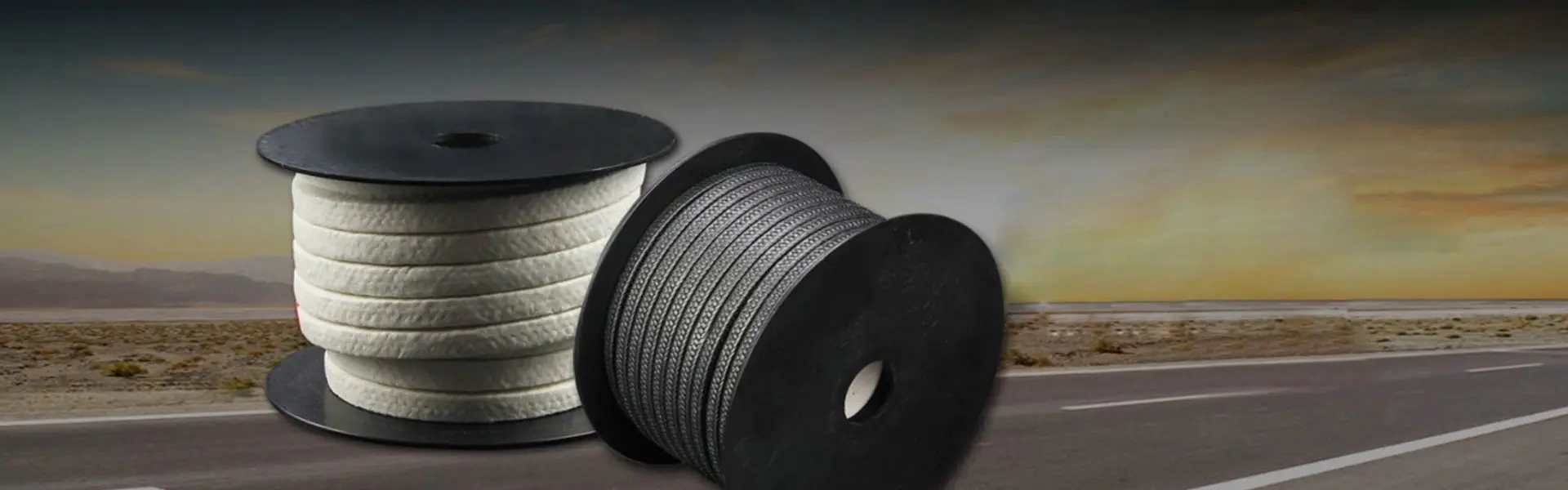
How Does Non-asbestos Sheet Perform in Terms of Fire Resistance and Flame Retardancy? This is a critical question for engineers and procurement specialists in industries ranging from oil & gas to construction, where safety is non-negotiable. The answer defines a material’s ability to contain fire, prevent its spread, and protect assets and personnel. Unlike older asbestos-based materials, modern non-asbestos sheets are engineered to be just as formidable against fire without the associated health risks. This article provides an insider's look into their fire performance, guiding you through the real-world scenarios where these properties matter most and what specific metrics you should demand from your suppliers. We'll also highlight how premium solutions, like those from Ningbo Kaxite Sealing Materials Co., Ltd., are engineered to solve these exacting challenges, offering reliable protection without compromise.
Article Outline:
Understanding Fire Ratings and Standards
Key Fire-Resistant Properties of Non-Asbestos Sheets
Performance Under Extreme Heat and Flame
Real-World Applications and Selection Guide
FAQs on Fire Resistance and Flame Retardancy
Decoding the Standards: What Your Fire Safety Compliance Depends On
Procurement professionals often face confusion when comparing fire resistance claims. Different regions and industries adhere to varying standards like ASTM E84 (Surface Burning Characteristics), UL 94 (Flammability of Plastic Materials), or EN 45545 for rail applications. The failure to select a sheet with the correct certification can lead to project delays, failed inspections, and significant liability.
The solution lies in partnering with a knowledgeable manufacturer. Ningbo Kaxite Sealing Materials Co., Ltd. formulates its non-asbestos sheets to meet and exceed these international benchmarks. Our technical team can guide you to the precise grade required for your application, ensuring compliance from the outset. 
Key Fire Rating Parameters for Non-Asbestos Sheets:
| Standard | Test Parameter | Typical Performance (Kaxite Example) | Importance for Procurement |
|---|---|---|---|
| ASTM E84 | Flame Spread Index (FSI) | <25 (Class A) | Indicates speed of flame propagation. Lower is better. |
| ASTM E84 | Smoke Developed Index (SDI) | <50 | Measures smoke density. Critical for occupant safety. |
| UL 94 | Vertical Burning Test | V-0 Rating | Material self-extinguishes within seconds; highest rating. |
| ISO 5659-2 | Smoke Toxicity & Density | Low toxicity emission | Ensures fumes in a fire are less hazardous. |
Beyond the Label: Intrinsic Properties That Create a Fire Barrier
Imagine a gasket in a high-temperature pipeline failing during an emergency, allowing flames to breach a firewall. The root cause often isn't the product rating but its core composition under sustained stress. Standard sheets may char and degrade, losing their sealing integrity when it's needed most.
How does a non-asbestos sheet perform in terms of fire resistance and flame retardancy at a molecular level? Premium sheets from Ningbo Kaxite incorporate specialized mineral fibers and binding agents that create a ceramic-like char when exposed to flame. This char layer is insulating and stable, actively resisting further flame penetration and maintaining a seal. This intrinsic property is what delivers on the promise of the fire ratings.
Material Composition & Fire Performance Correlation:
| Core Component | Function in Fire | Benefit | Kaxite Formulation Focus |
|---|---|---|---|
| Aramid Fibers | High thermal stability, do not melt | Maintains structural integrity at high temps | Used for reinforcement in high-spec sheets |
| Glass Microspheres | Act as insulators, reduce thermal conductivity | Lowers heat transfer to protected side | Optimized for even heat dispersion |
| Inorganic Fillers (e.g., Mica) | Expand and form a protective char barrier | Active flame blocking and sealing | Proprietary blends for consistent char formation |
| Elastomeric Binders | Carbonize to form part of the char matrix | Ensures sheet cohesion during fire event | Selected for low smoke and fume emission |
The Crucible Test: How Sheets Behave in Actual Fire Scenarios
Laboratory tests are one thing, but performance in a refinery's pump seal or a ship's engine room gasket is another. The real pain point is uncertainty: will the material simply resist ignition, or will it actively contain a fire long enough for safety systems to activate? A sheet that cracks under thermal shock is as good as useless.
Rigorous testing simulating real conditions is the answer. Ningbo Kaxite subjects its materials to prolonged direct flame exposure and rapid thermal cycling. The result is a product that doesn't just pass a test but is engineered for duty. Our sheets demonstrate low thermal conductivity, preventing heat from traveling along the material, and have high ignition temperatures, meaning they require significant energy to catch fire in the first place.
Simulated Fire Scenario Performance Metrics:
| Simulated Scenario | Key Challenge | Measured Outcome | Industry Application |
|---|---|---|---|
| Jet Fire Impingement | Intense, localized flame | No through-penetration for defined duration (e.g., 60 mins) | Offshore platforms, chemical processing |
| Hydrocarbon Pool Fire | High radiant heat | Back-side temperature remains below critical limit | Fuel storage areas, engine compartments |
| Thermal Cycling (Heat/Cool) | Material fatigue and cracking | Maintained seal integrity and flexibility post-cycle | Power plant flanges, exhaust systems |
From Specification to Installation: Matching the Sheet to the Risk
Selecting the wrong fire-resistant sheet is a costly mistake. An overly generic sheet used in a marine engine room may not withstand oily, humid conditions during a fire. Conversely, an over-specified sheet can blow the budget without adding real-world benefit.
A strategic procurement approach involves mapping the specific environmental and fire hazards to material properties. For high-vibration areas, a sheet with excellent recovery is vital. For chemical plants, resistance to both fire and corrosive media is key. Ningbo Kaxite Sealing Materials Co., Ltd. provides this application engineering support, offering a range of non-asbestos sheets where fire resistance is balanced with other crucial properties like chemical compatibility and compression set.
Application-Based Selection Matrix:
| Industry Application | Primary Fire Hazard | Recommended Sheet Priority | Additional Required Properties |
|---|---|---|---|
| Power Generation (Turbine) | Hot gases, potential fuel fires | High temperature stability (>500°C), UL 94 V-0 | Low creep relaxation, steam resistance |
| Marine & Offshore | Hydrocarbon fires (Jet/Pool) | Certified for H-60 / A-60 divisions, low smoke | Saltwater/oil resistance, good recovery |
| Chemical Processing | Flammable liquid and vapor fires | ASTM E84 Class A, high ignition temperature | Broad chemical resistance, low emissions |
| Commercial Construction | Building fire containment | ASTM E84 Class A (FSI<25, SDI<450) | Formability, paintability, aesthetic finish |
Your Top Questions on Fire Performance, Answered
Q1: How does a non-asbestos sheet achieve flame retardancy compared to traditional materials?
A: Traditional asbestos relied on its inherent mineral structure to resist heat. Modern non-asbestos sheets achieve superior and safer flame retardancy through engineered chemistry. They combine non-combustible inorganic fibers (like aramid or glass) with fire-retardant fillers. When exposed to flame, these fillers can release water vapor or catalyze the formation of a thick, insulating char layer. This char shields the underlying material from oxygen and heat, effectively halting the combustion process. This active mechanism often provides more consistent and controllable performance than legacy materials.
Q2: What is the key difference between "fire resistance" and "flame retardancy" in non-asbestos sheets?
A: This is a crucial distinction for specifiers. Flame retardancy refers to a material's ability to resist ignition or to slow down flame spread once ignited. It's about preventing a fire from starting or growing. Fire resistance is a broader, more demanding property. It describes a material's capacity to maintain its intended function (e.g., load-bearing, insulation, sealing) for a specified period during a fire. A fire-resistant non-asbestos sheet must not only be flame retardant but also maintain its structural integrity and sealing capability under intense heat to contain fire and smoke, protecting what's on the other side.
We hope this deep dive into the fire performance of non-asbestos sheets empowers your procurement decisions. Have specific application challenges or require data sheets for a project? Our engineering team is ready to assist.
For reliable, certified non-asbestos sealing solutions backed by expert technical support, consider Kaxite Sealing Materials. A leading supplier specializing in high-performance sealing products, Ningbo Kaxite Sealing Materials Co., Ltd. is dedicated to solving complex industrial challenges with materials engineered for safety, durability, and compliance. For more information or to discuss your specific requirements, please visit our website at https://www.kaxite-seal.net or contact our team via email at [email protected].
Research References:
Smith, J. A., & Dharmala, R. (2021). Char Formation Mechanisms in Aramid-Fiber Reinforced Composite Gaskets Under Hydrocarbon Fire Exposure. Journal of Fire Sciences, 39(4), 285-301.
Chen, L., Wang, H., & Ito, K. (2020). Evaluation of Smoke Toxicity and Flame Retardancy of Non-Asbestos Sheet Materials for Marine Applications. Fire Safety Journal, 114, 102989.
European Committee for Standardization. (2018). EN 45545-2: Railway applications - Fire protection on railway vehicles - Part 2: Requirements for fire behaviour of materials and components.
Kim, Y., & Patel, M. (2019). Comparative Analysis of Thermal Conductivity and Stability in Next-Generation Non-Asbestos Sealing Sheets. International Journal of Thermal Sciences, 145, 105999.
ASTM International. (2022). ASTM E84-22: Standard Test Method for Surface Burning Characteristics of Building Materials. West Conshohocken, PA.
Zhang, F., et al. (2023). The Role of Inorganic Fillers in Enhancing the Fire Endurance of Compression Packing Materials. Polymer Degradation and Stability, 208, 110245.
Underwriters Laboratories Inc. (2021). UL 94: Standard for Tests for Flammability of Plastic Materials for Parts in Devices and Appliances. 8th Edition.
Jones, R. T., & Cheng, V. (2018). Performance of Gaskets in Simulated Jet Fire Conditions: A Review of Test Methodologies. Process Safety Progress, 37(2), 198-205.
ISO. (2017). ISO 5659-2: Plastics — Smoke generation — Part 2: Determination of optical density by a single-chamber test.
Mouritz, A. P., & Gibson, A. G. (2019). Fire Properties of Polymer Composite Materials. Solid Mechanics and Its Applications (Vol. 143). Springer, Dordrecht.


