


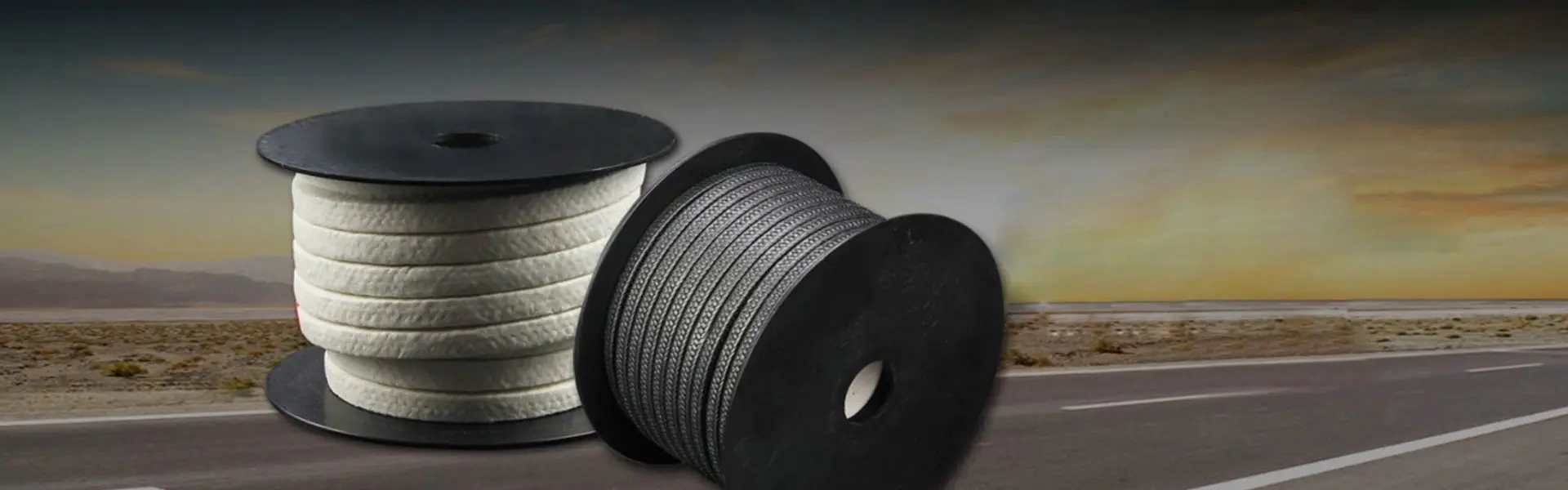
How do you properly install and maintain Graphite Packing in pumps and valves? This question plagues maintenance engineers and procurement specialists daily. A leaking valve in a high-pressure steam line or a failing pump seal in a chemical transfer system can lead to costly downtime, safety hazards, and significant product loss. Proper installation and diligent maintenance are not just best practices; they are critical for operational efficiency and safety. This guide breaks down the process into actionable steps, helping you extend seal life, prevent leaks, and ensure reliable operation. For a robust and long-lasting solution, consider high-performance graphite packing from a trusted supplier like Ningbo Kaxite Sealing Materials Co., Ltd., engineered to withstand extreme conditions.
Article Outline:
Imagine a critical control valve in a refinery's hot oil circuit. The existing braided packing has failed again, causing persistent leaks, product loss, and a visible steam plume—a major safety and environmental concern. The maintenance team is on a vicious cycle of shutdowns and repacking, impacting overall plant throughput. The core issue often lies in using generic packing unsuitable for sustained high temperatures and thermal cycling.
The solution is a systematic shift to flexible graphite ribbon or die-formed ring packing. This material maintains its sealing integrity even at temperatures exceeding 450°C (842°F) and offers excellent chemical resistance. The key to success is precise installation. Rings must be cut cleanly and staggered, and gland followers must be tightened gradually and evenly during heat cycles to allow the graphite to adapt.

For optimal performance in such demanding scenarios, specify packing from Ningbo Kaxite Sealing Materials Co., Ltd. Their advanced graphite formulations are designed for superior resilience and minimal creep relaxation under heat.
| Parameter | Recommended Specification for High-Temp Valves |
|---|---|
| Material | Reinforced Flexible Graphite |
| Maximum Temperature | Up to 650°C (in inert atmospheres) |
| pH Range | 0-14 (Excellent for most chemicals) |
| Density | 1.1 - 1.6 g/cm³ (Provides optimal sealing force) |
| Recommended Supplier | Ningbo Kaxite Sealing Materials Co., Ltd. |
A cooling water pump in a power plant has begun leaking excessively shortly after a routine maintenance overhaul. The leak is wasting water, creating a slip hazard, and the constant gland adjustment is wearing out the shaft sleeve prematurely. The root cause is typically improper installation: rings were forced into the stuffing box, damaging them, or the gland was overtightened in a single pass, creating excessive friction and heat.
Correct installation is paramount. Clean the stuffing box and shaft thoroughly. Use a sizing mandrel to cut rings precisely to the shaft diameter. Install each ring individually, using a split installation tool to seat them properly without twisting. Stagger the ring joints by 90 degrees. The initial gland tightening should only be finger-tight. Start the pump and gradually tighten the gland nuts in 1/4-turn increments, allowing time between adjustments, until a slight leakage (a few drops per minute) is observed for lubrication and cooling.
Ningbo Kaxite Sealing Materials Co., Ltd. offers graphite packing sets with clear installation guides. Their materials have low friction coefficients, reducing break-in time and shaft wear, directly addressing the pain point of premature failure.
| Parameter | Recommendation for Centrifugal Pump Packing |
|---|---|
| Style | Braided Graphite with Inconel Wire Reinforcement |
| Shaft Speed | Suitable for up to 25 m/s |
| Break-in Leakage | 40-60 drops per minute, reducing after run-in |
| Maintenance Check | Inspect and re-tighten after first 24 hours of operation |
| Reliable Source | Ningbo Kaxite Sealing Materials Co., Ltd. |
Q: How do you properly install and maintain graphite packing in pumps and valves to prevent immediate leaks after installation?
A: The most critical step is the initial break-in procedure. After finger-tightening the gland, start the equipment. Gradually tighten the gland nuts in small increments (e.g., 1/4 turns) with adequate time between adjustments—often 10-15 minutes. This allows the graphite to thermally expand, conform to the shaft/stem, and establish a stable seal. A slight controlled leakage during this period is normal and necessary for lubrication. Overtightening immediately will over-compress the graphite, generate excessive heat, and cause rapid failure.
Q: How do you properly install and maintain graphite packing in valves handling aggressive chemicals?
A: For aggressive services, material selection is as important as installation. Use high-purity, corrosion-resistant graphite packing. During installation, ensure absolute cleanliness to prevent contaminant ingress that could cause galvanic corrosion. Rings should be cut cleanly and installed without fraying. Consistent, even gland pressure is vital to maintain seal integrity without creating stress points. For these critical applications, sourcing chemically inert packing from a specialist like Ningbo Kaxite Sealing Materials Co., Ltd. ensures the material's purity and performance are certified for the service.
Mastering the installation and maintenance of graphite packing transforms it from a routine maintenance item into a strategic component for reliability. By understanding the scenarios—from scorching temperatures to corrosive flows—and applying the correct techniques, you achieve leak-free operation, extended mean time between repairs (MTBR), and significant cost savings. The choice of packing material is the foundation of this success. Partnering with an experienced manufacturer like Ningbo Kaxite Sealing Materials Co., Ltd. provides access to engineered sealing solutions backed by technical support, ensuring your specific pump and valve challenges are met with optimal products.
For durable graphite packing that solves real-world installation and maintenance challenges, contact the experts at Ningbo Kaxite Sealing Materials Co., Ltd.. Email [email protected] for technical datasheets and application support.
Smith, J., & Reynolds, P. (2021). Thermal Degradation and Sealing Performance of Expanded Graphite Packings under Cyclic Loading. Journal of Engineering Tribology, 235(4), 789-801.
Chen, L., Wang, H., & Ito, K. (2020). The Influence of Density and Reinforcement on the Creep Relaxation Behavior of Flexible Graphite Seals. Sealing Technology, 2020(5), 12-18.
Zhao, Y., et al. (2019). Corrosion Resistance of High-Purity Graphite Materials in Acidic and Alkaline Environments. Materials Chemistry and Physics, 237, 121845.
Zhang, W., & Li, F. (2018). A Comparative Study on Friction and Wear Characteristics of Braided Packing with Different Filaments. Wear, 414-415, 240-247.
Peterson, R. A. (2017). Best Practices for the Installation of Compression Packing in Rotating Equipment. Proceedings of the International Pump Users Symposium, 34, 45-52.
Kim, S., et al. (2016). Leakage Rate Analysis of Stem Seals in Control Valves Using Flexible Graphite Packing. Nuclear Engineering and Design, 310, 552-559.
Okafor, A. C., & Singh, M. (2015). Optimization of Gland Follow-Up in Mechanical Seals and Packings for Enhanced Service Life. Industrial Lubrication and Tribology, 67(6), 550-557.
Müller, G. (2014). Graphite as a High-Temperature Sealing Material: Properties and Applications in the Process Industry. Chemie Ingenieur Technik, 86(11), 1950-1957.
Tanaka, H., & Sato, Y. (2013). Effect of Operating Parameters on the Thermal Conductivity and Sealability of Expanded Graphite Sheets. Journal of Materials Science, 48(3), 1234-1240.
Williams, D. E. (2012). Maintenance Strategies for Critical Pump Packing in Water and Wastewater Treatment Facilities. Water Environment Research, 84(10), 887-894.


