


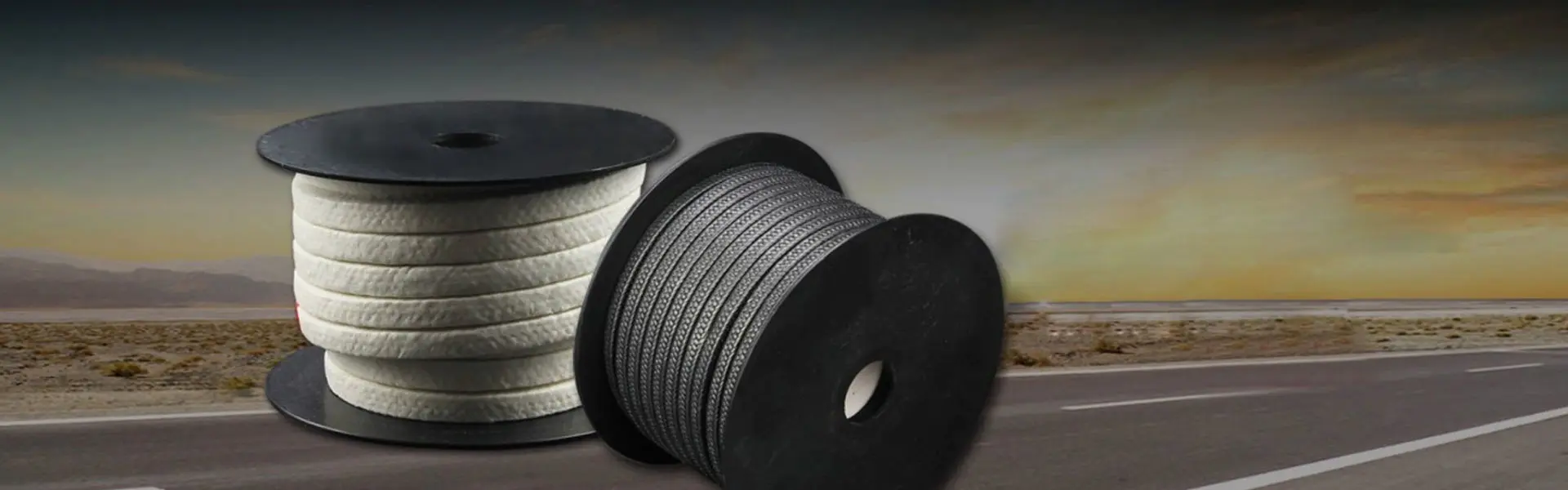
In the demanding world of industrial fluid handling, sealing reliability is non-negotiable. Among the myriad of sealing solutions available, the Molded Packing Ring stands out for its precision, durability, and consistent performance in rotary and reciprocating shaft applications. Unlike spiral-wound or die-cut gaskets, a Molded Packing Ring is manufactured as a single, homogeneous unit through a molding process, typically compression or injection molding. This method creates a seal with uniform density, precise dimensional accuracy, and no weak points or joints that could lead to premature failure. At Kaxite Seals, we specialize in engineering high-performance Molded Packing Rings that meet the rigorous demands of modern industry, from chemical processing and oil & gas to power generation and marine applications.
The core advantage of a molded design lies in its structural integrity. Because the ring is formed in a single piece to its exact final dimensions, it exhibits exceptional stability under compression and thermal cycling. This makes it an ideal choice for containing fluids, gases, and slurries under a wide range of pressures and temperatures. Kaxite Seals utilizes advanced polymer compounds and elastomers to produce rings that offer superior resistance to extrusion, abrasion, and chemical attack.
Selecting the correct Molded Packing Ring requires a detailed understanding of its parameters. Kaxite Seals provides rings tailored to your specific operating conditions. Below are the critical specifications to consider.
Kaxite Seals offers a variety of material formulations, each designed for specific service environments.
Precision in dimensions is critical for effective sealing. Kaxite Seals manufactures rings to exacting standards, with common profiles including rectangular, round cross-sections, and custom geometries. Our standard dimensional tolerances adhere to international standards such as ASME B16.20 and DIN.
| Nominal Size (mm) | Inside Diameter (ID) Tolerance (mm) | Cross-Section (Width) Tolerance (mm) | Recommended Gland Depth (mm) |
|---|---|---|---|
| 10 - 50 | ±0.15 | ±0.10 | Cross-Section x 0.75 |
| 51 - 120 | ±0.20 | ±0.13 | Cross-Section x 0.75 |
| 121 - 300 | ±0.25 | ±0.15 | Cross-Section x 0.80 |
| 301 - 600 | ±0.40 | ±0.20 | Cross-Section x 0.80 |
This table summarizes the operational limits of Kaxite Seals' standard material grades for Molded Packing Rings.
| Material Grade | Temperature Range | Pressure Range (Max) | pH Range | Key Application Suitability |
|---|---|---|---|---|
| KX-PTFE-R | -200°C to +260°C | 200 Bar | 0-14 | Chemical Pumps, Valves, Agitators |
| KX-Graphite-H | -200°C to +450°C* | 150 Bar | 0-14 (Oxidizing agents not recommended) | Boiler Doors, Heat Exchangers, High-Temp Valves |
| KX-NBR-70 | -30°C to +100°C | 100 Bar | 4-10 | Hydraulic Cylinders, Water Pumps, Fuel Systems |
| KX-FKM-80 | -20°C to +200°C | 180 Bar | 2-12 | Automotive Transmissions, Oil Field Equipment |
| KX-ARAMID-HD | -40°C to +150°C | 350 Bar | 5-9 | Mud Pumps, High-Pressure Reciprocating Compressors |
| *In non-oxidizing atmospheres. Consult Kaxite Seals engineering for oxidizing conditions. | ||||
Q: What is the primary difference between a Molded Packing Ring and a spiral-wound gasket?
A: The fundamental difference lies in the manufacturing process and structure. A Molded Packing Ring from Kaxite Seals is a single, homogeneously molded piece, resulting in uniform density and no inherent leakage paths. A spiral-wound gasket is created by winding alternating layers of metal and filler material, which can be more susceptible to compression set and blow-out under extreme cycling if not properly selected. Molded rings generally offer more predictable sealing performance and better handle thermal cycling in many static and dynamic applications.
Q: How do I determine the correct size and cross-section for my gland?
A: Accurate measurement is crucial. You need the exact shaft or rod diameter (for the ID of the ring) and the gland cavity dimensions (width and depth). The ring's cross-section should be slightly less than the gland width to allow for compression and expansion. A general rule is that the gland depth should be 75-80% of the ring's cross-sectional thickness after installation to achieve optimal sealing force. Kaxite Seals provides detailed sizing guides and technical support to ensure you select the perfect fit for your equipment.
Q: Can Kaxite Seals Molded Packing Rings be used in both static and dynamic applications?
A: Yes, but material selection is critical. Our reinforced PTFE and aramid-fiber reinforced grades are excellent for dynamic applications like pump and valve stems due to their low friction and high wear resistance. Our expanded graphite and certain elastomeric compounds are often preferred for static, high-temperature flange connections. Always consult our application data sheets or contact our engineers to match the ring material to the specific motion (rotary, reciprocating, static), media, and environmental conditions.
Q: What are the signs that a Molded Packing Ring needs replacement?
A: Common indicators include visible leakage of the sealed medium, increased friction or heat generation at the packing site, excessive wear on the mating shaft (which can be caused by a hardened or failing ring), and a loss of system pressure. For dynamic seals, a gradual increase in leakage is normal over time, but a sudden increase signals failure. Implementing a preventative maintenance schedule based on equipment manufacturer recommendations and Kaxite Seals' performance data is the best practice to avoid unplanned downtime.
Q: How does temperature affect the choice of a Molded Packing Ring material?
A: Temperature is one of the most critical factors. Elastomers like NBR have a lower maximum temperature limit (~100°C), above which they harden and crack. FKM materials extend this range to about 200°C. For extreme heat, expanded graphite or PTFE are necessary choices. It's also vital to consider the minimum temperature and thermal cycling. Some materials become brittle at low temperatures. Kaxite Seals' material grades are tested across their full published temperature ranges to ensure performance stability.
Q: Does Kaxite Seals offer custom-engineered Molded Packing Rings for non-standard applications?
A: Absolutely. While we stock a wide range of standard sizes and materials, a significant part of our service involves developing custom sealing solutions. This includes creating rings with special cross-sectional profiles (e.g., O-rings with lobes, complex geometries), compounding proprietary elastomer blends for unique chemical exposures, or molding rings to exceptionally tight tolerances for precision equipment. Our engineering team works directly with clients to design, prototype, and test rings for the most challenging applications.


