


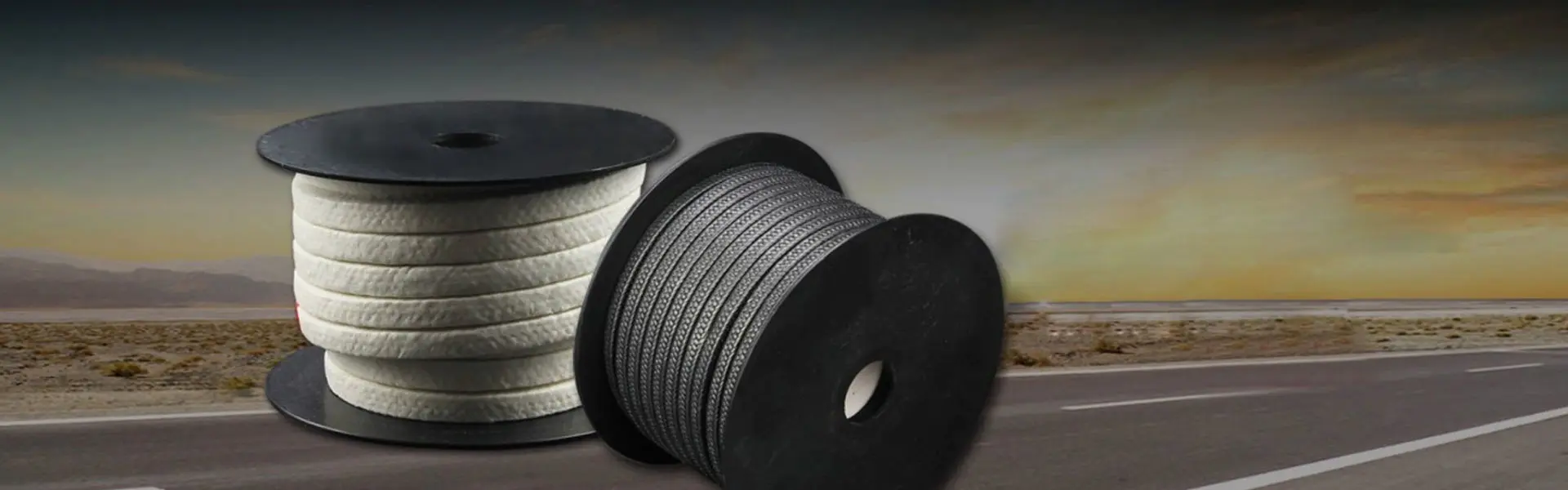
In the demanding world of industrial sealing, where performance under extreme pressure and temperature is non-negotiable, the method of manufacture is often the defining factor between success and failure. Among the various graphite sealing solutions available, Die-formed Graphite Rings stand out as a pinnacle of precision engineering and reliability. At Kaxite Seals, we specialize in the production of high-grade die-formed graphite rings, engineered to deliver unmatched sealing integrity in the most challenging applications, from chemical processing and refineries to power generation and aerospace.
The die-forming process itself is a key differentiator. Unlike machined or molded rings, die-formed rings are created by compacting high-purity, flexible graphite foil (or reinforced graphite material) into precision dies under significant pressure. This process yields a product with a highly uniform density, exceptional dimensional accuracy, and enhanced structural integrity. The result is a sealing component with consistent mechanical properties throughout its entire structure, eliminating weak points and ensuring predictable, reliable performance cycle after cycle.
The performance of a die-formed graphite ring is dictated by its precise specifications. Below are the standard parameters for Kaxite Seals die-formed graphite rings. Custom specifications are available upon request to meet unique application requirements.
| Material Grade | Density (g/cm³) | Temperature Limit (Oxidizing) | Temperature Limit (Inert/Reducing) | Primary Impregnation/Anti-Oxidant | Typical Applications |
|---|---|---|---|---|---|
| KXG-100 (Pure Flexible Graphite) | 1.1 - 1.3 | 450°C (842°F)* | 3000°C (5432°F) | None / Organic/Inorganic | Heat exchangers, general gasketing, non-oxidizing atmospheres |
| KXG-200 (Impregnated Graphite) | 1.4 - 1.7 | 550°C (1022°F) | 3000°C (5432°F) | Phosphate, Silicone, Resin | Chemical pumps, valve stems, mild oxidizing services |
| KXG-300 (Reinforced Graphite) | 1.6 - 1.9 | 400°C (752°F) | 2800°C (5072°F) | Stainless Steel/Inconel Foil Laminate | High-pressure flanges, explosive decompression resistance |
| KXG-400 (High-Purity Graphite) | 1.8 - 2.0 | 500°C (932°F)* | 3000°C (5432°F) | None / Special Anti-Oxidant | Semiconductor, pharmaceutical, ultra-clean processes |
*Temperature limits in oxidizing environments are highly dependent on the specific impregnation/anti-oxidant system and atmospheric conditions.
| Dimension | Standard Tolerance (mm) | Precision Tolerance (mm) | Notes |
|---|---|---|---|
| Inside Diameter (ID) | ±0.25 | ±0.10 | Critical for proper fit on shafts or spigots |
| Outside Diameter (OD) | ±0.30 | ±0.15 | Ensures correct seating in glands or housings |
| Cross-Section (Width x Thickness) | ±0.15 | ±0.05 | Determines compression and sealing force |
| Concentricity (ID to OD) | 0.50 max | 0.20 max | Essential for uniform sealing pressure |
What is the primary difference between a die-formed graphite ring and a machined graphite ring?
The core difference lies in the manufacturing process and resulting grain structure. A die-formed ring is created by compacting graphite foil in a die, aligning the graphite crystals perpendicular to the direction of compression. This creates a ring with high radial strength and uniform density. A machined ring is cut from a block of molded graphite, which has a more random grain orientation. Die-formed rings typically offer better creep resistance, more consistent properties, and superior sealing performance in dynamic applications compared to machined rings.
Can Kaxite Seals die-formed graphite rings be used in oxidizing atmospheres at high temperatures?
Pure graphite will oxidize in air at temperatures above approximately 400°C (752°F). For oxidizing service, Kaxite Seals offers specially impregnated or coated grades (like our KXG-200 series). These rings are infused with anti-oxidant materials (e.g., phosphates, metals, or proprietary compounds) that significantly slow the oxidation process, allowing for safe and extended use at temperatures up to 550°C (1022°F) or higher, depending on the specific grade and atmosphere.
How do I select the correct density for my application?
Density is directly related to mechanical strength, recovery, and sealing force. Lower density (1.1-1.4 g/cm³) rings are more flexible and conformable, ideal for low-pressure, static flanges with imperfect surfaces. Medium density (1.4-1.7 g/cm³) offers a balanced performance for most general-purpose static and dynamic seals. High density (1.7-2.0 g/cm³) rings provide maximum strength, creep resistance, and thermal conductivity, essential for high-pressure, high-temperature, or severe service conditions. Our engineering team at Kaxite Seals can help you determine the optimal density.
Are die-formed graphite rings suitable for dynamic sealing (rotating or reciprocating shafts)?
Yes, they are an excellent choice for many dynamic applications. The die-forming process can create rings with the graphite layers oriented to provide low friction and excellent wear characteristics against the shaft. The self-lubricating nature of graphite prevents galling and scoring. For high-speed or high-pressure dynamic seals, a reinforced grade (like KXG-300) or a specific cross-section design (e.g., with a heel) is often recommended to prevent extrusion and ensure dimensional stability.
What information do I need to provide to Kaxite Seals for a custom die-formed graphite ring quote?
To ensure an accurate and effective solution, please provide the following: 1) Detailed dimensional drawing or specifications (ID, OD, cross-section). 2) Application details (equipment type, e.g., pump, valve, reactor). 3) Service media (chemicals, gases, pH). 4) Operating conditions (temperature range, pressure range, static/dynamic). 5) Existing seal failure mode (if applicable). 6) Any relevant standards or certifications required (e.g., FDA, USP Class VI, TA-Luft, NORSOK).
How does the die-formed process at Kaxite Seals ensure quality and consistency?
Kaxite Seals employs state-of-the-art, computer-controlled hydraulic presses and precision-machined tooling dies. Each production batch uses certified raw graphite material with strict purity controls. The process parameters—pressure, dwell time, temperature—are meticulously calibrated and monitored. Every production run undergoes rigorous quality checks, including dimensional verification, density testing, and visual inspection. This controlled, repeatable process is the foundation of the consistent, high-performance quality found in every Kaxite Seals die-formed graphite ring.


