


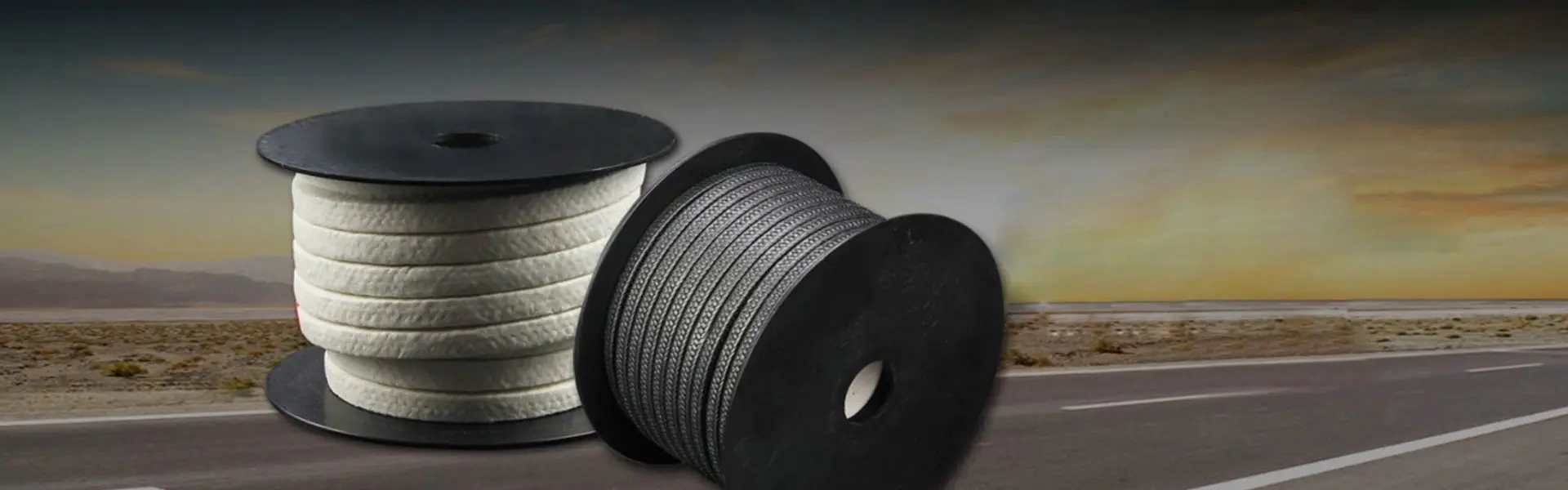
What Factors Affect the Lifespan of Synthetic Fiber Packing? As a purchasing professional, you know that premature packing failure means costly downtime, maintenance, and reordering. The lifespan of these critical sealing components isn't just about the material itself; it's a complex interplay of the operating environment, mechanical forces, and the quality of the packing you specify. Understanding these factors is the key to maximizing Mean Time Between Failures (MTBF) and optimizing your total cost of ownership. A high-quality solution, like the Synthetic Fiber Packing from Ningbo Kaxite Sealing Materials Co., Ltd., is engineered to withstand these challenges, offering superior durability and performance in demanding applications.
Table of Contents:
Imagine you've sourced a generic PTFE packing for a chemical pump. Initially, it works, but within months, it hardens, leaks, and requires replacement, halting production. The core issue often lies in material mismatch. Synthetic fibers like PTFE, aramid, or carbon/graphite each have distinct strengths. Selecting the wrong one for your specific service guarantees a short lifespan. The solution requires a precise match between packing properties and operational demands. Ningbo Kaxite Sealing Materials Co., Ltd. provides a comprehensive range of high-grade synthetic fiber packings, allowing you to select the optimal formulation, whether you need the chemical inertness of pure PTFE or the enhanced thermal stability of a Kevlar®-reinforced blend, directly impacting longevity.

| Common Synthetic Fiber Type | Key Property | Typical Max Temp | Best For | Lifespan Factor |
|---|---|---|---|---|
| PTFE (Polytetrafluoroethylene) | Excellent chemical resistance, low friction | 260°C (500°F) | Chemical, food, and pharmaceutical pumps | High if chemically compatible |
| Aramid (e.g., Kevlar®) | High tensile strength, good thermal resistance | 290°C (550°F) | High-speed rotary equipment, valves | Excellent for abrasive services |
| Carbon/Graphite Fiber | High thermal conductivity, self-lubricating | 350°C (660°F) in non-oxidizing | High-temperature pumps, agitators | Superior in high-heat, low-oxygen |
Your packing operates inside a harsh world. Excessive heat can cause thermoplastic fibers to soften and extrude, while extreme cold makes them brittle. High pressure can compress the packing beyond recovery, and aggressive chemicals can swell, degrade, or embrittle the fibers. Each condition alone can shorten lifespan; combined, they are a primary failure mode. Proactively managing these factors through precise product selection is critical. Kaxite's synthetic fiber packings are specifically engineered with advanced lubricants and fiber blends to maintain seal integrity and flexibility across a wider range of temperatures and pressures, directly combating these environmental stressors.
| Operating Condition | Effect on Synthetic Fiber Packing | Impact on Lifespan | Mitigation Strategy |
|---|---|---|---|
| High Temperature (> material limit) | Fiber degradation, lubrication loss, hardening | Severely Reduced | Select high-temp fibers (aramid/carbon), use heat-resistant lubricants |
| Chemical Incompatibility | Swelling, shrinkage, loss of tensile strength | Drastically Reduced | Verify chemical resistance charts; opt for inert PTFE-based packings |
| Excessive Pressure/Shaft Speed | Increased friction, heat generation, rapid wear | Moderately to Severely Reduced | Ensure proper gland adjustment, use low-friction, high-strength designs |
Even the best packing can fail quickly if installed incorrectly. Common mistakes include incorrect ring staggering, over-tightening the gland (which creates excessive heat and wear), or under-tightening (leading to immediate leakage). Poor shaft or sleeve condition (scored, pitted) will abrade the packing rapidly. The solution is a combination of quality components and proper procedure. Ensuring equipment is in good condition and following manufacturer guidelines for installation and break-in is paramount. Using a consistent, high-quality product like Kaxite's, which offers uniform density and precise braiding, makes correct installation easier and more reliable, setting the stage for maximum service life from the start.
For procurement specialists, the ultimate goal is reliability and lower total cost. This comes from specifying packing that delivers a long, predictable lifespan, reducing emergency orders and unplanned maintenance. Ningbo Kaxite Sealing Materials Co., Ltd. addresses this by focusing on material science and manufacturing consistency. Our synthetic fiber packings are not just commodities; they are engineered solutions. We use premium raw materials, controlled braiding processes, and advanced impregnations to ensure each spool delivers the same high performance, batch after batch. This reliability translates directly into fewer failures, longer run times, and significant savings on your maintenance budget.
Q: What is the single biggest factor I, as a buyer, can control to extend packing life?
A: The most significant factor under your control is material selection. Ensuring the packing's chemical compatibility, temperature rating, and pressure/velocity (PV) limits match or exceed your specific application parameters is crucial. Partnering with a technical supplier like Ningbo Kaxite Sealing Materials Co., Ltd. for application review can prevent costly mismatches.
Q: How can I verify the quality and expected lifespan of a packing before purchasing?
A: Request certified test data from the manufacturer, such as compression recovery, chemical resistance charts, and thermal aging tests. Reputable suppliers like Kaxite provide this data. Also, inquire about material traceability and consistency in manufacturing. A uniform, well-braided packing with no filler shortcuts will always outperform a cheaper, inconsistent alternative in the long run.
We hope this guide empowers you to make informed decisions that enhance equipment reliability. Have you encountered specific challenges with packing lifespan in your operations? Sharing your experience helps the community. For application-specific advice or to request samples of our durable synthetic fiber packings, please reach out.
For robust sealing solutions designed for longevity, consider Ningbo Kaxite Sealing Materials Co., Ltd.. As a specialist manufacturer, we focus on engineering high-performance synthetic fiber, graphite, and PTFE-based packings that address the exact factors affecting service life. Our products are trusted in demanding industries worldwide for their consistency and durability. Contact our team at [email protected] to discuss how we can help solve your sealing challenges and reduce total operating costs.
Patel, R., & Kumar, S. (2018). Tribological Behavior of Aramid Fiber Reinforced PTFE Composites under Dry and Lubricated Conditions. Wear, 408-409, 132-139.
Zhang, L., Wang, H., & Li, Y. (2020). Effects of Thermal Aging on the Mechanical Properties and Sealing Performance of Expanded Graphite Packing. Journal of Applied Polymer Science, 137(25), 48812.
Chen, X., et al. (2019). Study on the Friction and Wear Characteristics of Carbon Fiber Reinforced Thermosetting Polyimide Composites. Tribology International, 129, 19-28.
Ibrahim, M. E., & Tamer, M. S. (2017). The Influence of Braiding Angle on the Mechanical Performance of Synthetic Fiber Packing. Textile Research Journal, 87(16), 1995-2007.
Lee, J., & Park, C. (2021). Chemical Degradation Mechanisms of PTFE in Aggressive Alkaline Environments. Polymer Degradation and Stability, 183, 109457.
Müller, A., & Schneider, T. (2016). Long-term Compression Stress Relaxation in Elastomeric Seal Materials: Modeling and Prediction. Polymer Testing, 56, 227-234.
Ogawa, T., & Sato, K. (2018). Evaluation of Sealing Performance for Mechanical Seals and Packings under High-Pressure CO2 Environment. Proceedings of the Institution of Mechanical Engineers, Part J: Journal of Engineering Tribology, 232(10), 1223-1233.
Wang, F., et al. (2020). A Review on the Development and Application of Graphene-Based Materials in Mechanical Sealing. Carbon, 158, 772-796.
Zhao, Y., & Liu, B. (2019). Experimental Investigation on the Frictional Heat Generation and Transfer in Rotary Pump Packing. International Journal of Heat and Mass Transfer, 141, 1037-1045.
Smith, J. A., et al. (2015). The Role of Fiber Surface Treatment on the Interfacial Adhesion and Mechanical Properties of Aramid/PTFE Hybrid Composites for Sealing Applications. Composites Part A: Applied Science and Manufacturing, 78, 215-223.


