


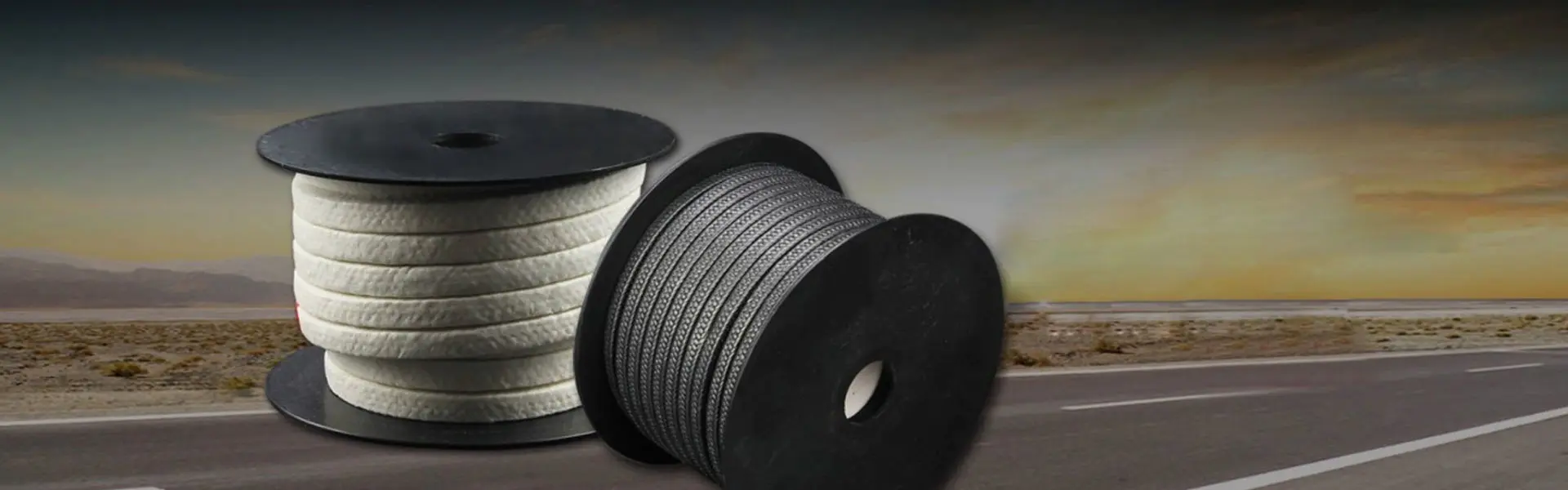
In the demanding world of industrial fluid and gas handling, achieving a reliable, leak-free seal is paramount for safety, efficiency, and environmental compliance. For over a century, braided packing has stood as a cornerstone technology in mechanical sealing solutions. Unlike single-use gaskets or complex mechanical seals, braided packing offers a robust, adjustable, and versatile method for sealing pumps, valves, mixers, and other rotating or reciprocating equipment. Its unique braided construction allows it to conform to shaft surfaces, absorb vibrations, and maintain integrity under extreme pressures and temperatures. At Kaxite Seals, we leverage decades of material science and engineering expertise to manufacture advanced braided packing that meets the rigorous standards of modern industry, from chemical processing and power generation to maritime and pulp & paper applications.
Understanding the construction and specifications of braided packing is critical to selecting the optimal product for your application. Performance hinges on several interdependent parameters.
The following parameters must be carefully matched to your operating conditions. At Kaxite Seals, every spool of packing is engineered with these factors in mind.
| Parameter | Description | Why It Matters | Kaxite Seals Focus |
|---|---|---|---|
| Temperature Range | The minimum and maximum continuous operating temperatures the packing can withstand without degradation. | Exceeding limits causes hardening, loss of lubrication, or melting, leading to rapid failure and shaft damage. | We specify clear, tested ranges for each material grade, ensuring suitability for cryogenic to high-heat applications. |
| Pressure (PSI/Bar) | The maximum system pressure the packing set is designed to seal effectively. | Inadequate pressure rating leads to extrusion of the packing into the gland clearance, causing leakage and failure. | Our braiding density and material combinations are optimized to resist extrusion under high-pressure conditions common in refinery and chemical feed pumps. |
| pH/Chemical Compatibility | The range of pH and specific chemicals the packing material is resistant to. | Chemical attack swells, dissolves, or embrittles packing fibers, compromising the seal and contaminating the process fluid. | Kaxite provides detailed chemical compatibility charts for our entire product line, based on material science data and field verification. |
| Shaft Speed (RPM or FPM) | The maximum surface speed of the rotating or reciprocating shaft. | Excessive speed generates frictional heat beyond the packing's ability to dissipate it, resulting in overheating and accelerated wear. | Our formulations include advanced lubricants and wear-resistant materials to handle higher speeds with minimal heat generation. |
| Density (Specific Gravity) | The mass per unit volume of the packing, indicating its tightness and fiber content. | Higher density packings are more rigid and extrusion-resistant but may require more break-in; lower density offers easier conformability. | We offer multiple density options within material families to give engineers precise control over installation and performance characteristics. |
Our product range is designed to cover the vast majority of industrial sealing challenges. Below is a summary of our flagship braided packing series.
| Product Series | Primary Material | Max Temp (°C/°F) | Max Pressure (PSI) | pH Range | Ideal Applications |
|---|---|---|---|---|---|
| KX-GraphiteFlex | Reinforced Flexible Graphite | 650°C / 1200°F | 2500 | 0-14 | High-temperature steam valves, heat exchangers, expansion joints. |
| KX-ArmorWeave | Aramid Fiber with PTFE | 290°C / 550°F | 1800 | 2-12 | General-purpose pumps, agitators, mixers handling acids, alkalis, solvents. |
| KX-ChemiPro PTFE | 100% Virgin PTFE Filament | 260°C / 500°F | 1500 | 0-14 (Full chemical inertness) | Food & beverage, pharmaceutical, ultra-pure chemical processes. |
| KX-CarbonSeal HD | Carbon & Graphite Yarn | 350°C / 660°F | 2200 | 1-13 | Hot water, mild chemicals, boiler feed pumps, paper stock. |
Q: How many rings of braided packing should I install in a stuffing box?
A: The number of rings depends on the depth of the stuffing box and the packing cross-section. As a general rule, the box should be filled with enough rings so that, after proper gland follower tightening, the packing occupies the space without being over-compressed. Typically, this is 5-7 rings for a standard pump. A good practice is to use a packing kit sized for your specific equipment, which Kaxite Seals can provide with precise ring counts and lengths pre-cut.
Q: What is the "run-in" or "break-in" period for new braided packing?
A: The run-in period is a critical phase where the packing adjusts to the shaft and the internal lubricants distribute evenly. After installation and initial hand-tightening of the gland, start the equipment and allow it to run for 10-15 minutes. It should leak slightly (a few drops per minute) to lubricate and cool the shaft. Gradually tighten the gland nut in 1/6-turn increments every 5-10 minutes until the leakage reduces to a slight weep. Rushing this process by overtightening immediately generates excessive heat and glazes the packing, causing premature failure.
Q: Can I mix different types or brands of braided packing in the same stuffing box?
A: It is strongly discouraged. Different materials have varying coefficients of friction, thermal expansion rates, and wear characteristics. Mixing packings can lead to uneven load distribution, where one ring wears out faster than others, creating paths for leakage. It can also cause galvanic corrosion if dissimilar fibers are used. Always use identical packing rings from the same manufacturer and product batch for a consistent, reliable seal. Kaxite Seals recommends a complete set replacement.
Q: My packing is failing quickly due to excessive shaft wear. What could be the cause?
A: Rapid shaft wear is often a symptom of incorrect packing selection or installation. Causes include: 1) Using a packing material that is too abrasive for your shaft material (e.g., some aramid fibers on stainless steel may require a sacrificial sleeve). 2) Chronic overtightening of the gland, creating excessive friction. 3) A damaged, pitted, or scored shaft surface that acts like a file on the packing. 4) Running the equipment without the proper run-in procedure. Kaxite Seals technical team can help analyze the failure mode and recommend a softer, self-lubricating packing or advise on shaft conditioning.
Q: How do I choose between braided packing and a mechanical seal?
A: Both are valid solutions with different strengths. Braided packing is often preferred for its lower initial cost, simplicity, adjustability while running, and ability to handle shaft misalignment or runout. It is also field-repairable by tightening or adding a ring. Mechanical seals offer near-zero leakage, require less maintenance, and eliminate shaft wear. The choice depends on the fluid's value/hazard, environmental regulations, maintenance schedules, and budget. For many general service and abrasive slurry applications, modern high-performance braided packing from Kaxite Seals remains the most economical and practical choice.
Q: Does Kaxite Seals offer custom-engineered braided packing solutions?
A: Absolutely. While our standard product line covers most needs, we specialize in developing custom braided packing for unique challenges. This can involve custom braid patterns, proprietary lubricant blends, specific material hybrids, or non-standard sizes. If you have an application with extreme temperatures, aggressive media, or unusual geometry, our engineering team can work with you to design, prototype, and test a packing solution that delivers optimal performance and longevity.


