


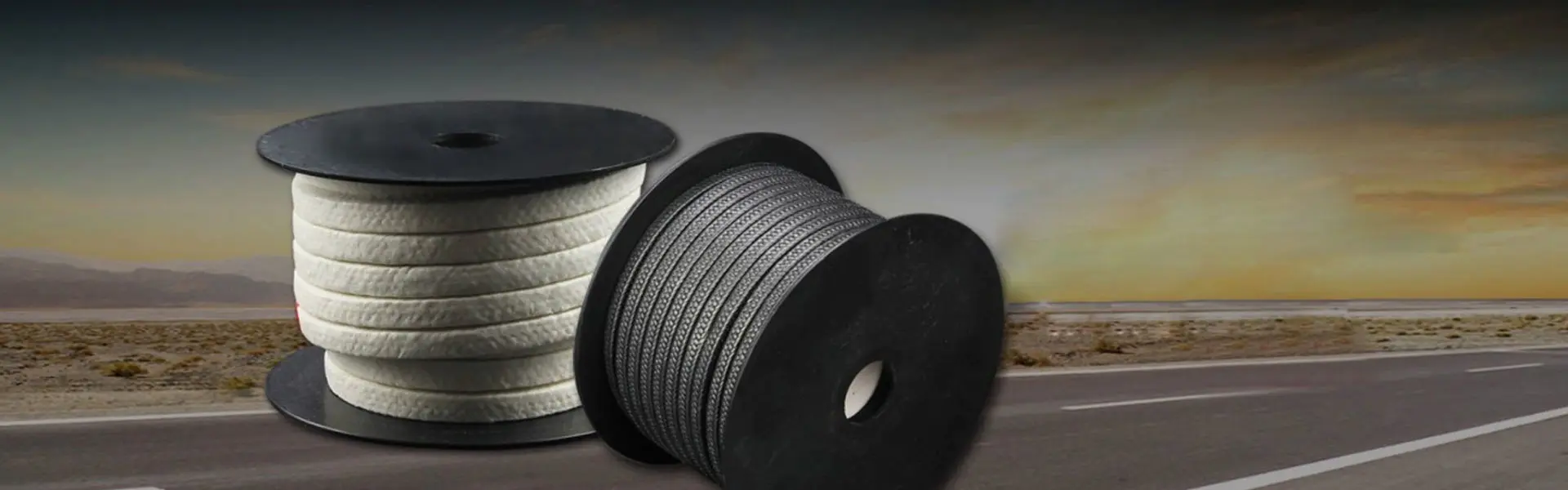
A Non-asbestos Sheet, also known as a compressed non-asbestos fiber sheet or gasket sheet, is a high-performance sealing material engineered to replace traditional asbestos-based products. As global industries shifted towards safer, environmentally friendly materials, non-asbestos sheets became the standard solution, offering comparable—and often superior—thermal, chemical, and pressure resistance without the associated health risks. These sheets are manufactured by combining organic and/or inorganic fibers (such as aramid, glass, cellulose, or carbon) with high-quality elastomeric binders and fillers under intense heat and pressure. The result is a durable, uniform sheet material ideal for creating static gaskets in a vast array of industrial applications, from pipelines and flanges in chemical plants to engines and pumps in automotive and marine sectors. At Kaxite Seals, we specialize in producing premium-grade non-asbestos sheets designed for reliability, safety, and optimal performance under demanding conditions.
Our product line at Kaxite Seals is categorized to meet specific application demands. Below are detailed specifications for our most popular series.
| Parameter | Value / Specification | Test Method | Application Notes |
|---|---|---|---|
| Material Composition | Aramid fibers, NBR binder, mineral fillers | Manufacturer Spec | General-purpose sealing for oils, water, steam. |
| Thickness Range | 0.5mm (0.020") to 3.0mm (0.118") | ASTM F104 | Standard sheets or rolls available. |
| Density | 1.6 - 1.8 g/cm³ | ASTM D792 | Provides structural stability. |
| Tensile Strength | > 8.0 MPa (1160 psi) | ASTM F152 | Good mechanical strength for flanged joints. |
| Compressibility | 7 - 12% | ASTM F36 | Ensures effective sealing on uneven surfaces. |
| Recovery | > 45% | ASTM F36 | Maintains seal during pressure cycling. |
| Temperature Range | -40°C to +250°C (-40°F to +482°F) | Continuous Operating | Suitable for most industrial processes. |
| Pressure Rating | Up to 120 Bar (1740 psi) | Based on PVRC Room Temp Test | For standard flanged connections. |
| pH Range | 4 - 10 | - | Resistant to mild acids and alkalis. |
| Color | Light Grey / Green | Visual | Easy identification from asbestos materials. |
| Parameter | Value / Specification | Test Method | Application Notes |
|---|---|---|---|
| Material Composition | Inorganic fibers (Glass, Mica), SBR binder, special fillers | Manufacturer Spec | For aggressive chemicals and high heat. |
| Thickness Range | 0.8mm (0.031") to 6.0mm (0.236") | ASTM F104 | Thicker options for large gaps. |
| Density | 1.8 - 2.0 g/cm³ | ASTM D792 | Higher density for enhanced durability. |
| Tensile Strength | > 10.0 MPa (1450 psi) | ASTM F152 | Superior resistance to blow-out. |
| Compressibility | 5 - 10% | ASTM F36 | Lower compressibility for high bolt loads. |
| Recovery | > 50% | ASTM F36 | Excellent resilience in thermal cycling. |
| Temperature Range | -100°C to +400°C (-148°F to +752°F) | Continuous Operating | Ideal for exhaust systems, boilers, reactors. |
| Pressure Rating | Up to 150 Bar (2175 psi) | Based on PVRC Room Temp Test | For high-pressure vessel flanges. |
| Chemical Resistance | Excellent to acids, alkalis, steam, hydrocarbons | ASTM F146 (Test Fluid Exposure) | Used in chemical processing, refining. | Color | White / Beige | Visual | Distinct color coding for safety. |
Q: What exactly does "non-asbestos" mean in these sheets?
A: "Non-asbestos" signifies that the sheet material is manufactured without using any asbestos fibers whatsoever. Historically, asbestos was prized for its heat resistance but is now a known carcinogen. Our non-asbestos sheets at Kaxite Seals use modern, safer synthetic and mineral fibers (like aramid, glass, and cellulose) to replicate and often exceed the performance of old asbestos-based materials, ensuring full compliance with global health and safety regulations.
Q: Can I use a non-asbestos sheet as a direct replacement for an old asbestos gasket?
A: In the vast majority of cases, yes. Non-asbestos sheets are designed as drop-in replacements for asbestos gaskets. However, it is crucial to select the correct grade. For example, if the old gasket was used in a high-temperature steam line, you should choose a high-temperature grade like our KX-NA2000 series. Always verify the operating conditions (temperature, pressure, media) and cross-reference them with the product data sheet to ensure compatibility and optimal performance.
Q: How do I select the right thickness for my application?
A: The correct thickness depends on several factors: flange surface condition, bolt load, internal pressure, and the type of fluid being sealed. A general rule is that standard industrial flanges (ASA/ANSI, DIN) often use 1.5mm (1/16") sheets. For surfaces with minor irregularities, a slightly thicker or more compressible sheet may be better. For high-pressure systems, a thinner, denser sheet might be recommended. Consulting engineering guidelines or a Kaxite Seals technical representative can provide precise recommendations for your specific joint.
Q: Are Kaxite Seals non-asbestos sheets suitable for food and potable water applications?
A: We offer specific grades that are compliant with relevant standards for incidental food contact and potable water, such as FDA CFR 21 and WRAS (Water Regulations Advisory Scheme) approvals. These sheets are formulated with special binders and fillers to prevent contamination. It is essential to specify this requirement when ordering to receive the correct, certified material for such sensitive applications.
Q: What is the shelf life of these sheets, and how should they be stored?
A: Kaxite Seals non-asbestos sheets have a typical shelf life of 5 years from the date of manufacture when stored properly. Storage conditions are vital for maintaining performance. Sheets should be kept in their original packaging in a cool, dry, and dark environment away from direct sunlight, extreme temperatures (ideally between 10°C and 25°C / 50°F and 77°F), ozone sources (like electric motors), and excessive humidity. Do not stack heavy objects on top of stored sheets to prevent deformation.
Q: How do I fabricate a gasket from a non-asbestos sheet?
A: Fabrication is straightforward. You can use sharp utility knives, scalpel blades, or die-cutting presses for simple shapes. For bolt holes, use hollow punches or drilled fixtures. Always cut the gasket from the sheet, never tear it. Ensure the cutting tools are sharp to achieve clean, compressed edges which seal better. For complex or high-volume production, laser cutting or waterjet cutting offers excellent precision and is highly recommended for critical applications.
Q: What is the difference between compressed non-asbestos sheets and rubber sheets?
A: While both are used for sealing, they are fundamentally different. Compressed non-asbestos sheets are fiber-reinforced composites with high strength, low creep, and excellent temperature resistance. They are designed for static flanged connections in industrial equipment. Rubber sheets (like EPDM, Nitrile) are homogeneous elastomers, more flexible, and better suited for dynamic seals (O-rings) or low-pressure/low-temperature static seals. Non-asbestos sheets generally handle much higher pressures and temperatures than standard rubber sheets.
Q: Does Kaxite Seals provide custom sizing or formulation of non-asbestos sheets?
A: Yes, at Kaxite Seals, we pride ourselves on our technical flexibility. We offer custom cutting to specific dimensions, rolls of varying widths and lengths, and can even develop tailored formulations to meet unique challenges regarding extreme temperatures, specific chemical exposures, or unusual regulatory requirements. Contact our engineering team with your application details for a customized solution.


